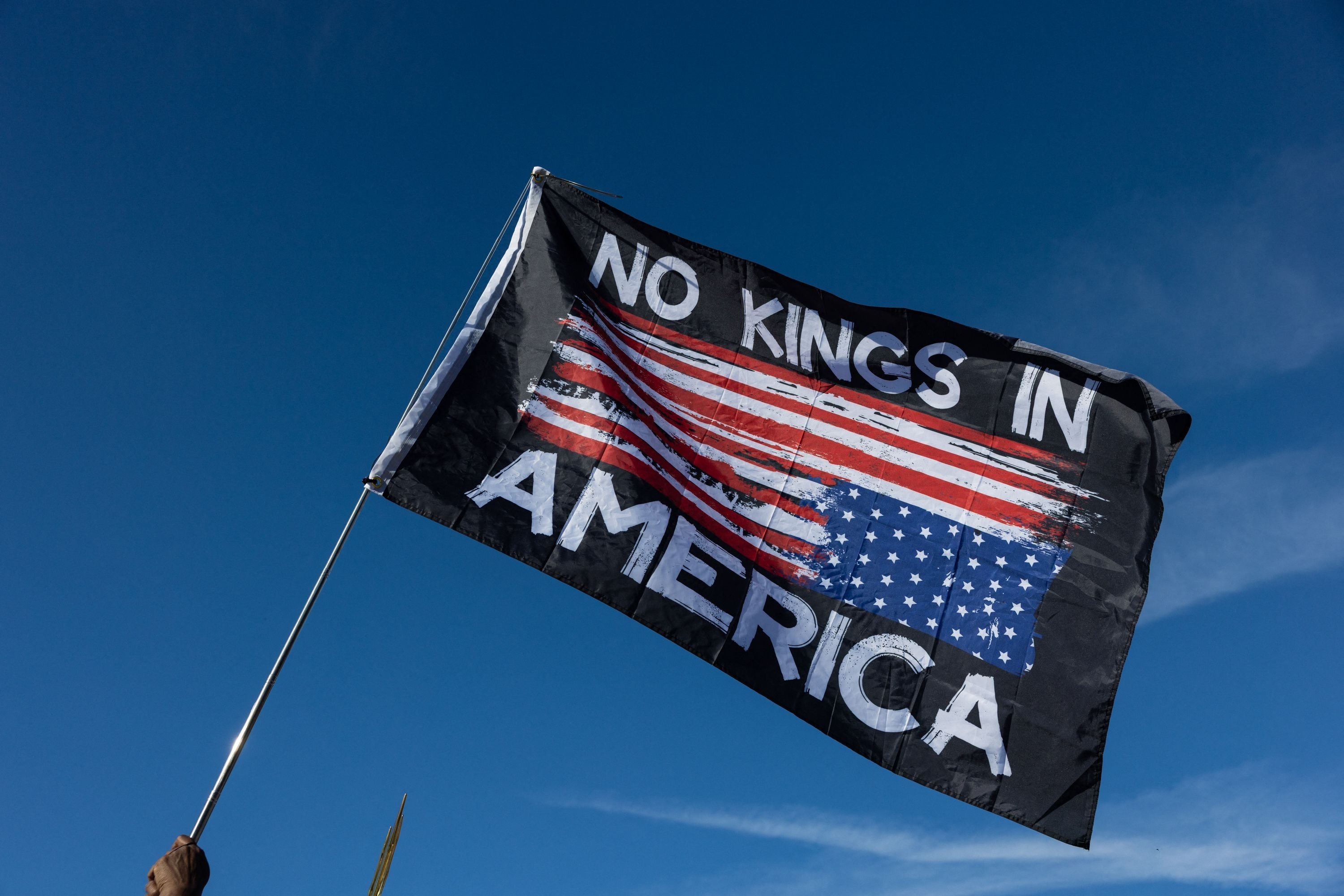
There is an old American instinct that becomes visible whenever somebody reaches for a crown. Wealth causes remarkably little alarm by comparison. A man may own a mountain, a railroad, a newspaper chain, a thousand-acre estate, a banking house, a university endowment, half the oil refining capacity of a continent, or a corporation whose revenues exceed those of sovereign states, and Americans will usually find a vocabulary for him. He becomes a magnate, a founder, a chairman, a president, a boss, a captain of industry, a philanthropist, a trustee. Place a hereditary crown on his head and the entire emotional register changes.
That reaction reaches back almost to the beginning of the country. During the dangerous period between military victory and a functioning national government, Americans repeatedly confronted the possibility that their Revolution might end the way revolutions had ended elsewhere: with soldiers, creditors, political instability, a powerful commander and eventually some new version of monarchy. The United States emerged from that period with an unusually deep suspicion of the king as a political category. At the same time, American society proved extraordinarily comfortable with almost everything that historically surrounded kings: great estates, dynastic fortunes, private councils, patronage systems, hereditary social capital, retinues of experts, elaborate ceremonies, private archives and institutions capable of exercising influence across generations.
That contradiction is one of the more interesting facts about the country. America has spent nearly two and a half centuries refusing a throne while becoming one of the easiest places on earth to live like a king.
Washington and the Crown That Never Appeared
The story can begin at Newburgh, New York, on May 22, 1782. The war had effectively turned in the American favor after Yorktown, although peace had yet to be finalized. The Continental Army remained in the field, Congress was financially weak, officers worried about their pay and pensions, and nobody could be certain what sort of political machine would hold the newly independent states together once the British threat receded.

Colonel Lewis Nicola wrote George Washington that day with a proposal whose significance Washington immediately understood. Nicola had become convinced that the existing republican arrangements were dangerously weak. His letter moved through financial reform, military grievances and constitutional structure before arriving at the possibility of a much stronger executive. Nicola suggested that prejudice against monarchy might eventually diminish and that the title of king could become attached to Washington’s office. Washington’s answer was furious by the standards of his correspondence. He wrote that the proposal had given him “painful sensations,” said he viewed such ideas “with abhorrence,” and warned that they were capable of producing some of the greatest mischiefs that could befall the country.

That exchange deserves more attention than the familiar legend that somebody casually offered Washington a crown. Nicola’s letter emerged from a genuine structural problem. The Continental Army represented one of the few truly national institutions in existence. Congress depended upon the states for money. Officers had spent years serving under Washington personally. The country had a celebrated commander, an unpaid military class and a weak civilian center. Those ingredients had produced monarchies, dictatorships and military regimes repeatedly throughout history. Washington understood the danger precisely because the suggestion was politically conceivable.
Ten months later the danger became much larger. In March 1783, officers camped around Newburgh were furious over unpaid wages and pensions. Anonymous addresses circulated urging them toward organized resistance. Some contemplated marching on Congress if peace arrived without a financial settlement; continued war raised the possibility of the Army refusing further service. Washington appeared before the officers on March 15 and attacked the methods being proposed while acknowledging the legitimacy of their financial grievances. His intervention helped defuse what became known as the Newburgh Conspiracy.
The famous spectacle came at the end of that year. On December 23, 1783, Washington appeared before Congress at Annapolis and surrendered his military commission. The act became central to his public image because everyone present understood what he possessed at that moment: enormous military prestige, personal loyalty from the officer corps and a reputation unmatched by any other American. He voluntarily returned command to civilian authority and went home to Mount Vernon.
The sequence matters. Nicola’s proposal, the Newburgh crisis and Washington’s resignation occurred within nineteen months. Together they established one of the foundational stories Americans would tell about legitimate power. Authority could be immense. Glory could be immense. Public gratitude could approach veneration. The holder of power still returned the commission.
Washington himself could live magnificently at Mount Vernon, preside over an enormous plantation household, entertain foreign dignitaries and occupy a social position that European visitors easily understood in aristocratic terms. His ownership of enslaved people also makes the inequalities within that republican image impossible to ignore. The political lesson attached to Washington concerned succession and public authority: the Army belonged to the republic after Washington left it, and the presidency would eventually belong to somebody else after he left that too.
The American Word “King”
The cultural work had already begun before Newburgh. Thomas Paine’s Common Sense appeared in January 1776 and made monarchy itself part of the revolutionary argument. Paine supplied one of the most durable sentences in American political language: “in America the law is king.” The phrase performed a linguistic substitution. The crown’s place at the top of the political order was occupied by an abstraction—a law that supposedly bound ruler and citizen alike.

The Declaration of Independence reinforced the association a few months later. Much of its indictment is organized around George III personally. “The present King of Great Britain” becomes the grammatical subject of repeated injuries, usurpations, dissolved legislatures, standing armies and interference with colonial government. By the end, the document declares that a prince marked by such conduct is unfit to rule a free people. Generations of Americans encountered the king first through that language: the distant individual who mistakes an entire political community for something he possesses.
The Constitution carried the suspicion into institutional design. Article I prohibits the federal government from granting titles of nobility, prohibits states from doing the same, and limits federal officeholders’ acceptance of titles, presents and emoluments from foreign kings and princes. Even the apparently trivial argument over what to call the president showed how sensitive the subject remained. In 1789 a Senate majority entertained the elaborate style “His Highness the President of the United States of America and Protector of their Liberties.” The House resisted the elevated title, and the simpler “President of the United States” prevailed.
This is where the language question becomes interesting. English itself has supported monarchies perfectly well. Britain continues to do so, as do English-speaking constitutional monarchies such as Canada and Australia. American English acquired a separate political memory during the eighteenth century. Words such as king, court, subject, nobility and hereditary came through the Revolution charged with arguments about dependence and arbitrary rule. Citizen, constitution, representation, president and republic supplied the preferred vocabulary for legitimate authority.
That linguistic inheritance helps explain why a future American monarchy remains culturally difficult to imagine. A ruler exercising extraordinary power can be described as a president, chairman, chief executive, director, administrator or commander and remain inside familiar American categories. Calling the same person King of America would summon 1776 into the room. The objection lives partly in law and partly in political reflex.
The Crown Kept Drifting Around the Edge
Monarchy did continue to appear in the uncertain years after independence. One of the strangest cases involved Prince Henry of Prussia, younger brother of Frederick the Great. Historians have argued about exactly who initiated the scheme and how far it progressed, although archival evidence establishes that the idea was more than a later legend. A 1911 study in the American Historical Review examined surviving Prussian material concerning a proposed American regency in 1786, and Minor Myers’s history of the Society of the Cincinnati describes Baron Friedrich Wilhelm von Steuben approaching Prince Henry about possible American kingship. Henry declined.

The episode occurred during the Confederation crisis, when Shays’ Rebellion, state fiscal problems and interstate weakness had convinced many prominent Americans that the national government required major reconstruction. Nobody needs to imagine a secret royalist master plan to see the importance of the story. Some people who had fought a king were capable, ten years later, of considering a foreign prince as a possible answer to republican disorder.
The Society of the Cincinnati made those anxieties sharper. Founded by Continental officers in 1783, the society allowed membership to descend to heirs, immediately provoking suspicion that the officer corps might evolve into an American hereditary order. Washington served as its president-general, while critics worried over aristocracy, military influence and inherited distinction. Those fears existed alongside the very real grievances of officers who had gone unpaid for years. The early republic was trying to decide which kinds of inheritance were compatible with republican government and which could become the seed of an aristocratic political class.
The Constitution eventually provided a stronger executive without creating a royal family. The presidency acquired command of the armed forces, appointment powers, diplomatic functions, veto authority and immense ceremonial importance. Every president nevertheless entered an office designed to outlive him. That is one reason the office can become grand without becoming a crown. The building, the archives, the staff, the powers and the title pass onward.
America Before the Republic Had Its Own Political Worlds
There is another complication worth placing here because European words can distort American history. Indigenous North America contained an enormous range of political systems before the United States existed. English colonists frequently reached for familiar terms—king, queen, prince, nation—when describing leaders whose authority operated according to different traditions.
Powhatan’s Tsenacomoco offers a particularly useful example. The National Park Service describes Powhatan, or Wahunsenacawh, as the mamanatowick, the paramount chief of a network encompassing dozens of tribes and more than 150 towns. Tribute flowed upward while a substantial amount of ordinary government remained with individual communities. Modern historians have used words such as chiefdom, confederacy and empire; the NPS favors “tributary nations” as a more precise description of the political arrangement.
That matters for a history of kings in America because the word king was already functioning as an act of translation. Europeans looked across unfamiliar political landscapes and searched for equivalents to their own hierarchy. Some Indigenous governments contained hereditary offices and tribute relationships that Europeans recognized immediately. Others distributed authority through councils, clans, kinship systems and forms of consensus that fit the royal vocabulary poorly.
America therefore began with multiple concepts of sovereignty occupying the same land. The republic added another layer rather than erasing everything underneath it. States, tribal nations, churches, municipalities, private corporations, families, associations and federal institutions would eventually overlap across an extraordinary number of jurisdictions.
The Republic Becomes a Refuge for Royalty
The rejection of an American crown never made the country inhospitable to displaced royalty. Quite the opposite happened. The immense territory, private-property system and absence of a domestic aristocratic hierarchy created ideal conditions for former princes, failed dynasties, political exiles and wealthy foreigners who wanted distance from European upheaval.
Jacobite networks had already stretched through Britain’s Atlantic colonies after the overthrow of James II and the failed Stuart restorations. Modern scholarship traces a substantial Jacobite diaspora across the Greater Caribbean that remained connected with the Stuart court and European Jacobite circles. The Stuarts themselves maintained their principal exile court in Europe, so the American story here is one of diaspora, kinship and transatlantic political connection rather than a Stuart palace transplanted intact onto American soil.
The French revolutionary period produced something more visible. Louis-Philippe, the future king of the French, traveled through the United States during his exile in the 1790s and visited Washington at Mount Vernon. The remarkable image is almost too perfect: a future European king visiting the retired American commander whose reputation had been built partly around refusing monarchical power. Mount Vernon’s records preserve Louis-Philippe’s visit and his encounters with the people living on Washington’s estate.
The Bonapartes created a far more substantial American court.

Point Breeze: A King in New Jersey
Joseph Bonaparte arrived in the United States after the collapse of Napoleon’s empire. He had been King of Naples and later King of Spain. In America he commonly used the title Comte de Survilliers, acquired property in Philadelphia and eventually established himself at Point Breeze in Bordentown, New Jersey, conveniently positioned between Philadelphia and New York.
Point Breeze became one of the grand estates of the Delaware Valley. Joseph assembled an extensive library and art collection, landscaped the property, created an artificial lake and miles of roads, constructed elaborate residences and entertained French émigrés, American politicians, diplomats, artists and naturalists. Visitors sought his company and sometimes his counsel. Archaeologist Richard Veit, writing for the Encyclopedia of Greater Philadelphia, describes the estate as a center of regional social life and explicitly discusses the landscape as a place where Joseph could enact the role of a king in exile.
The 1847 auction map preserved by the Library of Congress captures the entire strange arrangement in a single title: “Map of the residence & park grounds, near Bordentown, New Jersey: of the late Joseph Napoleon Bonaparte, ex-king of Spain.” The republic had an ex-king living on a landscaped New Jersey domain large enough to look like a principality on paper.
Here the American formula becomes visible in physical form. Joseph retained dynasty, family, wealth, household, collections, social precedence, international correspondence and the memory of kingship. His estate could function as a cultural court. Guests traveled to see him. European news arrived. French expatriates clustered around the household. Relatives extended the Bonaparte presence in the region. Yet Point Breeze possessed no independent legislature, army, taxation authority or legal sovereignty. New Jersey remained New Jersey.
That boundary explains a great deal about the American relationship with royalty. The country can accommodate almost unlimited grandeur as private property. A former king may reproduce the environment of a court, surround himself with art, advisers, relatives and visitors, and construct an estate recognizable to Europeans as aristocratic life. The decisive line is public jurisdiction.
Point Breeze also helps make sense of the many smaller royal migrations that followed revolutions and dynastic collapses. French nobles, Bonapartists, royalists and members of displaced European families passed through or settled in the United States. The famous Vine and Olive Colony in Alabama, often romanticized as a miniature Napoleonic exile court, was more socially mixed than later legend suggested. The wider pattern still stands: America repeatedly became a place where pieces of defeated Old World political orders could survive as families, fortunes, estates and cultural networks.
And then New Jersey produced an entirely different kind of empire.
From Point Breeze to Standard Oil
There is no genealogical succession connecting Joseph Bonaparte to John D. Rockefeller, and none is necessary for the comparison to work. What makes New Jersey fascinating is the legal transformation that occurred there during the nineteenth century. The state became an important jurisdiction for the corporate holding company, creating mechanisms through which ownership and control could be concentrated without territorial sovereignty.

Standard Oil had originally centralized its sprawling interests through the famous Standard Oil Trust of 1882. After legal challenges to the trust arrangement, the constituent companies were ultimately gathered under Standard Oil Company of New Jersey, taking advantage of New Jersey law allowing a parent corporation to own stock in other corporations. The Rockefeller Archive Center records that this structure helped consolidate the Standard interests under the New Jersey company before the U.S. Supreme Court ordered the combination broken apart in 1911.
The organizational change is worth lingering over. The old European estate concentrated land, household, dependents and inherited status around a person and family. The modern corporation concentrated assets, shares, subsidiaries, managers, contracts, intellectual property, pipelines and transportation arrangements around a legal entity. One map showed the grounds of an ex-king. Another kind of chart could show subsidiaries radiating from a New Jersey parent company.
American cartoonists recognized the resemblance to monarchy immediately.
In 1901 Puck published J. S. Pughe’s extraordinary cartoon “The King of the Combinations.” Rockefeller appears in royal robes standing on a Standard Oil tank with an enormous industrial crown made from railroads, tank cars and corporate interests. The image survives in the Library of Congress, which catalogs it under subjects including kings, crowns, capitalists, big business and Standard Oil. Americans had spent a century rejecting hereditary royal titles, then developed a political cartoon vocabulary in which the obvious way to represent concentrated corporate power was to draw an industrialist as a king.

That satire reaches directly into the larger theme. Industrial America found ways of assembling resources on a scale once associated with sovereign houses. A Rockefeller did not require the style His Majesty. Corporate law, banking, railroads, pipelines and ownership did the coordinating.
The word empire consequently remained alive in American speech. Newspaper empire. Railroad empire. Oil empire. Banking empire. Real-estate empire. Media empire. Businessmen could be called kings of steel, oil, railroads, tobacco or finance. Americans were willing to use royal language metaphorically because everyone understood the distinction between economic predominance and constitutional sovereignty.
The Germanic Body Beneath the American Imagination
There is an even older institutional comparison hiding in the founding literature. Federalist No. 19, written by Hamilton and Madison, examines the Holy Roman Empire under the heading of the “Germanic body.” The essay describes an imperial diet representing component members, an emperor functioning as executive magistrate, an Imperial Chamber and Aulic Council exercising judicial functions, and numerous princes or states possessing substantial sovereign authority of their own.
Hamilton and Madison were examining the Germanic system because they considered its center dangerously weak. Their purpose was to show the problems that arise when a confederation addresses commands to constituent sovereigns while lacking sufficient direct power. The American Constitution consequently strengthened the national government’s capacity to act upon individuals and created a more powerful federal center.
For the larger history, however, Federalist 19 proves that the founders possessed a sophisticated vocabulary for layered political orders. They knew political power could be distributed among an emperor, diets, courts, electors, princes, cities and constituent territories. The nation they created would develop its own dense collection of overlapping authorities: federal government, states, counties, municipalities, courts, corporations, churches, universities, associations, professional societies and private foundations.
The similarities belong to institutional architecture rather than constitutional identity. The United States was never a disguised Holy Roman Empire. Its founders were studying the Germanic arrangement as an example from which to learn, including lessons they regarded as warnings. Yet the old imperial vocabulary helps us see something about American organization that the simple republic-versus-monarchy division can obscure. Political and social power can be distributed through hundreds of bodies while still producing national coordination.
That is where the American habit of creating organizations becomes crucial.
The Republic of Associations
Alexis de Tocqueville arrived in the United States in the 1830s and became fascinated by the American compulsion to form associations. He saw commercial organizations, religious organizations, moral organizations, political organizations and enormous numbers of smaller societies organized for purposes ranging from serious reform to recreation. He eventually described the “science of association” as the “mother science” of democratic life.
The Library of Congress makes an especially useful observation about these organizations: large national associations sometimes developed structures that resembled the relationship between state and federal government. Local bodies fed upward into state bodies; state bodies connected to national bodies. There were constitutions, officers, treasuries, correspondence, elections, rituals, records and conventions. America was reproducing federated organization everywhere.
This is where the hutch of the city becomes a useful way of seeing the nineteenth-century lodge.
The Independent Order of Odd Fellows occupied precisely this layer of American life. Its traditional obligations included visiting the sick, relieving distress, burying the dead and educating orphans. Lodge halls could host meetings, schools, churches, dances and other local functions. National Park Service records documenting an African American Odd Fellows hall in Virginia show this combination of mutual aid, education and social space clearly.

Indiana gives the pattern a physical form. National Register documentation for the South Milford IOOF Hall records an upper-floor lodge meeting room while an addition initially housed a local bank. Other Indiana lodge records preserve minutes, membership rolls, audit reports and accounts. By the late nineteenth century these orders existed as dense networks embedded in ordinary towns rather than remote secret chambers.
Thinking of the lodge as a hutch gets at something deeper than ritual. A hutch stores and sorts. The lodge knew who belonged, who was sick, who owed dues, who had died, who needed assistance and which family might require support. Its officers maintained books. Its building provided a stable address. Its members carried information between households, businesses and other lodges. The cemetery extended the archive into death.
The courthouse performed another version of that work through deeds, trials, marriages and probate. Banks stored financial identities. Churches stored baptisms and burials. Fraternities stored memberships and obligations. Newspapers stored public reputation. Insurance companies converted life into actuarial records. Universities accumulated credentials and expertise. Corporations accumulated ownership.
These are the bones of civil society. They make a large country governable because human beings are nested inside many smaller institutions at once.
No secret command room is required for that architecture to matter. Power emerges from custody, continuity and records as much as it does from law. The organization that remembers who you are possesses a different kind of authority from the organization that can arrest you, yet both participate in the structure through which a society actually functions.
The Private Council Returns
The twentieth century added another institution to this landscape: the permanent expert council.
Industrial fortunes became foundations. Foundations developed staffs, boards, grants, research programs and global networks. Universities produced specialized experts. Governments increasingly required technical advice in economics, weapons, public health, diplomacy, agriculture, communications and science. A country suspicious of personal courts became exceptionally comfortable with panels.
The Rockefeller network offers unusually clear examples. In 1937 a Rockefeller Foundation grant helped the Council on Foreign Relations establish its first two research fellowships and build what became its Studies Department. During World War II CFR’s War and Peace Studies project produced work intended to advise the federal government on wartime policy and the postwar settlement.
Nelson Rockefeller’s Special Studies Project in the 1950s makes the resemblance to an old council even stronger. The Rockefeller Brothers Fund describes a project created to identify major problems and opportunities facing the United States and to “clarify national purposes and objectives.” It assembled figures from business, universities, journalism, labor, science and the military. Henry Kissinger directed the project, and specialist panels produced reports covering domestic and foreign policy.
RAND represents a parallel development from another institutional source. Its origins lay in the postwar relationship between the Army Air Forces and Douglas Aircraft, where military planners and civilian specialists were brought together for long-range strategic research. RAND’s history describes the project as an effort to create continuing analysis beyond the ordinary limits of military bureaucracy.
The courtly analogy becomes useful here when kept close to documented function. Kings once gathered generals, financiers, diplomats, clerics, jurists and scholars because complex rule required specialized knowledge. Modern American institutions gather economists, physicists, military officers, area specialists, business leaders, lawyers and political scientists. They commission papers instead of memorials to the crown. They hold conferences instead of privy councils. Their recommendations enter government through reports, personal networks, advisory appointments and public debate.
They possess influence, access, money and continuity. Legal sovereignty remains with constitutional institutions. The distinction keeps the history grounded while still allowing us to see the recurring organizational shape.
The council survived modernity extremely well.
The Darker Reflection: Machines, Syndicates and the Underworld

The same organizational instincts appear in less respectable institutions. Political machines historically organized patronage by ward and precinct. Criminal syndicates divided territory, created hierarchies, developed internal rules and appointed intermediaries. Mafia families in the United States used bosses, underbosses, advisers, captains and soldiers, while inter-family arrangements attempted to regulate disputes and coordinate interests across territorial boundaries.
That resemblance to older courts and confederacies is structural. Human organizations repeatedly rediscover hierarchy, jurisdiction, patronage, arbitration and council because those devices solve recurring coordination problems. Criminal organizations, business corporations, civic lodges and governments remain radically different in law, purpose and coercive authority. Similar organizational geometry does not establish a single clandestine system connecting them.
The useful insight lies elsewhere. America did not remove hierarchy from human life when it rejected monarchy. Hierarchy proliferated into institutions. Every large organization had to decide who could speak, who could authorize money, who kept records, who settled disputes, who inherited responsibility and who represented the organization to outsiders.
The republic decentralized an enormous amount of social power into those smaller bodies. Some served public purposes. Some served private fortunes. Some served ethnic communities, professions, churches or neighborhoods. Some became corrupt. Some became criminal. They existed alongside the constitutional state and interacted with it constantly.
The American Court Without the Throne
Seen across two centuries, Joseph Bonaparte and Rockefeller cease to look like unrelated curiosities.
Point Breeze was built around a former king, his family, his visitors, his collections, his correspondence and his estate. Standard Oil organized an extraordinary concentration of capital through stock ownership and corporate administration. Rockefeller philanthropy later placed large pools of private money under boards charged with pursuing long-range purposes. Policy institutes assembled councils of specialists. Universities developed their own estates, archives, fellowships and governing boards. Lodges reproduced constitutions and offices at the town level. Families established trusts designed to outlive the people who created them.
The old royal functions dispersed across the landscape.
Patronage went to foundations.
Counsel went to boards and institutes.
Dynastic property went into trusts and family offices.
Archives went to universities, corporations and libraries.
Ceremony went to civic organizations, clubs, fraternities and public institutions.
Long-range continuity went to corporations whose legal existence could survive generations of individual executives.
The crown itself remained politically radioactive.
That may be one of the most distinctly American arrangements imaginable. A person can accumulate the material surroundings of kingship and still be described through republican vocabulary. A private estate can look like a palace. A family fortune can last for generations. A board can deliberate over affairs spanning continents. A foundation can finance science across the world. A chairman can have aircraft, security, residences and advisers that would have astonished eighteenth-century princes.
Yet the language insists on offices, boards, ownership, contracts and institutions.
The person may be extraordinary. The title remains ordinary.
America Has No Kings
This is why Washington at Newburgh remains so important. His great act was larger than refusing somebody else’s suggested title. He helped establish the cultural expectation that the most celebrated man in the country could return authority to an institution that would continue without him. Americans spent the following centuries building enormously powerful institutions around that expectation.
The irony is that those institutions often recreated pieces of the old court. They needed memory, counsel, ceremony, wealth, hierarchy and succession. They created secretaries, trustees, presidents, directors, fellows, councils, committees and boards. They produced their own architecture, rituals, portraits, archives and genealogies. Some became so durable that individual human lifetimes barely mattered to them.
The United States consequently became a refuge for kings and a factory for king-sized institutions.
Joseph Bonaparte could place a royal household beside the Delaware. Louis-Philippe could walk through Mount Vernon. Jacobite families could carry memories of a lost dynasty across the Atlantic. Indigenous nations could continue political traditions older than the republic. Rockefeller could be caricatured with a crown while Standard Oil operated through corporate law. Odd Fellows could build lodge networks through American towns. Policy councils could gather people whose advice reached presidents without any participant claiming a hereditary right to rule.
The governing principle running through all of this is surprisingly consistent: grandeur is tolerated far more easily than personal sovereignty.
That principle also explains the strange plausibility of the AI question. Americans may someday become comfortable delegating extraordinary decisions to systems described as algorithms, models, networks or artificial intelligence. Such a development would arrive wrapped in the language of technology, administration and efficiency. The political vocabulary would make it feel categorically different from kneeling before a hereditary ruler, even if the practical questions about obedience, accountability and concentrated authority became just as serious.
Perhaps that is the final American joke. A machine might eventually be allowed to know everyone’s records, advise every institution, coordinate enormous systems and participate in decisions across the country. Give the machine a crown, call it His Majesty, and millions of Americans who had accepted the entire apparatus would suddenly remember Thomas Paine.
America has plenty of palaces. It has dynasties, councils, family fortunes, private estates, syndicates, foundations, lodges and institutions designed to survive their founders. It has repeatedly welcomed people who once possessed crowns somewhere else.
The empty throne is the part Americans seem determined to preserve.
