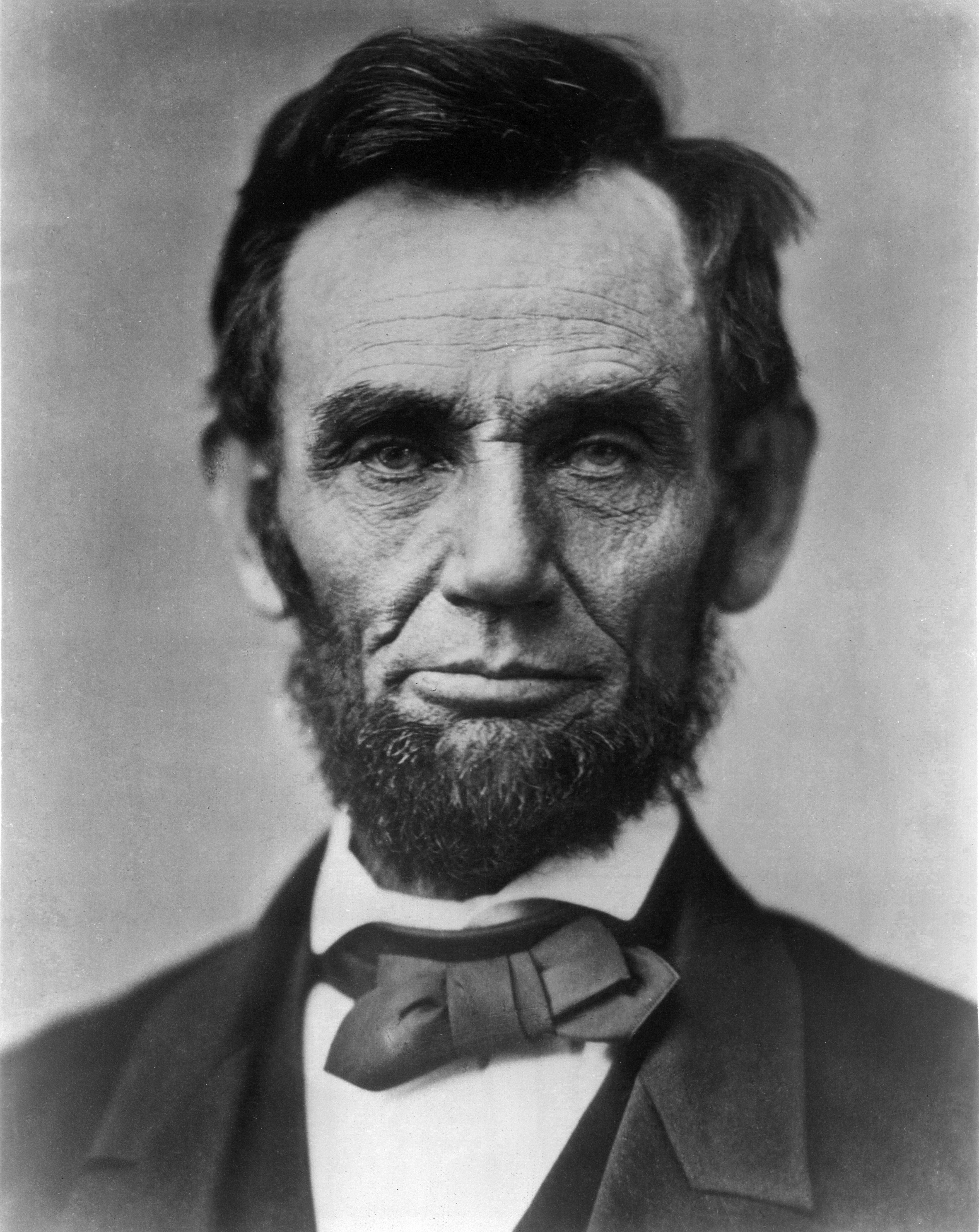
In March 1870, Lincoln’s former law partner William Herndon wrote to the biographer Ward Hill Lamon about a conversation with the dead president. In Herndon’s recollection, Lincoln began: “Billy, I’ll tell you something, but keep it a secret while I live. My mother was a bastard.” He described her father as “a nobleman so called of Virginia.” Nancy Hanks, in this account, had been born outside marriage to a man of higher social standing. Lincoln attributed some of his own abilities to that descent. Herndon left the grandfather’s name unrecorded.
The request for secrecy makes Lincoln the first person in this history to decide who should know. His death ended the restriction he had reportedly imposed on Herndon. It did not settle what his family and biographers would allow into print. Herndon passed the account to Lamon; John Nicolay and John Hay wrote their biography with Robert Todd Lincoln’s approval; later genealogists supplied Nancy with a different parentage. The dispute followed her from a private conversation into books, collections, and a museum supported by a company bearing her son’s name.
Behind the disputed birth lies another possibility: that an unacknowledged family obligation continued through patrons and intermediaries. Later Rosicrucian histories placed Lincoln inside a private hierarchy with the soldier Ethan Allen Hitchcock, the occult teacher Paschal Beverly Randolph, and an elusive John Temple. Randolph’s own fiction imagined a hidden adviser directing an emperor. These claims invite a history of power exercised around the public ruler—through assistance, confidence, and control of what could be said about him. Nancy’s story supplies a way through it. The acts of keeping can be followed even where the identity of an original patron remains unknown.
The unnamed Virginia grandfather

Herndon had been Lincoln’s law partner and spent years gathering recollections from his family, neighbors, and associates. The 1870 letter describes a conversation prompted by a court case involving hereditary qualities. Herndon understood Lincoln to be explaining his own mind through his mother’s ancestry. The account joins affection for Nancy to an acknowledgment of the circumstances of her birth. Its authority comes from Herndon’s intimacy with Lincoln; its uncertainty comes from the distance between a remembered conversation and the letter in which he recorded it.
A Virginia “nobleman” need not have held a European title. The expression could describe a planter gentleman whose position rested on land, marriage, office, and credit. Such a man could assist a child through a household placement, an introduction, or a provision administered by someone else. Those possibilities matter more to Nancy’s circumstances than a remote descent from royalty. The historical question concerns a living relationship and whatever responsibilities its participants accepted.

Paul Verduin’s reconstruction places Lucy Hanks, Nancy’s mother, in the Richmond County neighborhood of Virginia’s Northern Neck. Joseph Hanks, Lucy’s father in this reconstruction, worked among families whose property and influence greatly exceeded his own. Verduin considered Richard Beale, Griffin Murdock Fauntleroy, Elisha Lingan Hall, and members of the Peachey family as possible fathers of Nancy. His candidate list begins with local contact: the men belonged to the world in which the Hankses lived and worked.

An April 1785 debt proceeding names Joseph Hanks as the plaintiff against Beale and Fauntleroy. Hanks was trying to collect money from them. The direction of the debt matters: this proceeding records his claim against two substantial neighbors, and supplies no instance of a planter paying his expenses. Employment, credit, and litigation brought the households into contact before witnesses and county officials. None of the men named in the proceeding acknowledged Nancy as a daughter there.
The Fauntleroy family also carries the story west. Verduin’s candidate profile identifies Griffin’s surviving son Joseph with the man who inherited Mars Hill, sold the Virginia property, and eventually moved to New Harmony, Indiana. Clark Kimberling’s account, drawing on the 1952 family history, dates Joseph’s emancipation of the people he enslaved and departure with his household to 1827. Robert Henry Fauntleroy accompanied the migration. In 1835 he married Jane Dale Owen, sister of the reformer Robert Dale Owen.
If the employer’s identification is correct, a branch of one candidate family reached the lower Wabash while Lincoln still lived in southern Indiana. The marriage then connected it to the Owens’ world of reform, science, European intellectual life, and public office. Robert Dale Owen would later write directly to Lincoln about emancipation. That is a traceable family route between the Virginia neighborhood and a wartime adviser. Nancy’s descent from the Fauntleroys, and any encounter between Lincoln and the Indiana migrants, remain separate questions.
Verduin reports a different birth outside marriage within the older Fauntleroy family. Colonel William Fauntleroy’s will recognized Alexander, his son by Betsy Fisher, provided land, and appointed a guardian from the family. The original will has not been inspected for this article. As reported, the arrangement illustrates how acknowledgment could become property and continuing responsibility: relatives administered an inheritance for a child outside the marital household. It cannot support a claim that the family’s estates have been exhaustively searched for an equivalent provision for Nancy.
Nancy’s own care passed through the Hanks, Sparrow, and Berry household world. Richard Berry signed the June 1806 marriage bond as her guardian. That designation records a responsibility at the time of her marriage to Thomas Lincoln; its wording alone does not describe the whole of her upbringing. Lodging, sewing work, introductions, and marriage prospects could all depend on relatives and employers without producing a formal guardianship file.
A concealed father with resources could have acted through those relationships. Kinship care could also account for them. Choosing between the two explanations requires a particular transaction or acknowledgment: someone accepting responsibility, directing assistance, or explaining why it was owed. The social distance between a poor household and a planter family made such indirect help possible. It also made a family story about distinction compatible with continuing poverty.
Herndon’s version leaves that combination intact. Lincoln revered his mother and understood some of his gifts as an inheritance from her unnamed father. He asked his partner to keep the account private while he lived. A later biographer could accept the story, reject it, or replace it with a pedigree that removed the difficulty. Each choice would change the mother through whom Lincoln had reportedly explained himself.
The adviser behind the sovereign

Birth was one route to standing in a royal court. Instruction and initiation could create relationships of their own: a man who inherited a throne might remain another man’s pupil. From 1781 to 1786, Johann Christoph von Wöllner lectured the future Frederick William II on government, including religion. Wöllner belonged to the Gold- und Rosenkreuzer. After the prince became king, he appointed his former instructor to head the department responsible for Lutheran and Catholic affairs. On July 9, 1788, Wöllner’s religious edict required clergy to adhere to their confessional standards.
The king retained the power to follow other counsel. In December he issued a censorship edict against Wöllner’s advice. Private instruction had nevertheless carried its author into an office from which he could write policy for the kingdom. The relationship joined a ruler’s legal authority to an adviser’s earlier access and convictions. It also allowed disagreement between them. Service within the same hierarchy did not eliminate the separate judgment of either man.

Louis-Napoléon Bonaparte’s route to the French throne passed through conspiracy, imprisonment, exile, election, and a coup. His name carried dynastic value long before he could command the machinery of the state. Preserving that value required devoted organizers and people prepared to undertake confidential errands. The political organizer Persigny helped sustain the Bonapartist cause. Charles de Morny, Louis-Napoléon’s half-brother, brought family proximity into financial and governmental activity. Their work belonged to the practical circumstances of a restoration: money had to be found, supporters persuaded, communications delivered, and danger managed.

The physician Henri Conneau remained with Louis-Napoléon during his imprisonment at Ham and helped him escape. Once the former prisoner was emperor, the same trusted doctor carried confidential communications between Napoleon III and the Italian statesman Camillo Cavour. Medical attendance gave Conneau access to the person of the ruler; friendship made him suitable for political business that demanded discretion. The man who had served the prisoner continued to handle the emperor’s private affairs.

Paschal Beverly Randolph gave that kind of dependence an extraordinary literary form. A writer, lecturer, self-described physician, and occult teacher, Randolph developed his Rosicrucian ideas while participating in the struggle over Black emancipation. He had experienced racial exclusion within spiritualist circles and wrote with an acute concern for who could claim knowledge and who would be recognized as possessing it. His own work ranged across fiction, spiritual instruction, political argument, and the practical education of freedpeople. The sovereign and the unseen adviser offered him a way to imagine a distribution of power that official rank concealed.
In The Wonderful Story of Ravalette, published in 1863, the adept Dhoula Bel claims responsibility for Napoleon III’s liberation and greatness. His reach extends across wars, governments, and the humiliation of rival powers. The emperor appears as a “silent automaton,” dependent on an intelligence capable of assuming different identities. Randolph places the author of imperial success behind the person who receives its public honors. The supernatural transformations enlarge a recognizable political circumstance until a whole company of agents seems to inhabit one enduring adviser.
Read as a political composite, Dhoula Bel gathers functions that historical courts distributed among several people. Conneau’s intimate access and confidential service, an organizer’s work among supporters, a relative’s financial resources, and a diplomat’s negotiations could all contribute to the sovereign’s apparent personal achievement. Randolph compresses them into a being whose changing appearances suggest that the office survives its occupants. This reading leaves room for autobiographical encounters and disguised political observation within the fiction. It also explains why identifying a single man from one resemblance would diminish the character’s larger claim.

Randolph wrote this account during Lincoln’s presidency. His invisible adviser preceded the assassination and the enormous later struggle to claim Lincoln’s memory. A public ruler dependent on a private authority was already present in Randolph’s writing during Lincoln’s life. Later institutional histories would assign American names and offices to a relationship the novelist had imagined behind an emperor.
An organizational language for concealed relationships appears in the July 1897 issue of Paul Tyner’s magazine The Temple. Its Rosicrucian text describes people living near one another without knowing of their shared connection until a “stress of need” required recognition. The Law of Silence permitted affiliation and knowledge of affiliation to be distributed unevenly. A neighbor could belong to the same order and remain unrecognized; a crisis could disclose the bond. Membership, under such a rule, did not give every member a complete view of the organization.
R. Swinburne Clymer’s 1928 publication made anonymity an explicit discipline: “Know all things but thyself remain unknown.” Under such a rule, a person could know the lawyer who introduced him or the patron who helped him while remaining ignorant of the obligation behind the assistance. That divided knowledge would allow several people to fulfill parts of a responsibility without disclosing its source to the beneficiary. These later formulations describe the proposed mechanism; evidence that it operated around Nancy and Lincoln must come from their own relationships.
Patents across the Atlantic

A Masonic patent carried an authority its bearer could exercise far from the men who signed it. A seal and a chain of names certified rank, permission to communicate degrees, and allegiance to a jurisdiction. Joseph Cerneau carried such claims from the Caribbean into New York. Rival Scottish Rite authorities contested his powers, and later bodies continued to invoke his name after he left the city in 1827. Succession could remain valuable long after its original claimant had gone.
The count de Saint-Laurent entered the dispute with an authorization issued by de Grasse-Tilly in Paris in August 1816. Alain Bernheim’s study places his council in an April 1832 union with the New York body associated with Elias Hicks and the Cerneau succession. A treaty between councils in France, Brazil, and the Western Hemisphere followed in February 1834; Belgium joined in March 1835. Its provisions dealt with recognition, jurisdiction, discipline, and representation. The French Supreme Council’s account also places Lafayette among the honorees of the Cerneau body. Private rank traveled through agreements that resembled the instruments of public diplomacy.

These bodies also claimed an aristocratic and sovereign past. The Scottish Rite’s constitutional tradition attributed a decisive act to Frederick the Great. Historians have disputed that pedigree. Surviving compilations such as the Golden Book have to be distinguished from the earlier acts they purport to transmit. A constitution, a copy, and a later account of its origins could each authorize a claimant in practice, while possessing very different historical standing.

In Elmira, New York, a county history records an 1826 encampment certificate naming Thomas Maxwell as Grand Commander, John Hughes as Generalissimo, Isaiah Dunham as Captain General, and Isaac Roe as Recorder. Its degrees included Templar, Malta, Mediterranean Pass, and Red Cross. The historian suggested an Ancient Scottish Rite origin for the body; the named officers and degrees are firmer ground than that proposed jurisdiction.

The Elmira Royal Arch chapter ceased recording meetings in November 1827, during the Anti-Masonic crisis following William Morgan’s disappearance. Seventeen years later, Hezekiah W. Atkins called its officers together. Maxwell, Hughes, and Caleb Baker reappeared in the 1844 history. A separate account of the craft lodge describes Roe retaining records and regalia during the disruption. People and objects survived the interruption in meetings.
Their obligations may have survived it too. Duncan’s nineteenth-century published Royal Arch ritual describes duties of confidentiality, assistance in difficulty, relief for distressed companions and their families, and preference in employment between equally qualified men. It is reasonable to infer that members could continue such relationships when their chapter stopped meeting. That inference concerns social obligations, rather than an unrecorded command structure. Elmira supplies a working example of an institution resuming through men who remembered one another and retained its belongings.
The proposed court around Lincoln would have needed a comparable means of continuity. A patron’s death or a lodge’s suspension need not end an obligation if a successor knew whom to assist and possessed the authority to act. Patents and returning officers show how that could happen. They leave the affiliations of the supposed Lincoln intermediaries to be proved individually.
Private confidence in Washington

Edwin Stanton brought Major General Ethan Allen Hitchcock into the War Department in the spring of 1862. Hitchcock had spent a military lifetime studying philosophy, alchemy, and religious symbolism. He read alchemical texts as accounts of moral and spiritual development, in which an outward operation concealed an inward one. The same man could assess a military disposition and spend his private hours interpreting a Hermetic author.

Stanton telegraphed for a personal conference on March 7. Hitchcock came to Washington, met the secretary and Lincoln, and accepted service with the understanding that his health would prevent a field command. Within weeks he was advising them about the forces around the capital. On March 30 he urged Lincoln to retain troops in the Shenandoah rather than transfer Blenker’s division to Frémont. Lincoln did not take that advice. Hitchcock’s later frustration with the administration arose partly from his belief that the resulting weakness had invited disaster.
Another recommendation had an immediate result. On April 2, Stanton asked Hitchcock and Adjutant General Lorenzo Thomas to examine whether McClellan had left Washington secure before departing for the Peninsula. They reported that Lincoln’s requirements had not been fully met. On April 3, Lincoln directed that either McDowell’s or Sumner’s corps remain in front of Washington; Stanton retained McDowell. Hitchcock thus helped supply the assessment behind a decision that withheld a major force from McClellan’s advance on Richmond. His participation is specific. A claim that Hermetic loyalties determined his advice would require evidence about its reasoning beyond his known intellectual interests.
Later Rosicrucian accounts assigned Hitchcock an authority that military papers do not describe. In their Council of Three, John Temple, Hitchcock, and Randolph preceded a wartime arrangement that included Lincoln. One version says the president had “no directive, authoritative power” within the order because of his public office and was bound by its Law of Silence. Hitchcock possessed authority and acted as an intermediary. The president commanded the Union while occupying a subordinate position in the fraternity’s account of itself.
The printed versions developed over time. In July 1908, The Initiates named Temple as supreme grand master at San Francisco in 1861 and placed his death in 1863. That issue does not name Lincoln. The later bound Initiates and the People includes Lincoln in a Washington temple and calls Lincoln, Hitchcock, and Randolph a triumvirate. Its appeal to page 484 of Croffut’s edition of Hitchcock’s journals leads to Hermetic reading among the general and friends, rather than a register naming those three as a council. The Council of Three passage also appears in Clymer’s Book of Rosicruciae, volume two, published in 1947.
Lincoln’s own conduct makes the question of obedience more interesting. In May 1859, through Jacob Bunn, he bought the equipment of Theodore Canisius’s German-language newspaper. The confidential arrangement supported Republican political work while keeping Lincoln’s ownership from public view. Canisius later received the Vienna consulship. Lincoln could devise a concealed arrangement, choose an intermediary, and reserve information to himself. Herndon’s account of Nancy’s birth attributes another deliberate restriction to him. Any private hierarchy around Lincoln would have had to deal with a politician who already knew how to keep his own counsel.
John Temple has an earlier place in Randolph’s writings. The dedication of Eulis!, published in 1874, names him among the people Randolph thanked. Its gratitude is expansive, extending to anyone who “ever did me a kindness.” The acknowledgment attests to Randolph’s regard without defining a debt, a particular service, or an office in an order. Temple’s name was in print before the later council histories, and his identity remains central to their interpretation.
The California merchant Jonathan Temple, also known as John or Juan, is a plausible candidate. A New Englander who traveled through Hawai‘i before settling in Mexican California, he accumulated property and a mercantile business and married Rafaela Cota. Their daughter Francisca married Gregorio de Ajuria, a Spanish merchant with Mexican political connections. In July 1856, Ajuria enlisted Temple in a lease of Mexico’s national mint. The family’s interest survived changes of government and eventually passed to Francisca.
The mint lease joins private capital to a state concession through a marriage connection and an intermediary. Temple also traveled to New York and Paris. If he was the man Randolph thanked, the association would connect the occult writer to someone accustomed to moving money and obligations between countries. The Californian died in San Francisco in 1866, three years after the death assigned to Temple in the 1908 account. The discrepancy prevents an easy identification. Neither the dedication nor the candidate’s business history supplies the missing explanation of what he did for Randolph.

Randolph was more explicit about a service he said he undertook for Lincoln. On November 4, 1865, he wrote from New Orleans to Oliver Otis Howard, commissioner of the Freedmen’s Bureau, seeking support for the schools. He identified himself as principal of the Lloyd Garrison School and referred to “My friend, the late President Lincoln.” According to the letter, Lincoln’s personal advice had persuaded him to abandon medical work and teach in the South. Randolph invoked the dead president while trying to sustain work he said he had undertaken at the president’s urging.

This was a practical appeal about administration and money, written within months of the assassination to an official who could help the schools survive. Randolph’s claim of personal encouragement belongs to that contemporary correspondence. His later successors would fold it into a much larger account of shared initiation and direction. The difference between the two accounts is the reach of the authority each attributes to the relationship.

Robert Dale Owen reached the wartime government through a separate channel. The author of the spiritualist Footfalls on the Boundary of Another World had served in politics and diplomacy; his sister Jane’s marriage connected him to the Fauntleroys of New Harmony. In September 1862 he urged emancipation as a military necessity. Chase carried the letter to Lincoln, who had already read a draft proclamation to the cabinet in July.
Stanton appointed Owen to the Freedmen’s Inquiry Commission in March 1863. On July 21, Lincoln talked with him. The next day, Lincoln introduced John Eaton Jr., whose work with freedpeople in Grant’s department could inform the inquiry. Owen sent Lincoln an abstract of the commission’s report in August. A committed spiritualist participated in the administration’s work through a cabinet introduction, an appointment, a presidential interview, and access to military experience. Those were the channels through which his recommendations could affect policy.

Abraham Jonas used confidential friendship to protect Lincoln before he became president. The Quincy lawyer and organizer had held senior Masonic offices in Kentucky and Illinois. In July 1860 he warned Lincoln that opponents were gathering affidavits to place him at a Know-Nothing lodge meeting. Lincoln’s reply was confidential. On December 30, Jonas sent a private warning that men were discussing how to prevent the inauguration, including violence against Lincoln. Their correspondence records information passing through personal connections in a moment of real danger.
Jonas had exercised Masonic authority at Nauvoo in March 1842, authorizing Joseph Smith and Sidney Rigdon to advance through the degrees. His legal associate Henry Asbury, another Lincoln friend, later helped organize the Illinois Union League. Its September 1863 proceedings record Asbury presenting a committee proposal for membership certificates; its printed system included signs, passwords, and recognition in emergencies. The wartime administration had supporters who understood how to organize loyalty through initiation and restricted information.

Benjamin Brown French held senior Masonic and Templar offices while serving as commissioner of public buildings. In December 1861, Mary Lincoln summoned him about furnishing bills that exceeded the appropriation. She asked him to persuade her husband to approve them while concealing that she had approached him. Lincoln refused to approve the excess. French eventually arranged a $4,500 deficiency appropriation and shifted other funds to meet the spending. His journal records the request to keep the meeting private; the payments required work through public accounts.
French’s rank has not been shown to explain his intervention. His office and household access were sufficient to put a delicate confidence in his hands. Mary sought help from a man able to carry a private request into governmental action. Jonas, Hitchcock, Owen, and Randolph each approached Lincoln through a different relationship, and those distinctions matter to any proposed coordination among them.

Mary’s October 1860 letter to Dyer Burgess denied Lincoln’s membership in a secret order. Later Rosicrucian writers nevertheless assigned him a place in their councils. The gap between her statement and theirs cannot be filled by adding up the affiliations of his friends. The stronger part of the history follows what those friends actually did: a warning delivered, troops retained, a school defended, a bill paid. Their acts disclose how much presidential life could depend on people trusted with only part of its business.
A republic before an emperor

The private relationships surrounding Lincoln operated within a government fighting to retain continental power. In January 1862, Simon Cameron left the War Department for the Russian ministry, and Stanton succeeded him in Washington. Cassius Marcellus Clay, already serving at St. Petersburg, was temporarily displaced and later returned. The same round of appointments that opened Hitchcock’s advisory position also sent a former secretary of war to Alexander II’s court.

Cameron described the stakes at his audience with Alexander on June 25, 1862. In the address reported to Washington, Russian expansion eastward and American expansion westward became compatible movements. Both countries were transforming labor, and telegraphic connection might eventually join them without passing through “unfriendly hands.” Cameron presented continental development, emancipation, and direct communication as parts of a shared future.

The American minister spoke for a republic whose survival would determine whether that future was possible. A divided United States would have a different relation to European power. A reunited one could continue organizing territory, labor, credit, and transport on an immense scale. Describing this prospect as imperial concerns the reach of the state and the resources it could command. Cameron’s speech attached that reach to a language of civilization and moral progress shared, for the occasion, with an autocracy.
The telegraph moved beyond the speech. On July 1, 1864, Lincoln approved legislation allowing Perry MacDonough Collins and his associates to extend lines toward British America as part of a connection through Russian territory and the Bering Strait. Congress granted access to public land and construction materials, authorized naval assistance, and reserved government priority in use of the lines. Military officers could be directed to protect them. A commercial enterprise acquired public resources and provisions for diplomatic and military service.

On March 24, 1865, Clay sent Seward the correspondence with the Russian government concerning the project. He reported that Collins’s charter had been substantially agreed and had become law. His enclosures described Western Union’s resources and a proposed extension into China; Clay sought Russian help in obtaining the necessary permission there. Lincoln’s legislation, Seward’s department, Clay’s diplomacy, and the company’s proposed investment belonged to the same undertaking. Communications would help the two states act across their territories and compete for commercial intelligence beyond them.

The Russian squadrons visiting American ports in 1863 made the friendship easier to picture. Their deployment also served Russia’s own confrontation with Britain and France over Poland. Naval instructions prepared the ships for possible commerce warfare if European war came, and distant ports reduced their exposure at home. Americans welcomed them as evidence of friendship during the Civil War. The visit could serve both governments without amounting to the sweeping Russian guarantee of intervention later attached to it.

The Rosicrucian tradition inserted another channel into that relationship. It credited Randolph with appealing through the Russian branch of his order for assistance if needed. Such a channel, if substantiated, would join the hidden adviser of Ravalette to diplomacy conducted during Lincoln’s presidency. The official record already names the ministers, companies, grants, and correspondence through which cooperation proceeded. A concealed intervention would have to be located within that history.
The general’s nephew, also named Ethan Allen Hitchcock, later represented the United States in Russia. The family name returned to an imperial court through a documented appointment. Whether anything of the uncle’s private intellectual affiliations traveled with it is unresolved. The career illustrates the kind of continuity a family can maintain through public service, even as the particular knowledge and obligations carried by one generation become difficult to recover.
Who kept Nancy’s story?

Lincoln’s death made the division between public possession and private keeping unavoidable. French prepared the Capitol for the body. His son designed the catafalque; his wife helped make its covering. On April 21, 1865, the commissioner proposed storing it in Washington’s unused tomb beneath the crypt. The family who had helped manage the president’s surroundings now helped determine the objects through which his death would be remembered.

Brumidi’s Apotheosis of Washington was taking shape above the Rotunda in 1865. Washington’s unused tomb lay below; Lincoln’s coffin stood in the ceremonial space between them. Foreign Masonic condolences subsequently claimed a share in honoring him, using a language of fraternity that extended beyond demonstrated membership during his life. The republic could exalt the dead president, and private bodies could associate themselves with the exaltation. Neither act required settling his mother’s ancestry.

Herndon’s instruction, as he remembered it, had lasted only while Lincoln lived. By March 1870 he had written the account of Nancy’s birth to Lamon. He also offered his collected research for sale. His correspondence describes papers that a biographer could arrange, analyze, and publish; ownership of those papers would carry considerable power over the resulting life. The intimate conversation about Nancy entered a market for manuscripts and a contest over the right way to portray Lincoln.

John G. Nicolay and John Hay had known Lincoln as his White House secretaries. Robert Todd Lincoln made his father’s papers available to them for their ten-volume Abraham Lincoln: A History. In January 1884, Hay invited Robert to strike out anything he objected to in the chapters covering the first forty years and promised to accept his judgment. Later letters describe further changes made to satisfy him. The son’s editorial authority accompanied the biographers’ privileged access to the archive.
Herndon accused them of suppressing material facts, expressly including Lincoln’s genealogy, paternity, and the description of Nancy. He believed dependence on Robert’s materials had induced them to protect Robert’s sensibilities. That was Herndon’s accusation, and he labeled part of it his opinion. Hay’s invitations to Robert establish an editorial concession independently of Herndon’s judgment. They do not identify every passage altered or prove that Robert possessed a record naming Nancy’s father. Their disagreement concerned whether the private account Herndon had received belonged in the public life.

Robert’s control outlasted the biography. He deposited the presidential papers at the Library of Congress in 1919 and transferred them by deed in 1923. His conditions restricted access until twenty-one years after his death. He died on July 26, 1926; the papers opened to the public on July 26, 1947. Earlier biographers had enjoyed selected access, so the closed period was never a complete absence of knowledge. It was a substantial inequality between readers who could consult the collection and readers who had to rely on publications derived from it.
A different reconstruction of Nancy had already appeared. Caroline Hanks Hitchcock’s Nancy Hanks, published in 1900, argued for a pedigree through the Hanks and Shipley families. She is the genealogist whose name appears in the Hanks-Hitchcock research later assembled at Fort Wayne; that collection’s label refers to her work, and supplies no demonstrated link to General Ethan Allen Hitchcock. Her reconstruction replaced the unidentified Virginia gentleman with a family descent that could be printed and traced.

Fort Wayne became an important place for deciding between those accounts. Robert had approved Lincoln National Life’s use of his father’s image in 1905. Arthur Fletcher Hall’s collecting interests subsequently developed into the Lincoln Historical Research Foundation in 1928 and the museum opened in 1931. Hall recruited Louis A. Warren, whose genealogical interests helped shape the institution’s work. Corporate money sustained collecting, cataloging, exhibitions, and the regular publication of Lincoln Lore.
Some of the men supporting that environment also held fraternal office. Hall had been potentate of Mizpah Shrine in 1913. The 1919 directory places B. Paul Mossman both in senior company management and at the head of the Scottish Rite consistory; William Geake also held high-degree office. The recognized Fort Wayne bodies had themselves organized partly in opposition to Cerneau competitors in the late 1880s. This was a city where rival claims of succession had demanded decisions about credentials and authority.

Those offices establish an overlap between corporate patronage and fraternal life. Warren’s publications establish what the research institution actually did with Nancy’s ancestry. In his 1933 “The Shipley Ancestry of Lincoln’s Mother,” he defended the main thesis of Caroline Hanks Hitchcock’s work while acknowledging errors in some of her information. His printed line made Nancy the daughter of Lucy Shipley and her husband James Hanks. That parentage made her legitimate. It offered the foundation’s readers an affirmative family history in place of the birth Lincoln had reportedly asked Herndon to keep secret.
Warren also defended Robert’s editorial decisions. In Lincoln Lore on March 14, 1949, he reproduced Herndon’s charge against Nicolay and Hay, then agreed that Robert had removed material derived from what Warren called Herndon folklore. He praised the wisdom of Robert’s “blue pencil expurgations.” A disagreement that had begun among Lincoln’s intimates now had an institutional successor. The Fort Wayne editor judged both the pedigree and the treatment of the testimony that challenged it.

Between Robert’s death in 1926 and the public opening in 1947, Hall’s foundation and museum opened, Warren published his Shipley argument, and Rosicrucian writers elaborated their own account of Lincoln’s private affiliations. Their histories supplied another exceptional ancestry: initiation into a lineage of hidden teachers. These were different claims, advanced for different purposes, while public examination of the central archive remained limited. Warren’s defense of Robert followed two years after the opening.
The seal does not, by itself, explain why any of them acted. The 1908 Temple passage precedes it and does not name Lincoln. The scanned volume labeled 1932–41 includes the Lincoln temple claim, but the compilation does not securely date that passage’s first appearance. The named council narrative is identifiable in the 1947 Book of Rosicruciae. Until an earlier issue is located, a claim that the closed archive caused the council story would run ahead of the publication history. The clearer fact is that several institutions had acquired authority to speak about Lincoln before ordinary readers acquired comparable access to his papers.


Lloyd Ostendorf brought a different expertise to the same family problem. A collector and artist, he helped classify Lincoln’s photographs, distinguishing sittings, copies, and later alterations. His photograph collection entered the Fort Wayne holdings in 1986. In 1963, working with family photographs and written descriptions in a project associated with Adin Baber, he reconstructed Nancy’s face. No authenticated portrait of her had survived for him to copy.

The relatives selected for that reconstruction carried a genealogy into the image. Their resemblance to the finished face resulted from the method; it could not independently confirm Nancy’s parentage. Yet the portrait allowed readers to encounter a recognizable mother without confronting the uncertainty surrounding her father. A historian’s pedigree had supplied names. An artist’s reconstruction supplied features. Both depended on choices among inherited records and descriptions.
Ostendorf also co-edited Lincoln’s Unknown Private Life with Walter Oleksy in 1995. The book presented the household recollections attributed to Mariah Vance through Adah Sutton’s disputed transmission. Its editors published both a revised text and a facsimile of Sutton’s manuscript. Ostendorf thus participated in two kinds of reconstruction: the face of Lincoln’s mother and the reported speech of his household. His recognized authority over photographs could not settle the separate provenance of those recollections.

The collecting institutions were connected through people as well as acquisitions. R. Gerald McMurtry worked at Fort Wayne under Warren, moved to Lincoln Memorial University in 1937, and returned to direct the Fort Wayne institution in 1956. LMU had been helped into existence by Howard, the official who received Randolph’s appeal about the schools, and became a repository for Cassius Clay’s papers. Industrial supporters such as Frank A. Seiberling helped sustain it. The diplomatic and educational careers followed earlier in this account eventually entered the same professional world as the disputed family history.
That world did not speak with one voice on private affiliation. McMurtry used Lincoln Lore in 1971 to reject Lincoln’s supposed Masonic membership, reproducing Mary’s denial and examining an altered portrait in regalia. Corporate or fraternal overlap cannot substitute for an institution’s actual editorial acts. In Nancy’s case, those acts are unusually visible: Herndon transmitted the private account; Robert exercised authority over the authorized biography; Warren defended the cuts and a legitimate pedigree; Ostendorf reconstructed the mother’s face. What each preserved or preferred still affects the Lincoln a reader meets.
An invisible court
Lincoln’s reported request to Herndon concerned a family confidence whose public consequences he understood. He could honor his mother, attribute his abilities to her unknown father, and ask that the circumstances of her birth remain private. After his death, the people entrusted with his history could make decisions of their own. A confidence became testimony, then a dispute between biographers, then a judgment defended by an institution.
The proposed older court would extend that keeping backward into Nancy’s life. A father might arrange help without acknowledgment; a patron might act through a household or a lawyer; an initiated successor might inherit a responsibility left outside ordinary records. Elmira shows how people could sustain an association through an institutional interruption. Temple’s mint venture shows the merchant candidate moving capital into government business through family connections. Hitchcock’s assessment helped keep McDowell’s corps near Washington. Each concerns a workable relationship. Their union into one continuous system remains a larger claim, with breaks between Nancy and a named patron, Elmira and a defined Atlantic succession, and Randolph’s Temple and the asserted council.
Lincoln also complicates the image of a ruler managed from behind. He arranged concealed newspaper ownership through Bunn and, in Herndon’s recollection, restricted the telling of his mother’s birth. He could receive assistance while controlling a secret of his own. Randolph’s hidden sovereign and the fraternity’s subordinate president capture one possible distribution of power. Lincoln’s actions require room for negotiation, calculation, and refusal within it.
The grandfather remains unnamed. Herndon, Robert, and Warren nevertheless took identifiable positions and made choices about what to tell. Their decisions survive beside the story they accepted, softened, or disputed. Following Nancy through those decisions brings the invisible court into the history of Lincoln’s own household: first as a possibility behind his origins, and then as the people who acquired the power to define them.