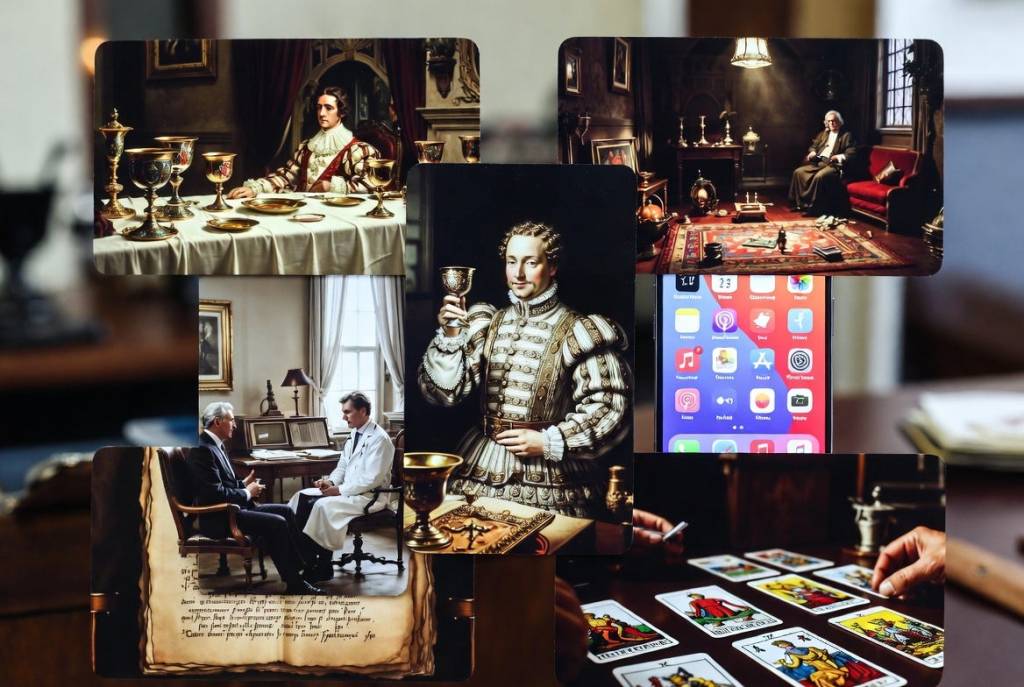
The Curious Timeline of Mr. Smith

There are moments in American history when multiple systems come online at once — religion, commerce, geography, intelligence. Not gradually. Not politely. They activate together, compressing decades of change into a few volatile years. The 1820s–1830s frontier is one of those moments. America is still unfinished. Federal authority is thin. Rivers function as highways. Land is speculative. Faith is mobile. Capital is hunting new corridors. … Continue reading The Curious Timeline of Mr. Smith

Tarot in the Digital Age: From Paper to Protocol, and the Emergence of a New Symbolic Ecology

What the digital age ultimately reveals is not a break with tarot’s past, but the continuity of its underlying function. Across six centuries and multiple cultural transformations, tarot has remained a tool for negotiating uncertainty through images. Whether shuffled at an aristocratic table, studied in an occult lodge, interpreted in a therapist’s office, or tapped on a smartphone screen, the cards help people convert ambiguity … Continue reading Tarot in the Digital Age: From Paper to Protocol, and the Emergence of a New Symbolic Ecology

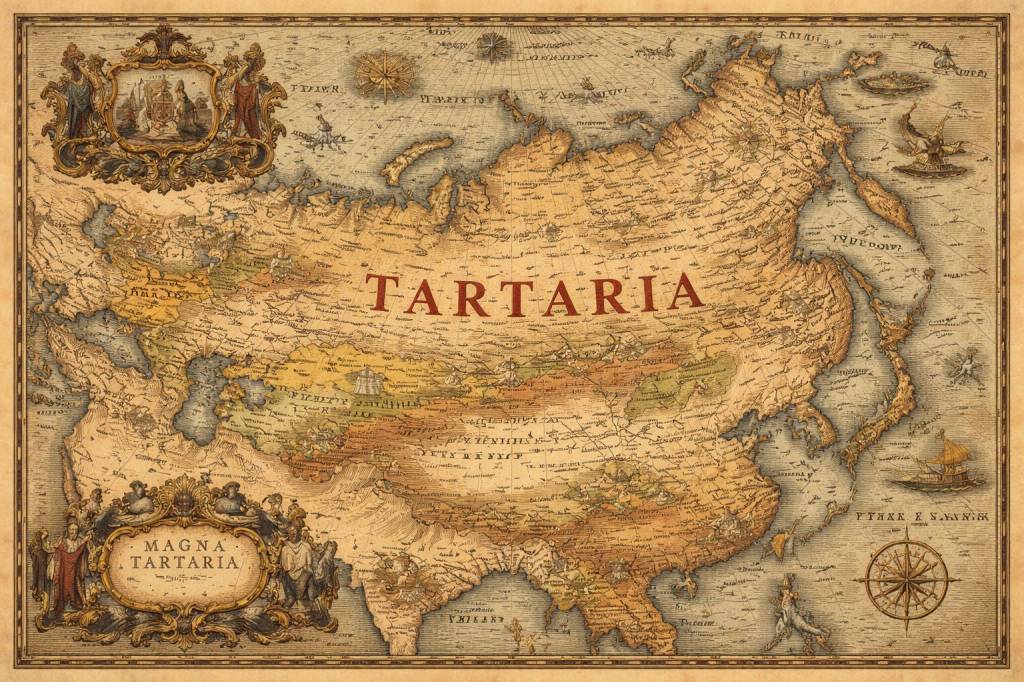
Reconsidering Tartaria: Frontier Confederations, Erased Institutions, and the Myth of the Lost Empire

The continued appeal of the Tartaria idea should not be read as proof of a lost global empire erased by some hidden catastrophe. Instead, it reflects a real and well‑founded unease with the historical record itself: gaps in archives, sudden architectural discontinuities, and abrupt breaks in institutional memory that appear too systematic to be accidental. These irregularities are most visible in frontier regions—zones of trade, … Continue reading Reconsidering Tartaria: Frontier Confederations, Erased Institutions, and the Myth of the Lost Empire