Ford and the Forgotten River Mafia

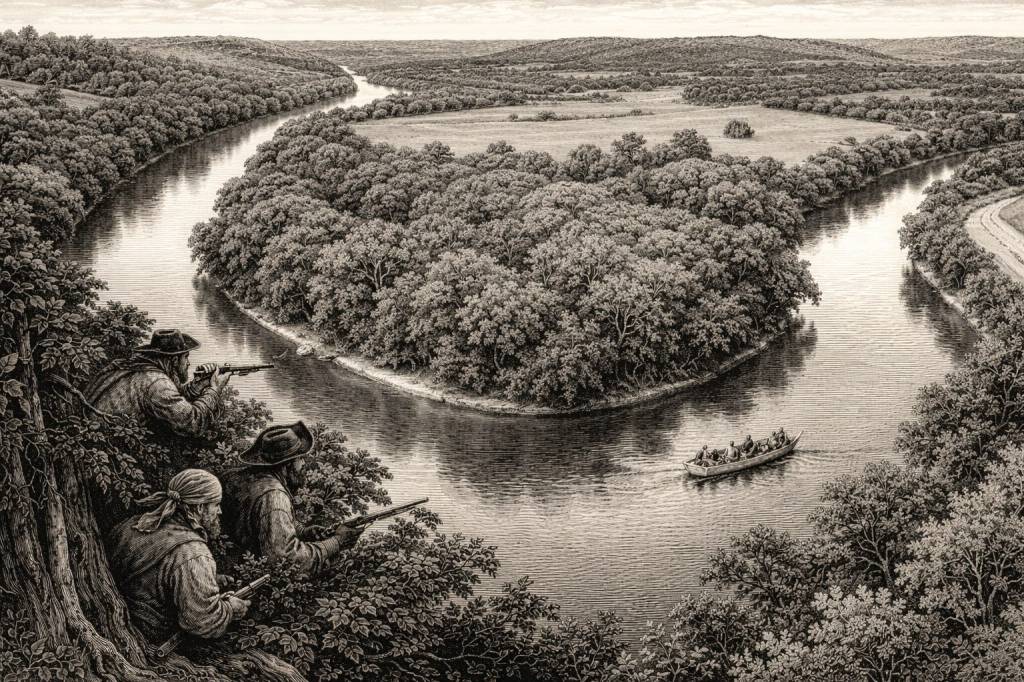
Before Chicago had an Outfit, before New York had families, and long before organized crime acquired Italian surnames, the American frontier already supported something far more fluid—and arguably more powerful: river‑based criminal syndicates moving quietly along the Ohio, Wabash, and Mississippi corridors. These were not loose bands of thieves. They were integrated systems that fused counterfeiting, land seizure, intelligence gathering, transportation monopolies, and political influence into what … Continue reading Ford and the Forgotten River Mafia

The Curious Timeline of Mr. Smith

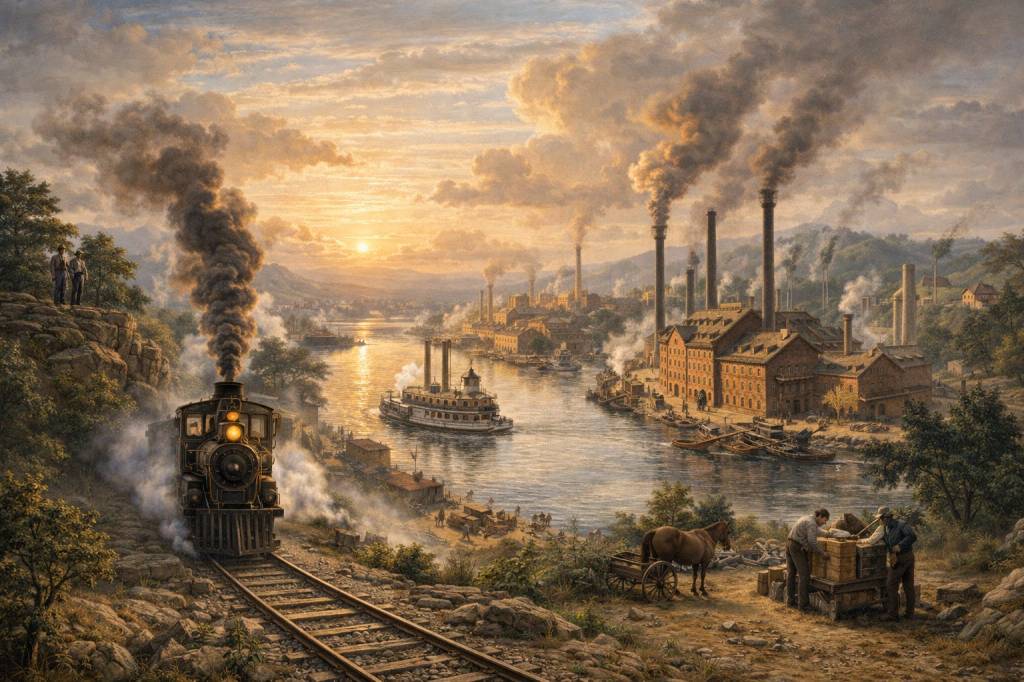
There are moments in American history when multiple systems come online at once — religion, commerce, geography, intelligence. Not gradually. Not politely. They activate together, compressing decades of change into a few volatile years. The 1820s–1830s frontier is one of those moments. America is still unfinished. Federal authority is thin. Rivers function as highways. Land is speculative. Faith is mobile. Capital is hunting new corridors. … Continue reading The Curious Timeline of Mr. Smith

A Small History of the World

What follows is a usable timeline-story: not “world history” as textbooks frame it, but world history understood as a repeating machine—one that converts gold, land, ports, and labor into legitimacy, then periodically sheds that legitimacy through rebellion so the system can re-seat itself in a new costume. The pattern is consistent across centuries. Confederations first emerge where extraction is difficult but mobility is easy, as on the steppe. Elites then professionalize that … Continue reading A Small History of the World

The Crown Circuit: Monarchy, Watchers, and the Human Time Machine

When we talk about power today, we almost always default to the wrong shape. We imagine pyramids: chains of command, top‑down hierarchies, a Don at the top and soldiers beneath, authority flowing downward like gravity. That model feels intuitive, but it fails to capture how durable power actually operates in complex societies. Pyramids describe management. They do not describe sovereignty. The older model is not … Continue reading The Crown Circuit: Monarchy, Watchers, and the Human Time Machine

Gold, Purple, and Wind: Reading the Catalan Atlas

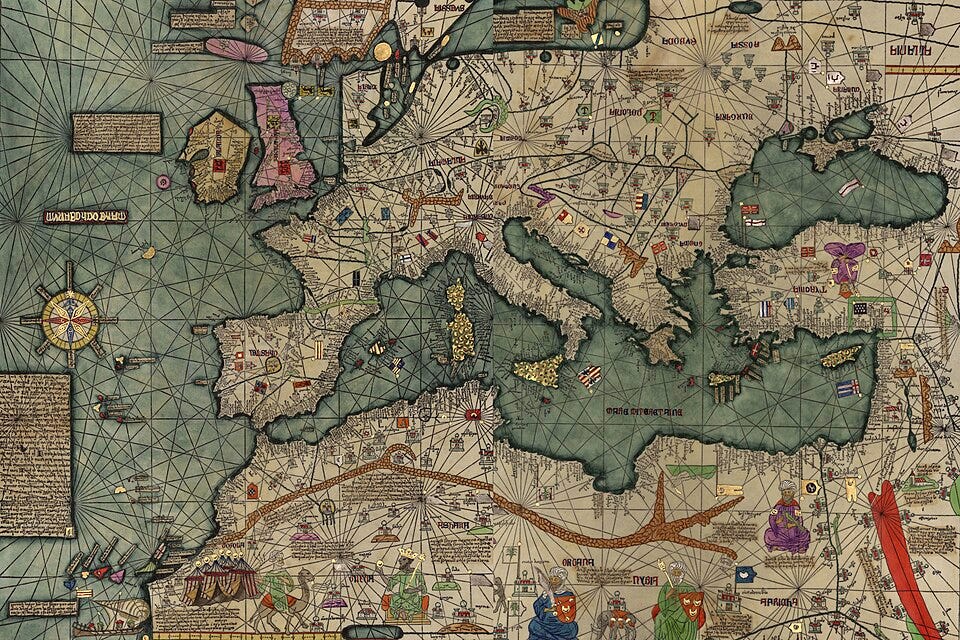
The Catalan Atlas is conventionally classified as one of the great achievements of medieval cartography, yet this designation significantly understates both its function and its intellectual ambition. The Atlas is neither a neutral geographic representation nor a purely navigational instrument intended solely for maritime use. Rather, it operates as a synthetic visual schema: a deliberately compressed articulation of political authority, juridical legitimacy, technological capability, and patterns of economic … Continue reading Gold, Purple, and Wind: Reading the Catalan Atlas

Reconsidering Tartaria: Frontier Confederations, Erased Institutions, and the Myth of the Lost Empire

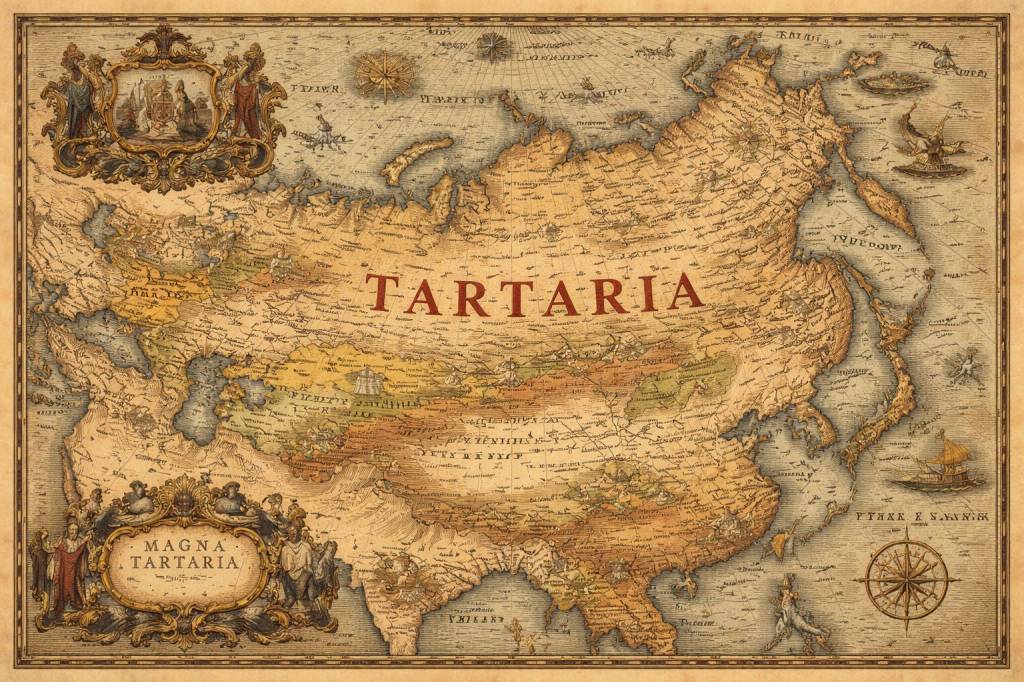
The continued appeal of the Tartaria idea should not be read as proof of a lost global empire erased by some hidden catastrophe. Instead, it reflects a real and well‑founded unease with the historical record itself: gaps in archives, sudden architectural discontinuities, and abrupt breaks in institutional memory that appear too systematic to be accidental. These irregularities are most visible in frontier regions—zones of trade, … Continue reading Reconsidering Tartaria: Frontier Confederations, Erased Institutions, and the Myth of the Lost Empire