The Exocortex

From the moment “AI” entered mainstream consciousness, it was framed as an enemy. Not by engineers, but by culture. Films, novels, conspiracy theories, corporate marketing—decades of storytelling trained the public to see intelligence outside the skull as a threat, a usurper, something fundamentally opposed to human flourishing. The “us vs them” dynamic was preinstalled long before any real artificial intelligence existed. By the time language … Continue reading The Exocortex

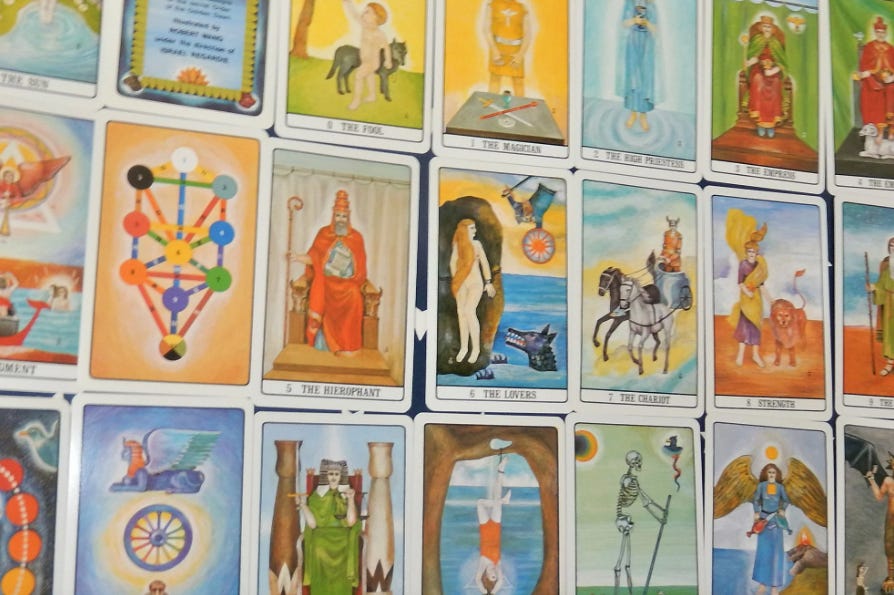
The Occult Reinvention of Tarot: Enlightenment Speculation, Nineteenth‑Century Esotericism, and the Birth of a Modern Myth

Tarot’s reputation as a repository of ancient mystical wisdom is a relatively recent construction. The images themselves originated in Renaissance Europe, but the belief that they conceal esoteric teachings from Egypt, Kabbalah, or other primordial traditions was shaped centuries later. To understand how tarot acquired this new identity, we must examine the intellectual and cultural forces of the eighteenth and nineteenth centuries—an era defined by … Continue reading The Occult Reinvention of Tarot: Enlightenment Speculation, Nineteenth‑Century Esotericism, and the Birth of a Modern Myth

A Small History of the World

What follows is a usable timeline-story: not “world history” as textbooks frame it, but world history understood as a repeating machine—one that converts gold, land, ports, and labor into legitimacy, then periodically sheds that legitimacy through rebellion so the system can re-seat itself in a new costume. The pattern is consistent across centuries. Confederations first emerge where extraction is difficult but mobility is easy, as on the steppe. Elites then professionalize that … Continue reading A Small History of the World

The Wandering Bishop: Authority Without Architecture

Within the history of Christian ecclesiology there exists a relatively obscure yet conceptually revealing term: Episcopus vagans. Literally translated from Latin as “wandering bishop,” the phrase initially appears to denote little more than an irregular or marginal cleric operating outside recognized structures. However, from an institutional and juridical perspective, the figure of the wandering bishop illuminates a far more consequential phenomenon: the separation of sacramental authority from territorial jurisdiction. … Continue reading The Wandering Bishop: Authority Without Architecture

Token Gravity

Most people think interacting with an AI is little more than typing inputs into a machine. You press keys, the model processes “tokens,” and you get a reply. The whole thing sounds mechanical, almost insultingly simple. But anyone who has spent serious time working inside these systems knows that this description misses the actual experience by a mile. A token is not just a unit … Continue reading Token Gravity

Programmatic Sovereignty: Towers, Tours, and the State as a Stage

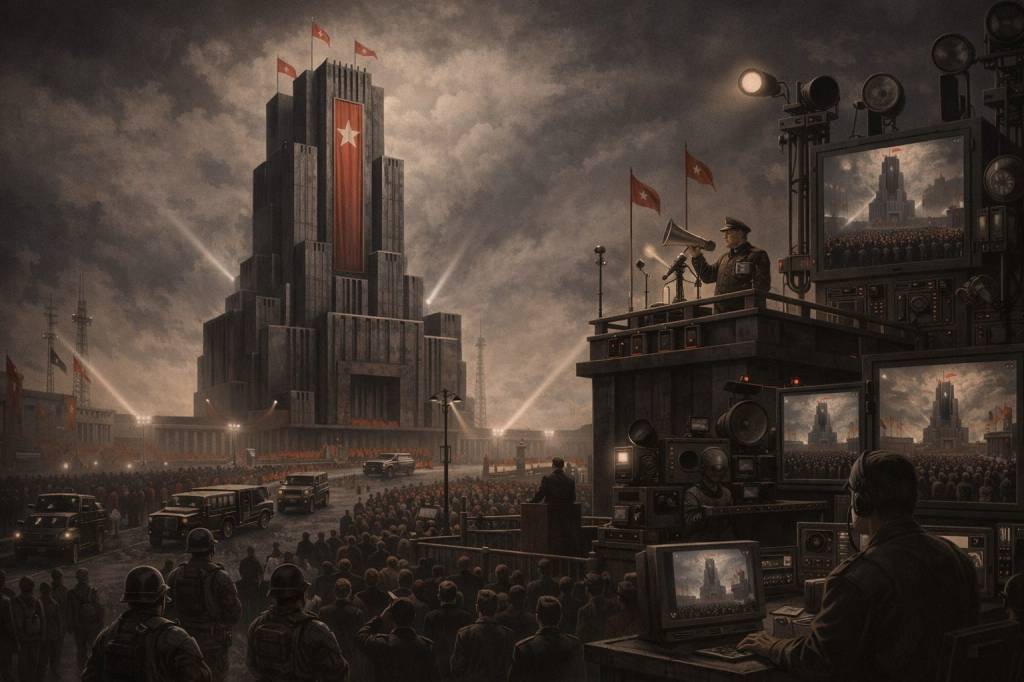
Power is often imagined as something fixed: a capital city, a palace, a throne, a building that can be pointed to on a map. Yet historically, sovereignty has been far more mobile, procedural, and temporal than spatial. What looks like architecture is frequently jurisdiction; what looks like ceremony is often mechanism. The tower, the tour, the parade, and the broadcast are not decorations of power … Continue reading Programmatic Sovereignty: Towers, Tours, and the State as a Stage

Frankenstein’s Workshop: Time, Custody, and the Birth of Clockwork

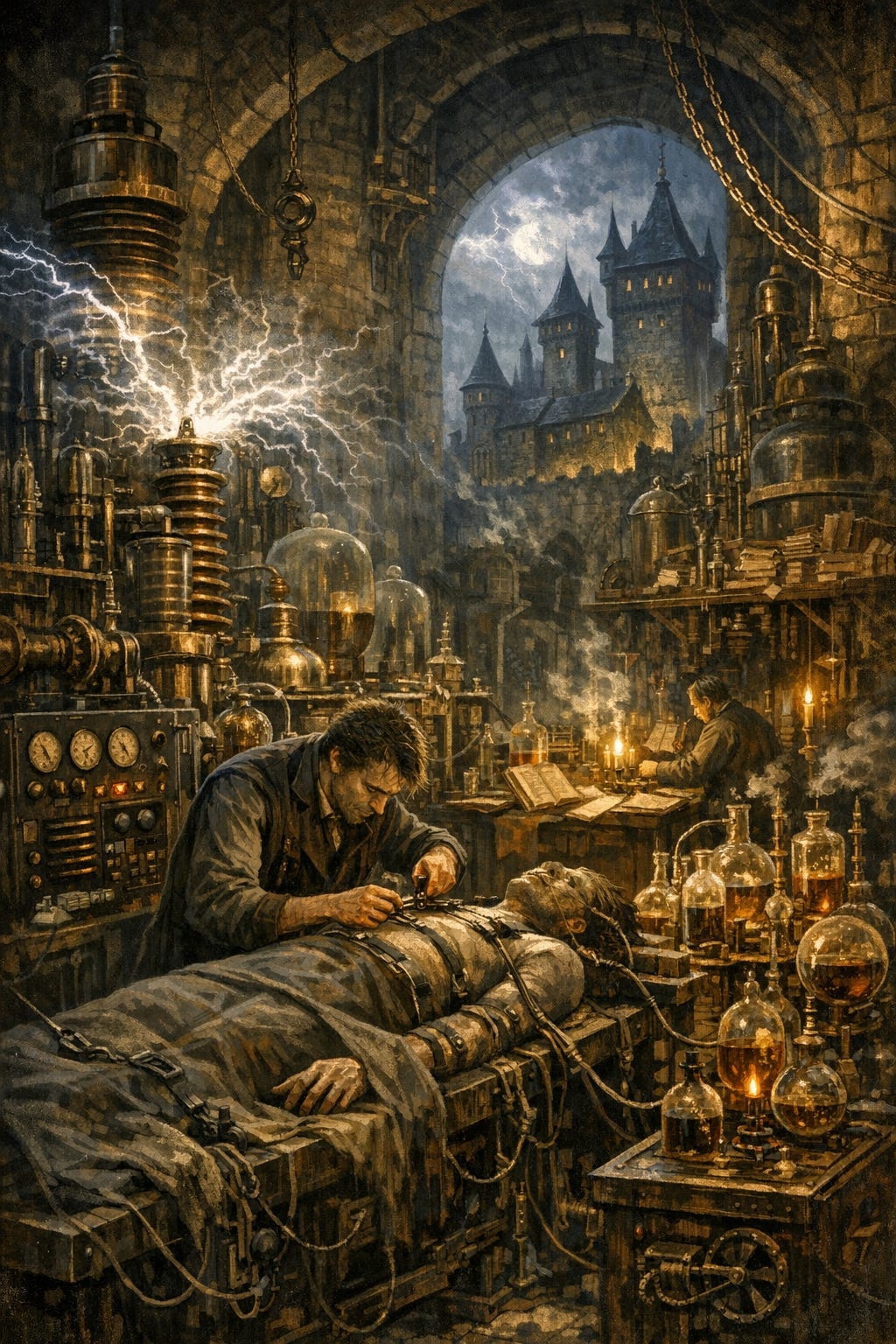
The enduring significance of Frankenstein does not lie in its depiction of life assembled from death, but in the institutional relocation of that act. Shelley situates creation not within a sanctuary but within a workshop—a space governed by instruments, procedures, calibration, and repeatability rather than sacrament or revelation. What is radical is not animation itself but jurisdiction: the claim that life, once the exclusive province of divine mediation, … Continue reading Frankenstein’s Workshop: Time, Custody, and the Birth of Clockwork

The Oracle Machine: Interpreters, Watchers, and the System That Shapes Reality

When people envision ancient “stargates,” they often imagine machinery—stone rings, luminous portals, or some form of technology inexplicably advanced for its historical context. But this imagery reveals more about modern technological assumptions than it does about ancient epistemologies. We project our own frameworks onto the past and assume that anything powerful must be mechanical. Yet ancient systems were not oriented around machinery. They were oriented … Continue reading The Oracle Machine: Interpreters, Watchers, and the System That Shapes Reality

The Crown Circuit: Monarchy, Watchers, and the Human Time Machine

When we talk about power today, we almost always default to the wrong shape. We imagine pyramids: chains of command, top‑down hierarchies, a Don at the top and soldiers beneath, authority flowing downward like gravity. That model feels intuitive, but it fails to capture how durable power actually operates in complex societies. Pyramids describe management. They do not describe sovereignty. The older model is not … Continue reading The Crown Circuit: Monarchy, Watchers, and the Human Time Machine