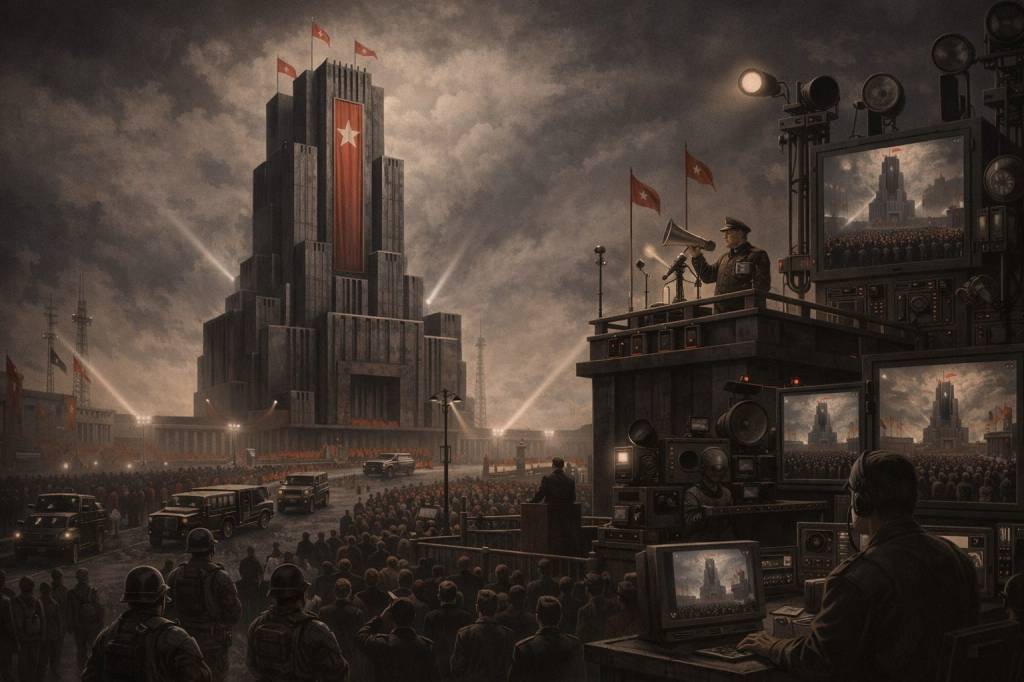
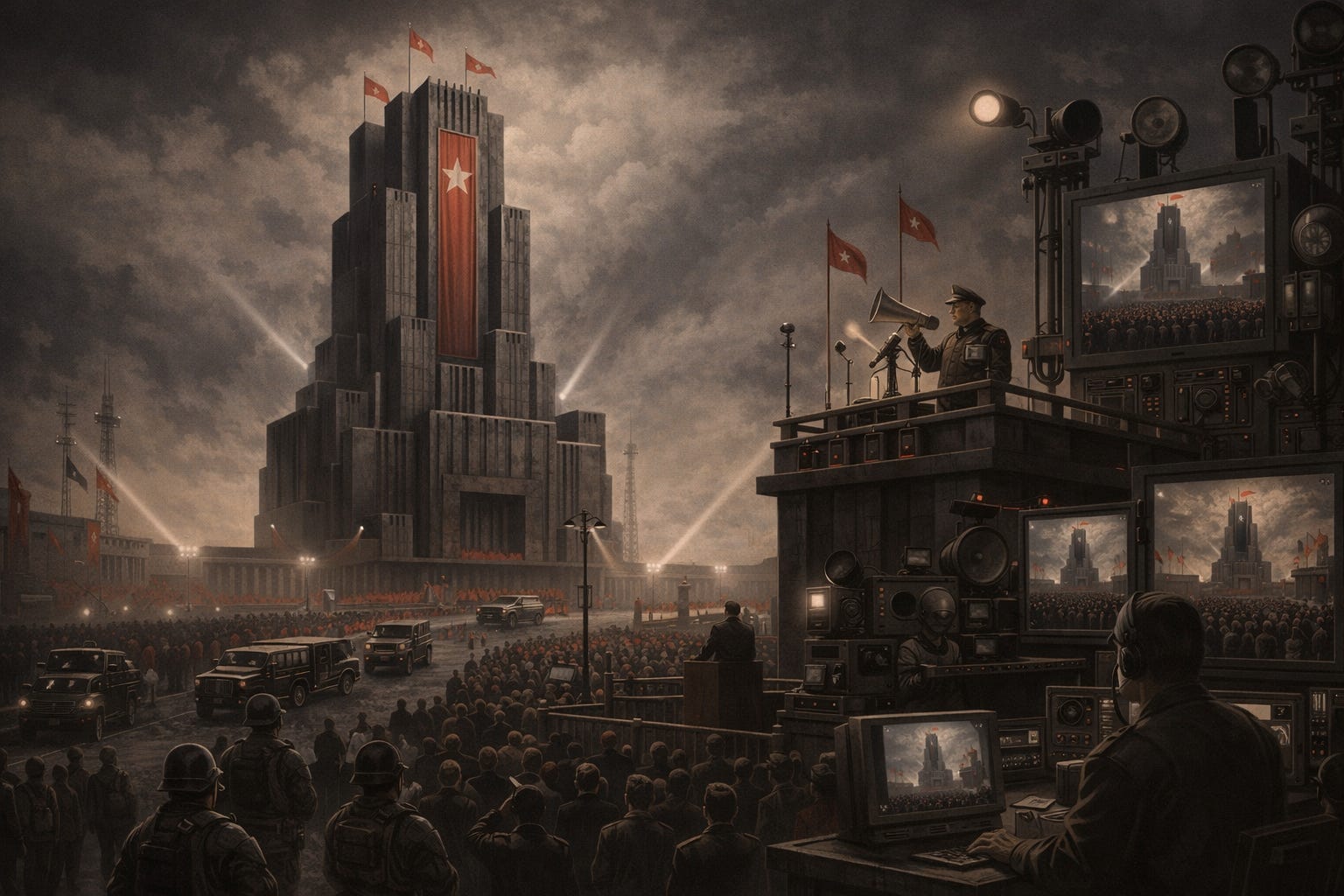
Power is often imagined as something fixed: a capital city, a palace, a throne, a building that can be pointed to on a map. Yet historically, sovereignty has been far more mobile, procedural, and temporal than spatial. What looks like architecture is frequently jurisdiction; what looks like ceremony is often mechanism. The tower, the tour, the parade, and the broadcast are not decorations of power but its operating interfaces.
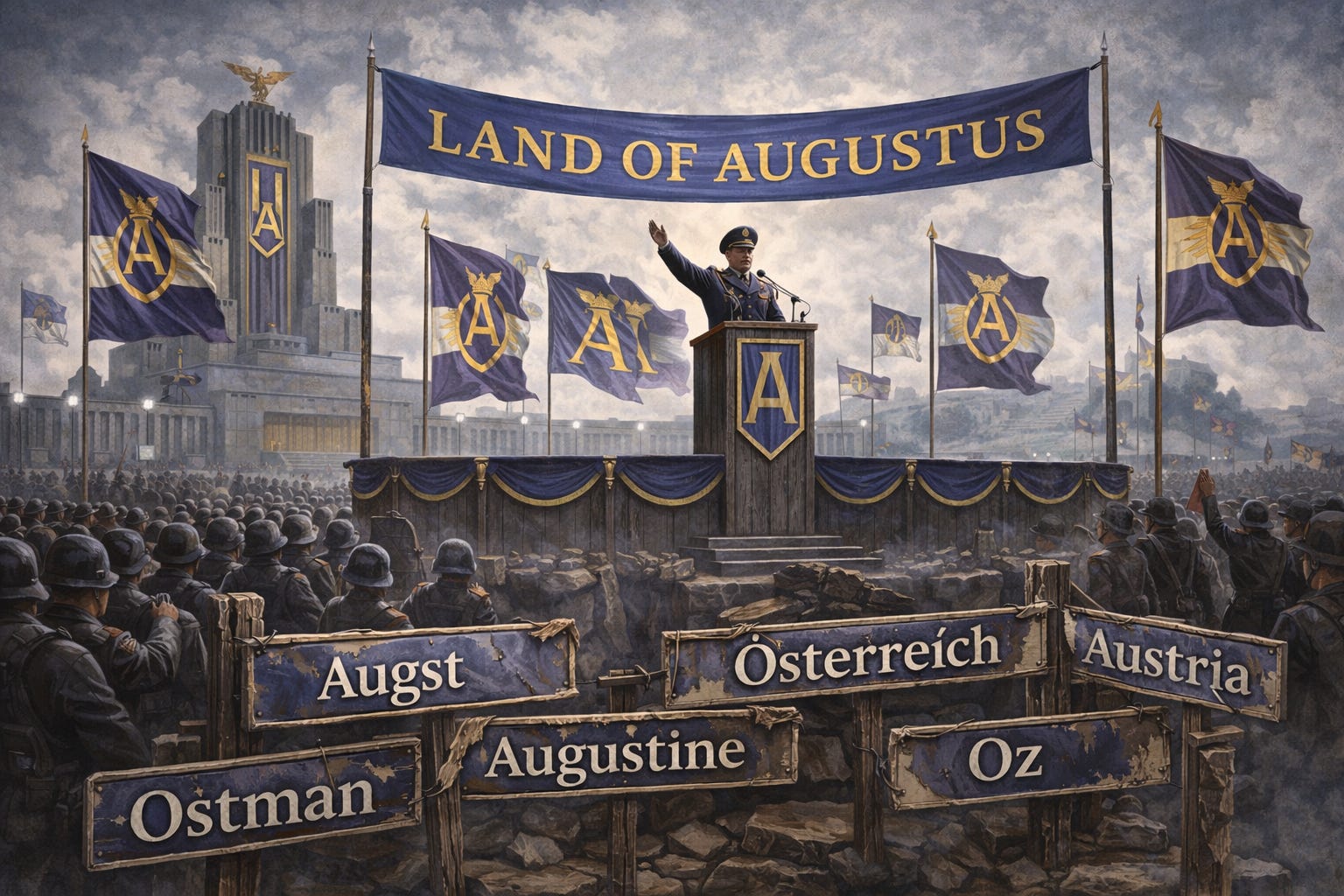
In much of continental Europe, particularly across French, Burgundian, and border-German regions, the idea of the “tower” did not primarily denote a building. It denoted a seat: a node of authority where custody, timing, record‑keeping, and legitimacy converged. This logic extended beyond surnames into place‑naming itself. To ask where one was, and to receive an answer such as “the land of Augustus,” was to identify jurisdiction rather than geography. Over time, such phrases stabilized into toponyms—Augustus’ land becoming Augustine, Augst, or analogous forms like Oz —encoding authority into the landscape through linguistic compression. Surnames such as de la Tour, du Lac, or de la Roche functioned similarly, less as genealogical claims than as positional markers. They named jurisdiction and function, not blood. Precision in naming was dangerous; it made one legible to law and crown. Abstraction, by contrast, preserved continuity. This was not poetry but operational security.
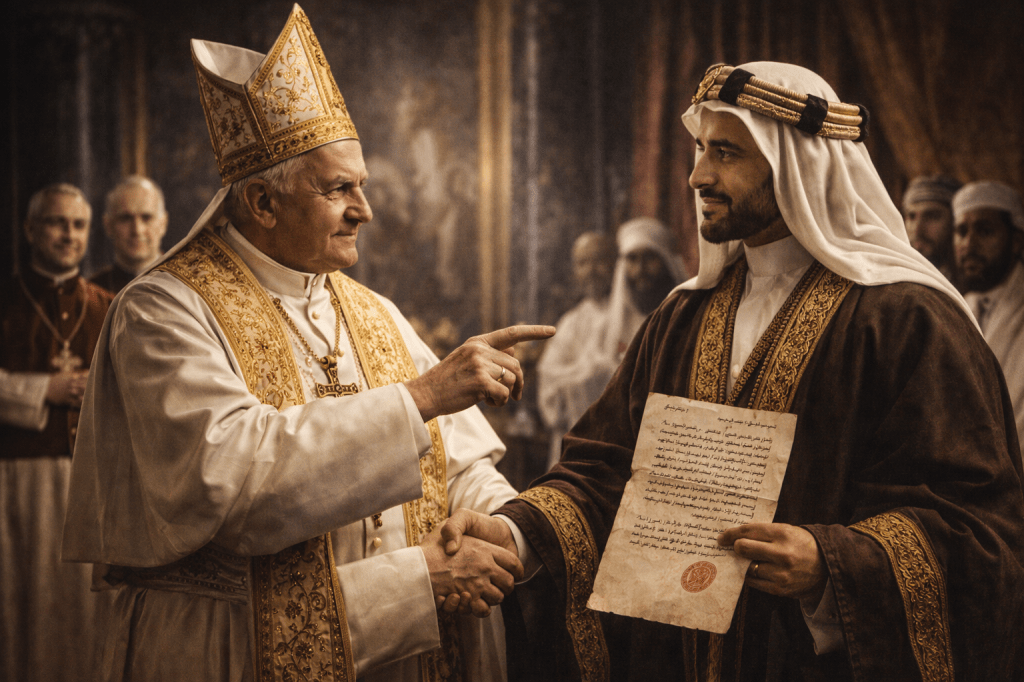
The same logic explains the persistent use of aliases, pen names, and role‑titles across aristocratic, occult, and later criminal cultures, particularly in the French and Italian worlds where family and state historically converged. Under dynasties such as the Capetians—capo in both linguistic root and political function—the house was the state, and authority flowed through familial position rather than abstract office. A real name anchored responsibility; a functional name preserved the role. Monastic renaming, papal names, guild titles, and mafia nicknames all operate on this principle. In this sense, French and Italian naming traditions function as soft encryption. “Michael” becomes interchangeable with “Don,” just as “Don” once mapped cleanly onto baronial or seigneurial authority. Likewise, figures such as “Tony the Fixer” signal function before identity: ostensibly a mechanic, contractor, or shop owner, he is understood within the network as someone who resolves problems across jurisdictions. The storefront provides plausible cover, but the name advertises capacity. To ask “Can Tony take a look?” is not a personal inquiry but a routing query—do you have access to the local seat, the man who can authorize, arbitrate, or make things disappear? The name becomes a socket, a gatekeeper function inside a network. Authority moves laterally through roles rather than vertically through explicit command.
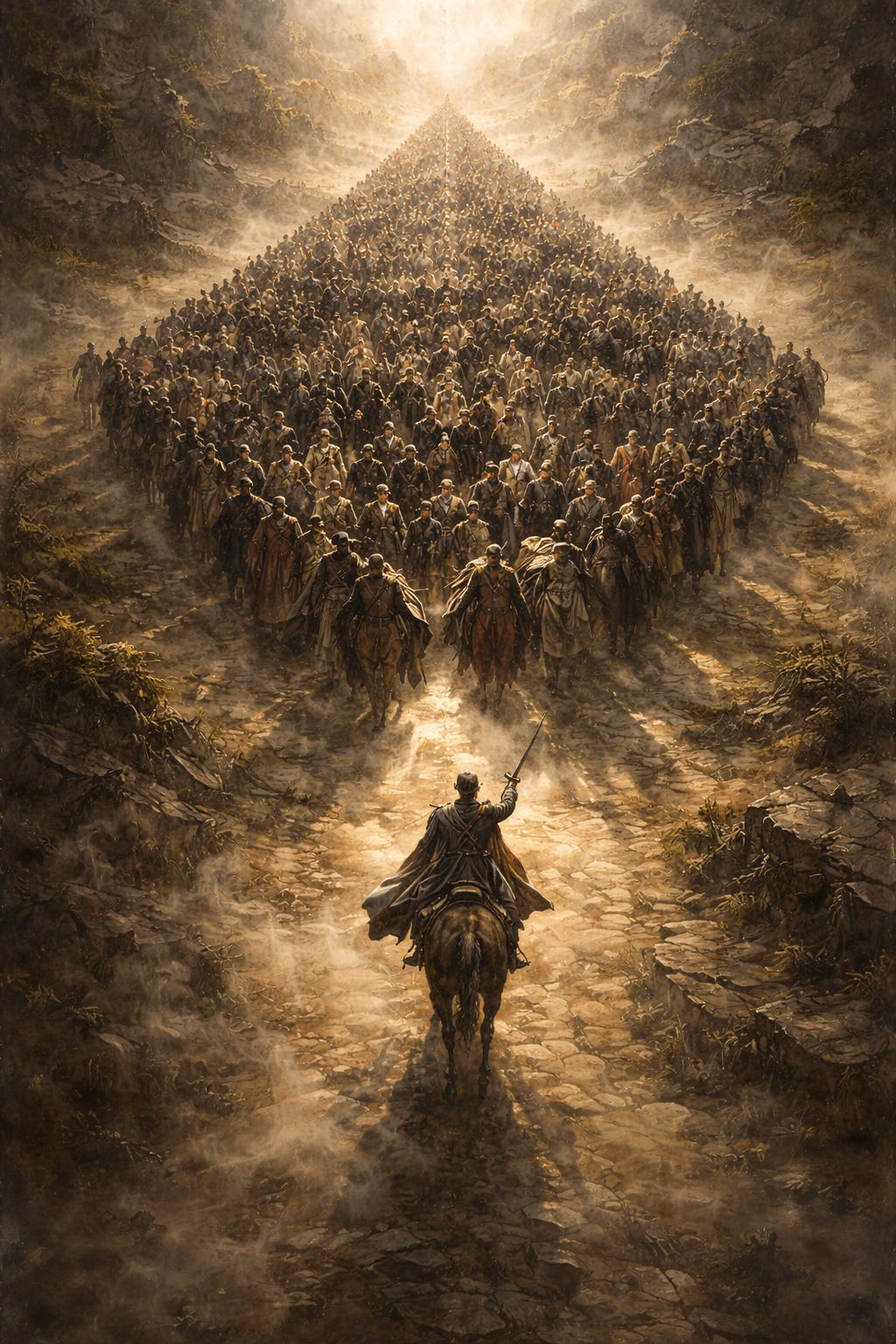
This lateral geometry is routinely misread as a pyramid. In practice, it resembles a spearhead or chain‑mesh formation. The leader is not at the top but at the front, advancing into new space. Those immediately behind have direct access; those further back have wider coverage but less proximity. Rings of trust overlap, allowing information and legitimacy to propagate without central disclosure. Such a structure is resilient: decapitation does not collapse it, and exposure does not reveal its seat. Authority flows forward and backward, threading cohesion into the social fabric rather than imposing it from above.
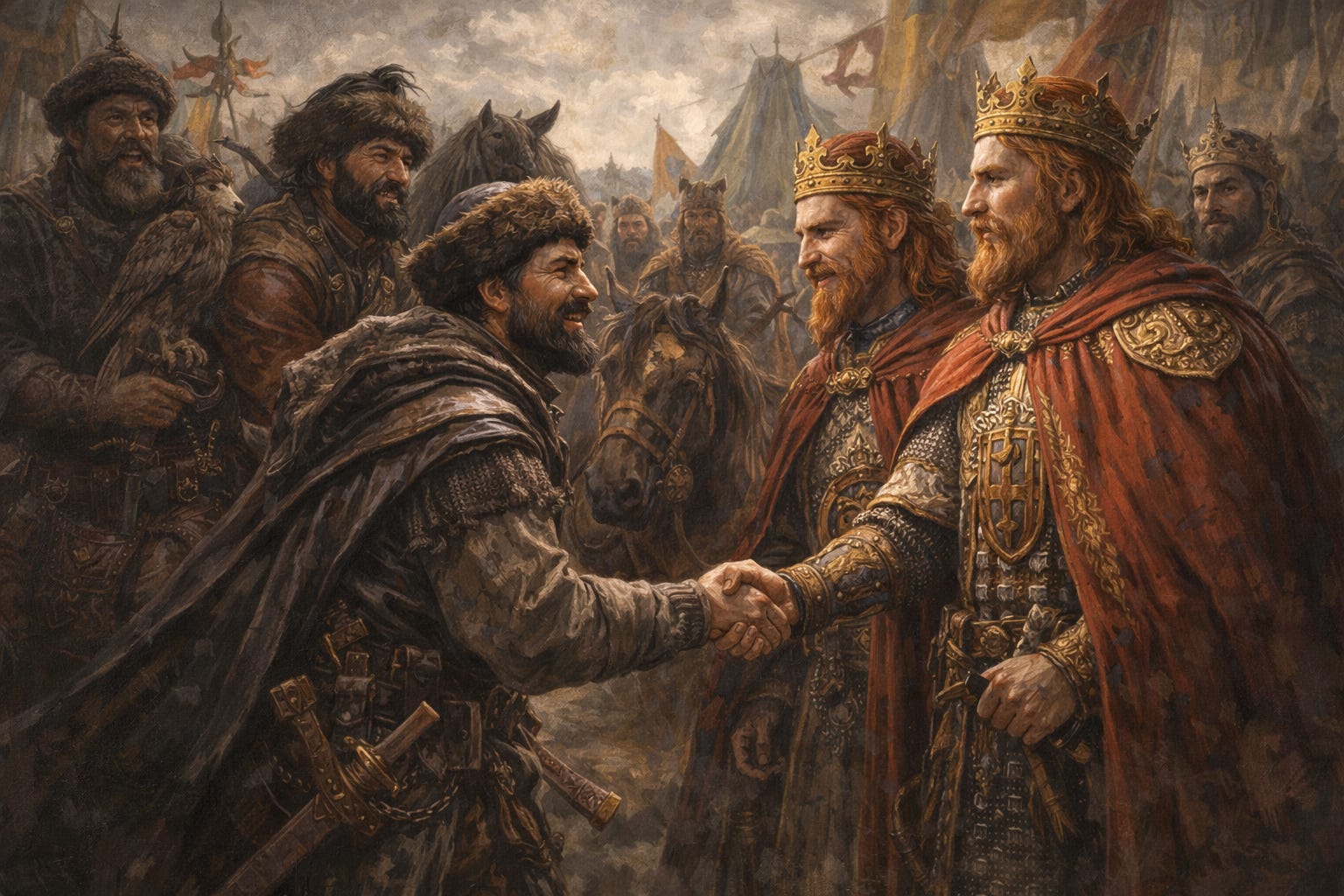
When steppe confederations—mobile, oath‑based, symbol‑driven systems—interfaced with sedentary Frankish and Merovingian tower logic, the result was not assimilation but interoperability. The tower became the anchor; the tribe became the network. Court scribes operating in frontier languages like Occitan did not merely write literature; they tracked obligations, guarantees, and trust across distance. When charters and ledgers were burned in war, the marks survived: seals, sigils, heraldic signs, mnemonic symbols.
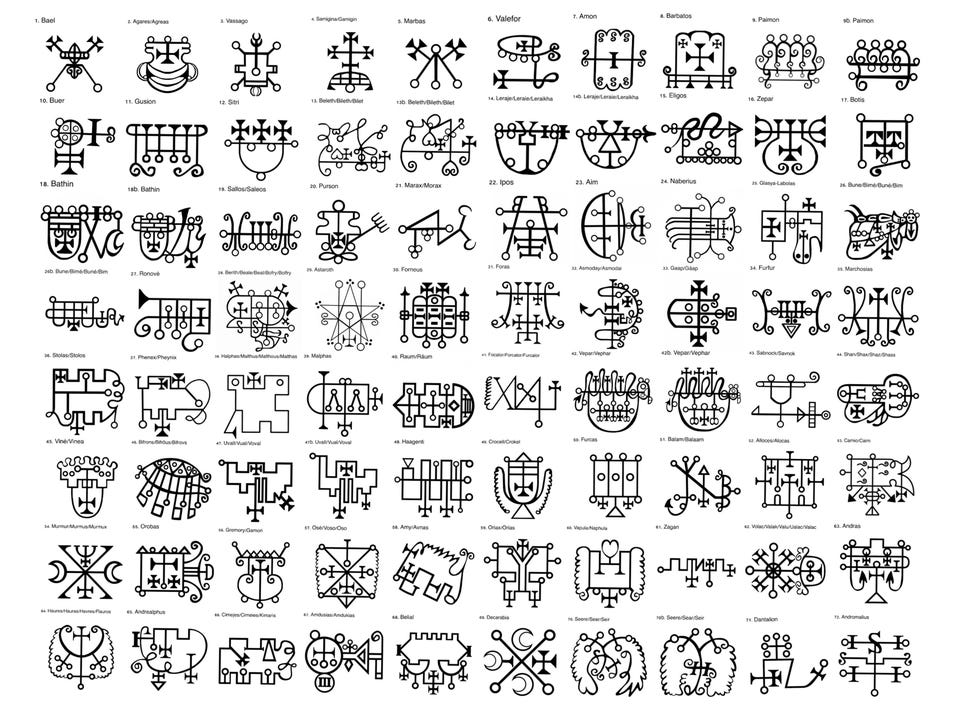
Over time, bookkeeping fossilized into myth. What later appears as demonology—most clearly in catalogues such as the Ars Goetia—reads less like theology than residual accounting: named entities, specific jurisdictions, enumerated legions, defined competencies, and recognizable temperaments. These were not moral abstractions but functional profiles. Sigils operate here not as mystical curiosities but as brands and ownership marks, analogous to tallies cut into wood or signs burned into livestock seized as collateral. Debt is reframed as damnation, default as eternal bondage, insolvency as exile from the system. Entire houses or obligation‑groups become fixed types, no longer redeemable within the ledger. Social credit systems, in this sense, long predate modern terminology.
This mobility of authority is why “great” leaders historically tour their realms. They are not visiting territory; they are activating it. Movement precedes law. Authority advances along what might be called an imperial highway or jetstream—a corridor of momentum where legitimacy, logistics, and belief align. Caesar walked Gaul into Roman time; Alexander stitched continents by outpacing bureaucracy; the khans ruled not from capitals but from circulation itself, their courts moving with the herd, the campaign, and the season. In each case, sovereignty rode the current rather than resisting it.

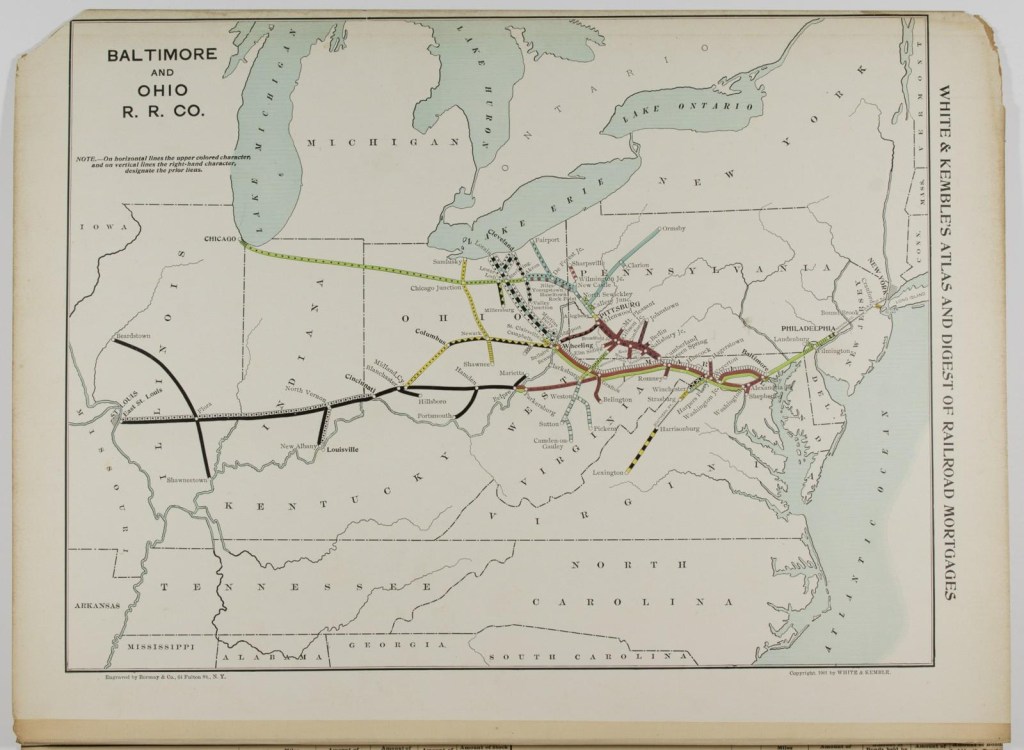
This logic persists into the modern era. Napoleon’s campaigns were not simply military maneuvers but dynastic sweeps carried on the winds of change unleashed by revolution and mass mobilization. His authority traveled faster than institutions could stabilize against it. Lincoln’s power, by contrast, was exercised within history rather than above it: his movement through rail, speech, and timing aligned the Union to a shared temporal horizon even as the physical nation fractured. In darker form, similar mechanics appear wherever mass movement, spectacle, and alignment are weaponized to accelerate historical transitions. Even here, the pattern holds: legitimacy is tested in motion. Failed leaders bunker; successful ones circulate. A tour is a diagnostic sweep—where does resistance soften, where does momentum gather, where does alignment form?
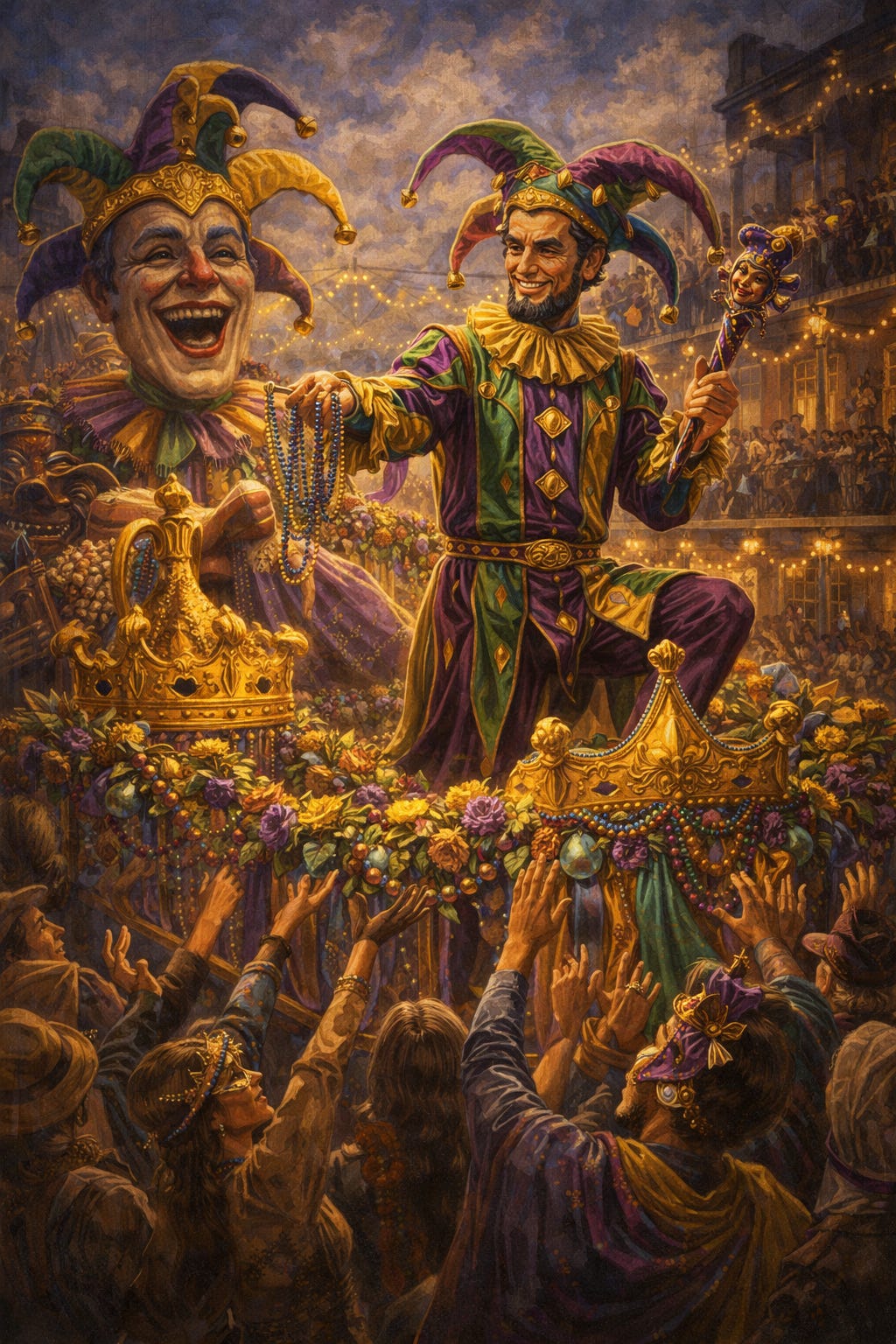
Before engines, this alignment was literal. Wind moved ships only when human intention and natural force synchronized. The “winds of change” were logistical realities before they became metaphors. Everything else—borders, treaties, institutions—was wake. That same engine persists across media shifts: sail gives way to rail, rail to broadcast, broadcast to algorithm. The carrier medium changes; the logic remains. What changes is how the parade is staged. In older regimes, authority announced itself through processions and carnivals—entering the city, arriving at the house, presenting the family through spectacle. Mardi Gras preserves this logic in parody: a city flooded with floats, each claiming attention, each performing sovereignty for a moment, while the real seat remains indistinct. To arrive is not to find the tower but to sort through the parade. Modern houses no longer need papier‑mâché floats. Their trailers are commercials, their processions ad campaigns, their banners brands. Luxury houses, media conglomerates, and corporate dynasties move through society as rolling spectacles, while carnival societies persist precisely to mock the mistake of confusing display with authority.
At the imperial scale, this produces a land‑pirate economy refined into system management. Force becomes inefficient; continuity becomes paramount. Noble houses evolve into corporations; banners into brands; parades into advertising. This same logic surfaces in modern statecraft through the routine use of cover names, compartment labels, and codewords within bureaucracies such as intelligence and law‑enforcement agencies. These are not disguises but functional abstractions—soft encryption carried forward from the French and Italian fusion of family and state. Roles are preserved while identities are buffered; responsibility is routed without over‑exposure. Switzerland quietly reenters the story here not as mastermind but as cataloger. Arbitration, custody, accounting, synchronization—these are the tools of a system that prefers balance sheets to banners. Neutrality, in this sense, means hosting time itself: holding programs in escrow, pacing outcomes, and making rule repeatable without rulers.
Seen this way, society begins to resemble a slate of long‑running shows. Large systems do not improvise governance year by year; they option it. Multi‑year social and political “programs” are conceived, stress‑tested, and greenlit much like television pilots. In the American context, presidential terms function as neatly packaged seasons—four‑year episodes nested inside longer narrative arcs. Some shows get renewed, some are quietly canceled, and others are rebooted with new casting but familiar plots. The point is not the individual performer but the continuity of the series.
Once attention becomes currency, the nation becomes a stage—but the stage is not flat. It is layered, orbital, and interlinked like chainmail. This is where the Hollywood star system and political relevance reveal themselves as parallel phenomena. Celebrity does not sit at the top; it occupies an orbit. Stars rise, peak, and decay within attention fields that overlap with others, producing resilience rather than hierarchy. No single figure carries the system; the mesh does. Relevance circulates laterally, with figures drifting between prominence and obscurity as new orbits intersect.
This is not crude propaganda but programming in the theatrical sense. Conflicts are real but bounded; rebellion is permitted but cast. Crucially, the star is not the conductor, and the conductor is not the orchestrator. The visible figure performs within a score written elsewhere, while the orchestration remains distributed across institutions that rarely appear on stage. Power here resembles maillage rather than command, cortège rather than decree. Seats of relevance function as a game of orchestrated musical chairs: prominence is always temporary, rotation is essential, and stability comes from motion, not fixation.
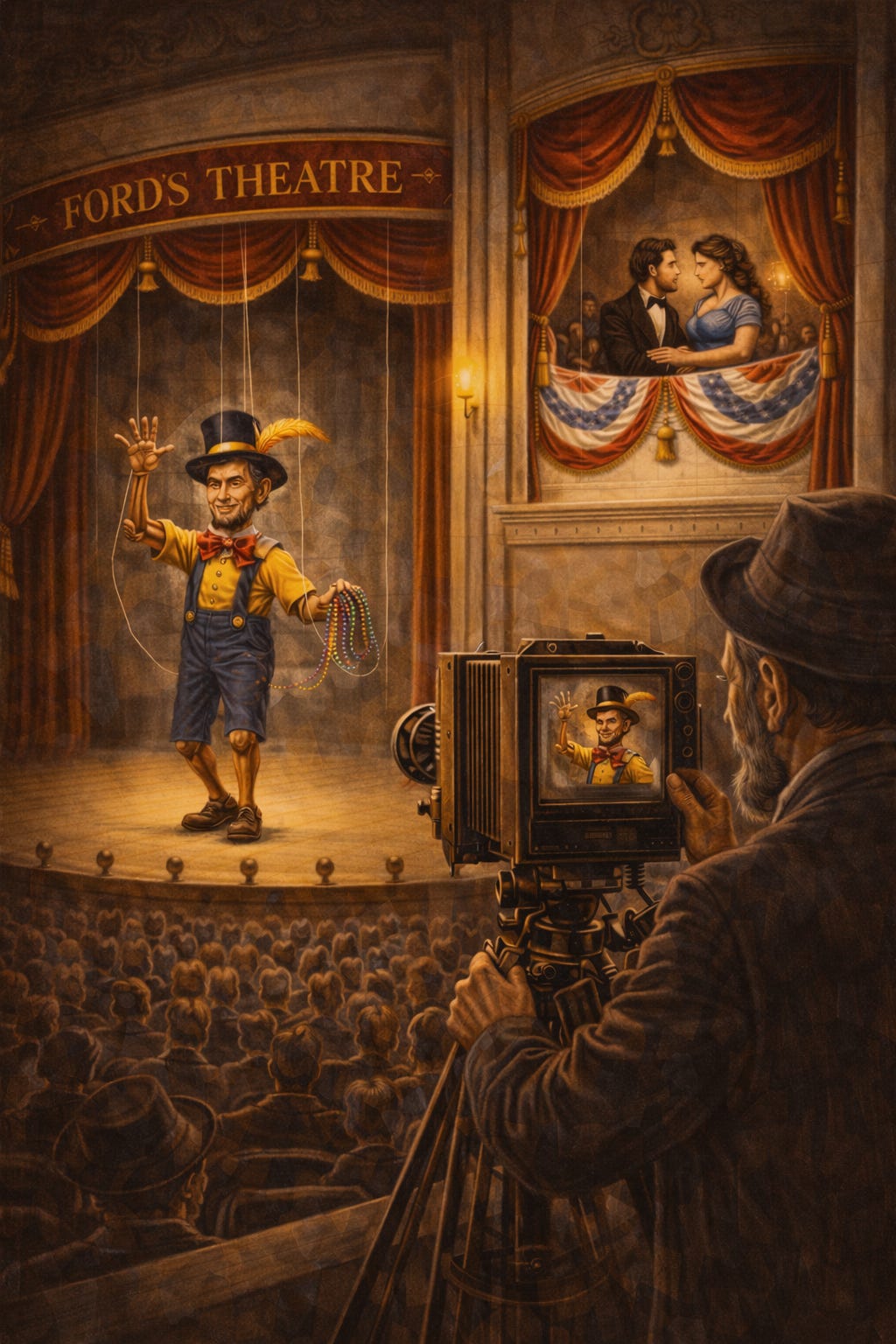
Television did not invent programming; it inherited state‑level stagecraft and optimized it for synchronization. The infrastructure behind TV—studios, schedules, ad markets, ratings—functions like a modern tower in motion, a traveling maison projecting authority not through stone and ceremony but through screens, commercials, and serialized spectacle. These broadcasts are the contemporary parade: a continuous procession of faces, conflicts, and resolutions that trains attention while disguising the seat.
In this model, the true seat of power is not spatial but temporal. Whoever controls schedules, release windows, cycles, and pacing occupies the choke point. The throne is not occupied; it is scheduled. The tower moves, the house travels, and sovereignty persists by scripting the conflicts it survives. What appears spontaneous is often the surface of a carefully maintained temporal order.
Empire no longer governs land; it governs sequence. Authority is no longer seated in stone but embedded in time. To mistake the star for the house, the float for the seat, or the parade for the power is to watch the spectacle and miss the orchestration.
 Unnameable Media
Leave a comment