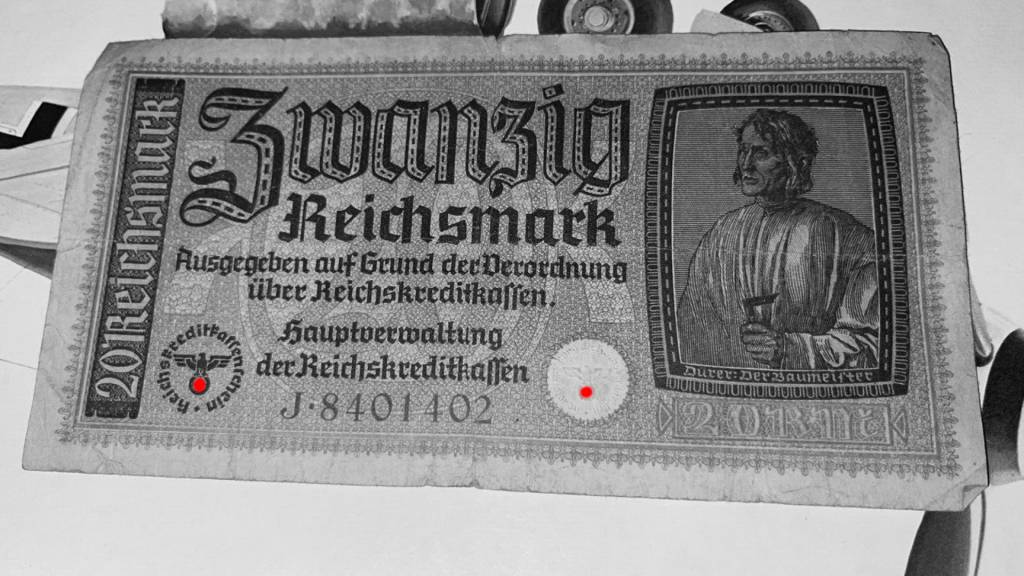
If you trace the hidden wiring of the modern world — the black budgets, the offshore money channels, the classified aerospace research, the deniable intelligence programs, the quiet financial arteries that move billions without ever appearing in a public ledger — you eventually end up in a place that surprises almost everyone.
Not in Langley.
Not in Miami.
Not in the Caribbean.
Not in the Cold War.
You end up in Germany in the early 1930s, standing beside a tall, thin, impeccably dressed banker named Hjalmar Schacht.
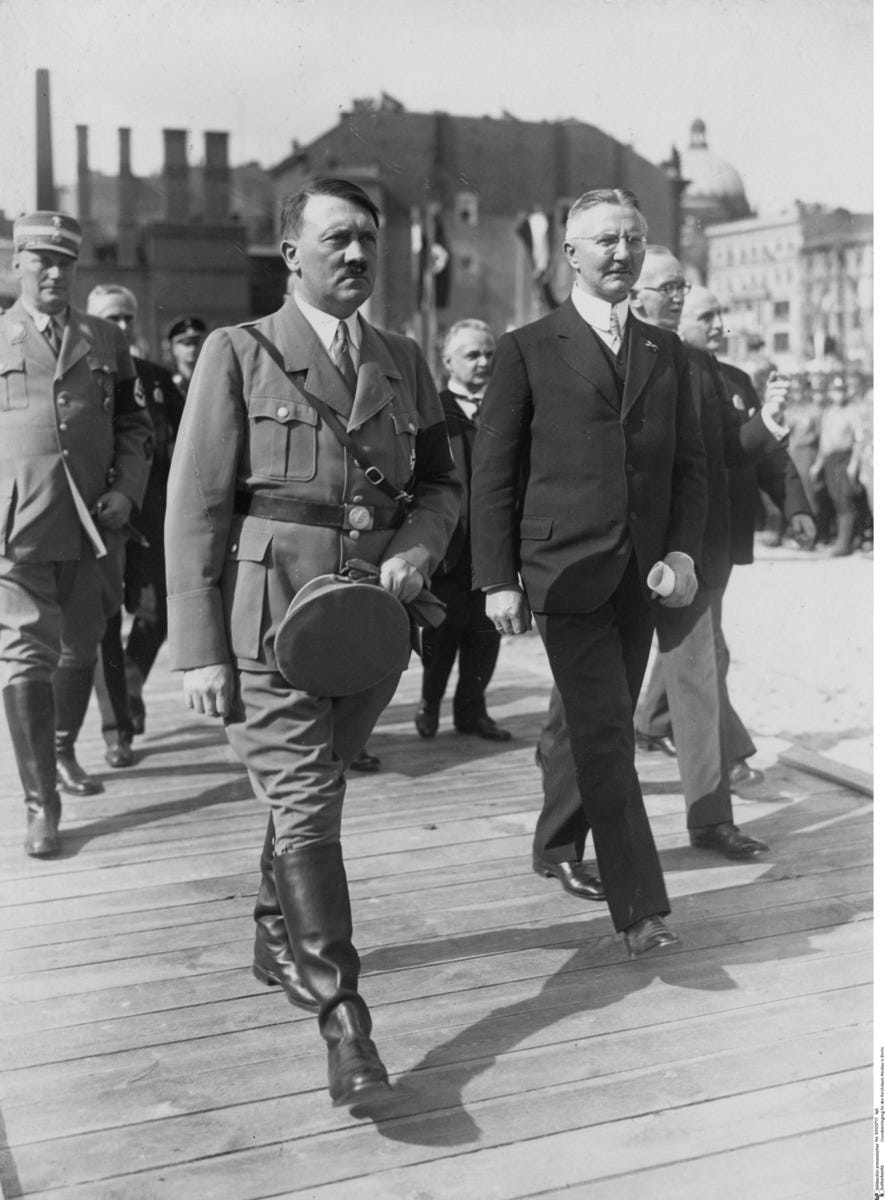
Schacht was not a spymaster.
He wasn’t an occult figure.
He wasn’t an ideologue.
He wasn’t plotting world domination in a smoke-filled room.
He was something far more dangerous, and far more useful.
He was a technician — a man who understood the mechanics of money at a level so deep that he unintentionally created the financial operating system that modern intelligence agencies would later adopt, expand, and eventually bury behind layers of secrecy.
To understand the deep state, you first have to understand the man whose ideas quietly built its bones.
The Wall Germany Hit
When Schacht took over the Reichsbank, Germany was trapped between two impossible conditions:
- The economy was shattered.
- The world was watching.
The country desperately needed to rebuild its industrial base, restore employment, and restart the engines of production. But the international financial system kept a close eye on every movement Germany made. Anything that resembled rearmament or massive state spending triggered panic and intervention.
Schacht realized that the traditional instruments of government finance wouldn’t be enough. The budget had limits. The currency had limits. International auditors had limits.
But accounting itself — that was a different story.
If the budget couldn’t move, he would create a second budget.
If the currency couldn’t absorb the spending, he would create a second currency.
If the world was watching the front door, he would build a back entrance.
This was not ideology.
It was engineering.
The Birth of the Parallel Ledger
Schacht’s most important invention was a strange financial instrument called a MEFO Bill — a kind of IOU issued by a company that didn’t exist.
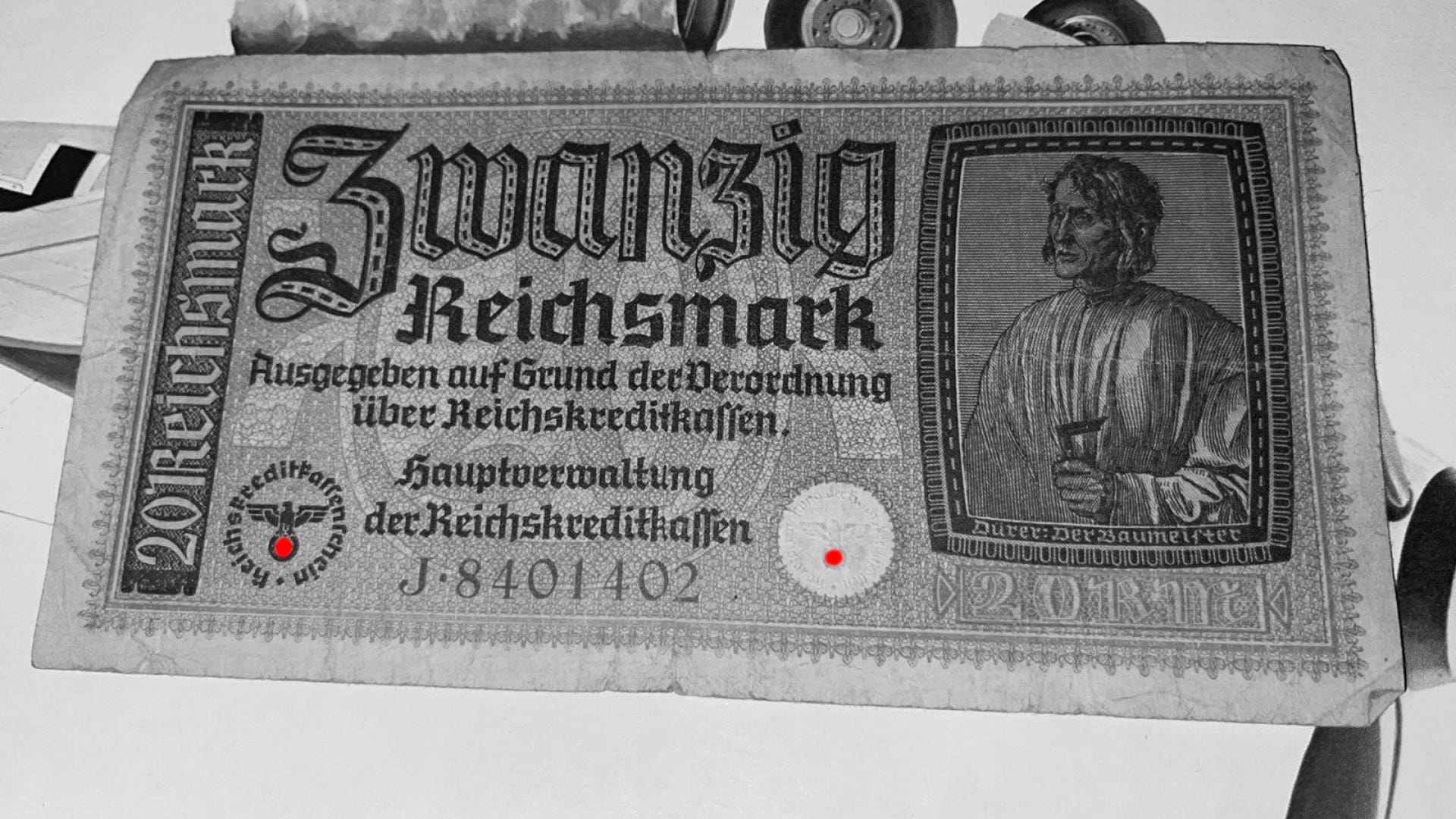
The company, “Metallurgische Forschungsgesellschaft,” had no employees, no offices, and no factories. It was a shell — a legal fiction with a letterhead.
Industries supplying materials to the government were quietly instructed to send their invoices not to the government treasury, but to this phantom company. MEFO would “pay” them by issuing a bill of exchange, a kind of state-guaranteed promissory note.
And here is the critical detail:
The government did not record these bills as spending.
The budget remained clean.
International observers saw nothing.
Money was flowing.
Projects were being built.
Industries were running day and night.
But the financial record showed almost none of it.
Schacht had created a shadow balance sheet — a second economy parallel to the official one.
This system was the first modern black budget.
It was legal, elegant, and invisible.
The World Adapts Schacht’s Logic
Schacht did not invent secrecy.
He did not invent covert operations.
He did not invent geopolitical games.
What he invented — and what changed everything — was a financial mechanism that allowed governments to spend enormous sums without ever exposing their activity to public scrutiny.
After World War II, the entire global intelligence architecture found itself needing this exact tool.
The Cold War required:
- deniable operations,
- classified technology research,
- clandestine foreign funding,
- covert logistics networks,
- and budgets no parliament or congress could debate.
The CIA, MI6, Mossad, BND, KGB — all of them needed a financial layer that could operate outside democratic visibility.
And so they borrowed the Schacht formula:
Create legal entities that exist only on paper.
Route money through them.
Guarantee them with the state.
Let the public budget remain pristine and boring.
Schacht built a model.
The Cold War turned it into a universe.

The Offshore Revolution: Schacht Goes Tropical
By the 1950s and 1960s, the logic of MEFO Bills found new life in a new geography: the Caribbean offshore system.
Tiny island nations became the new “MEFO” corporations:
- no taxes,
- no reporting,
- no oversight,
- Swiss-level secrecy,
- legal trust structures designed to disappear money on command.
The Bahamas, Cayman Islands, Panama, and others rapidly developed into nodes for global financial invisibility.
What Schacht pioneered in a single fake corporation, the postwar world scaled up into an entire network of jurisdictions dedicated to keeping state and private capital off the books.
If MEFO was a basement workshop, the offshore system became a global factory.
This is the financial infrastructure that later supported:
- covert arms deals,
- deniable aviation operations,
- experimental aerospace funding,
- private intelligence partnerships,
- and multi-billion-dollar classified research programs.
No conspiracy is required.
The architecture is public record.
The intent is not.
The Part Nobody Talks About
When people discuss “deep state” or “hidden government,” they usually imagine conspiracies, occult symbols, or smoke-filled rooms.
But that isn’t what sustains the secret world.
It is numbers.
It is ledgers.
It is accounting frameworks designed to conceal the true scale of government activity.
Schacht’s great contribution wasn’t political.
It was architectural.
He proved that a state could run a second financial system behind the visible one, with its own channels, its own rules, and its own freedoms — all without ever violating the letter of the law.
Once that door opened, the Cold War walked through it.
Then the intelligence agencies.
Then the black-budget aerospace world.
Then the modern security state.
The parallel ledger became permanent.
Why Schacht Matters Now
Today, discussions around “disclosure,” “secret programs,” or “unacknowledged projects” often focus on the technology — exotic materials, propulsion breakthroughs, or mysterious archives.
But none of that can exist without funding.
And that funding cannot exist without a financial structure capable of hiding it.
The entire idea of a classified technological ecosystem depends on the Schacht blueprint:
- money routed through deniable entities,
- budgets that exist outside government books,
- offshore pipelines that erase the trail,
- state guarantees that make fake companies function as real ones,
- and a financial culture premised on institutional invisibility.
Schacht didn’t intend to build the skeleton of the modern deep state.
But once he demonstrated how to build a parallel economy, the modern security apparatus inherited his toolset and refined it into a permanent, global machinery.
Conclusion: The Invisible Engineer
History rarely remembers the engineers who build the infrastructure of secrecy.
It remembers ideologues, generals, revolutionaries, and spies — the people who shout.
But the deepest transformations often come from the quiet technicians who alter the plumbing of the world.
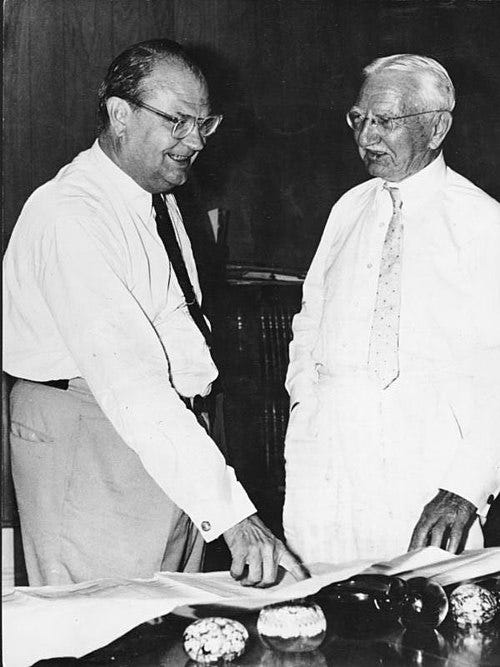
Schacht was one of those figures.
Not because of ideology.
Not because of villainy.
Not because he controlled nations.
But because he invented a style of thinking — a method — that showed governments how to create money that isn’t officially real, how to fund projects that don’t officially exist, and how to operate a state within a state without ever declaring it.
The modern shadow world didn’t begin with intelligence agencies.
It began with an economist and a fictional company that could pay any bill without leaving a trace.
We are still living inside the blueprint he drew.
 Unnameable Media
Leave a comment