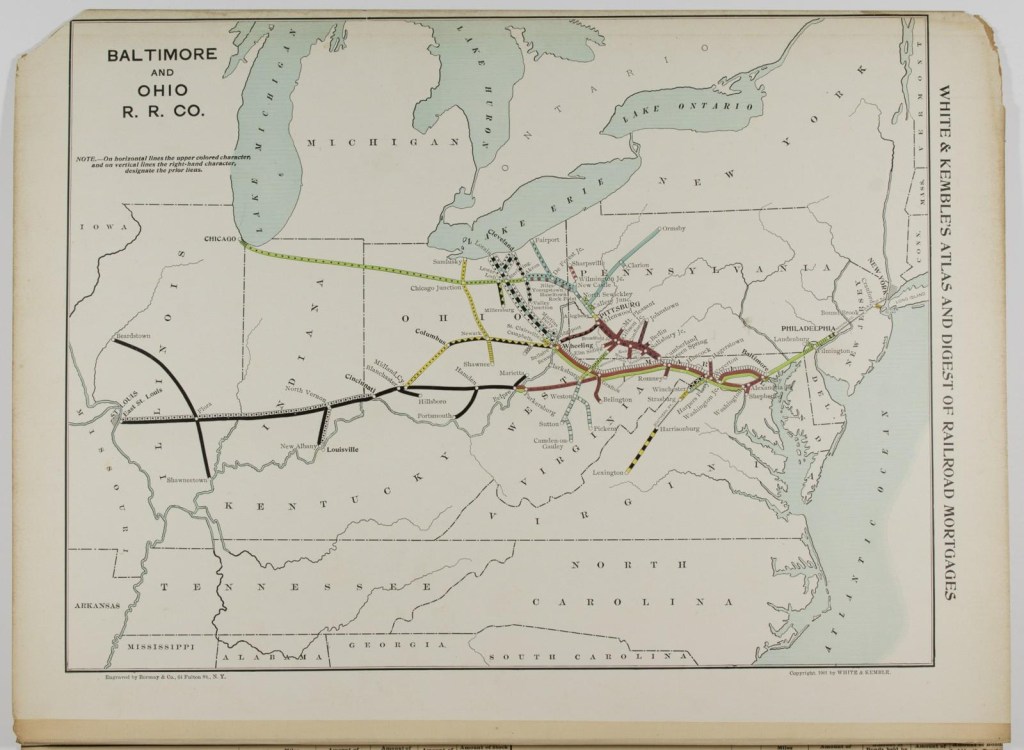
The United States has a strange blind spot about its own foundations. A massive portion of the continent was once claimed, surveyed, mapped, named, and—crucially—routed by France. Forts went up. Trade corridors hardened into habit. Entire regions took their first civic shape inside French logistics and Catholic festival time. And yet the U.S. does not speak French the way Canada does. To feel the French language on this continent, people go north.
But the absence of a language doesn’t mean the absence of influence. A deeper layer can vanish as speech and still remain as infrastructure. That’s the real pattern here: the French presence did not “leave.” It blended back into the fabric of the society itself, almost like Greek influence in America—so normalized that it stops looking like an inheritance. There’s a track and field facility at nearly every public school in the U.S. Nobody introduces it as “Greek.” It just is. The same thing happens with fraternal culture. Greek-letter fraternities are everywhere, and most people inside them have no idea what they’re actually participating in historically, why it took the shape it did, or how much older the blueprint is than the campus.
This is a story about that blueprint.
It’s also a story about masks—literal masks (Carnival, mystic societies, parades, costumes, night-rides) and institutional masks (“parody,” “humbug,” “just a joke,” “just a club”). Because the single most important idea in this entire weave is this:
Parody is one of the best covers ever invented.
Something can be “a mockery” on the surface and still function as a serious social machine underneath.
That applies to college orders. It applies to Carnival krewes. It applies to postwar “invisible empires.” It applies to any system that learns how to hide its real work behind performance. And it applies—explicitly, deliberately, and stated here as theory—most of all to the Independent Order of the Sons of Malta, which shows every sign of a serious network wrapped in theatrical noise.
French America: The Corridor Beneath the Country
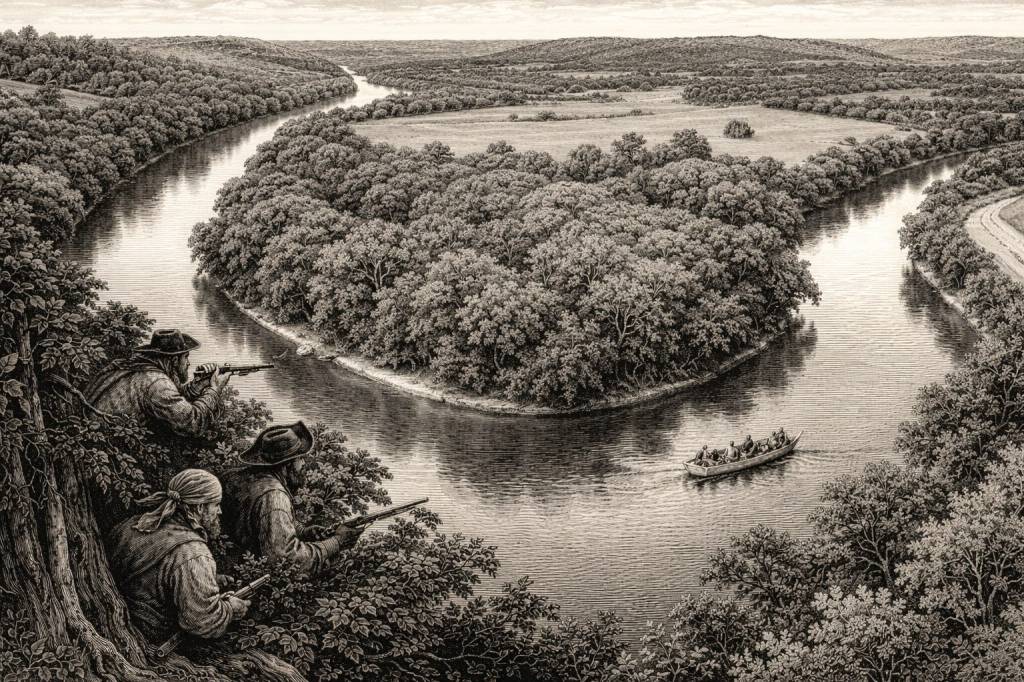
Before the United States is an English-speaking nation-state, it is already a set of corridors—water corridors first, then road, then rail. France’s North American project didn’t just create towns; it created route logic. The old northern passage out of Canada down through the Great Lakes into the American interior is not a metaphor. It’s a functioning invasion of geography. It’s the Great Lakes system feeding the river systems feeding the Gulf. It’s the portage points that turn one watershed into another.
That’s why the French and Indian War matters in this story. It’s not merely a war about sovereignty. It’s a war over circulation itself—over who controls movement, commerce, military reach, and the ability to police the interior of a continent. Most people don’t realize how central this corridor was, or that even after Britain technically “won,” the struggle didn’t stop.
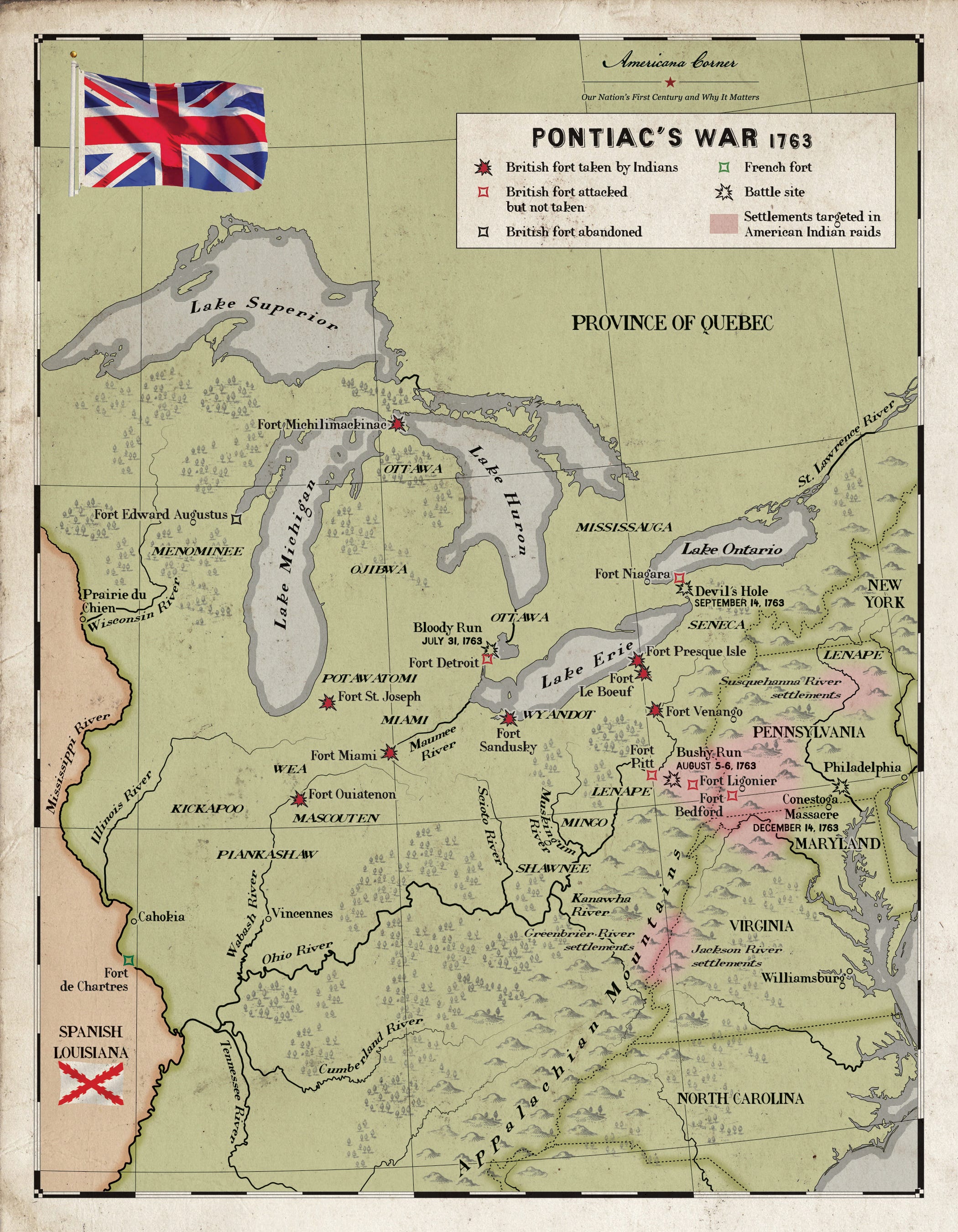
It immediately continued as Pontiac’s War, when Indigenous alliances rose up across the Great Lakes and Ohio Valley to contest British takeover of the same forts, portages, and supply lines. Pontiac’s War makes the point unmistakable: whoever held these corridors held the continent. Forts were attacked simultaneously from Detroit to the Wabash to the Ohio country because everyone understood the same thing—the map was the prize.
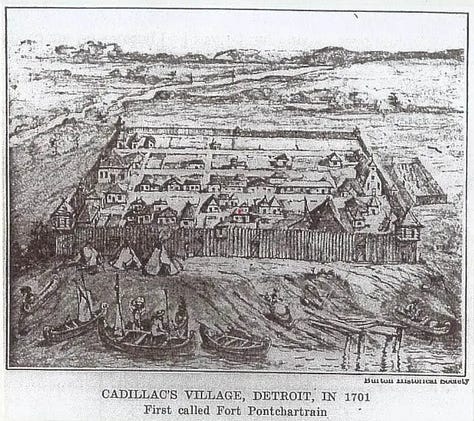
And that’s why the star‑fort pattern matters. Star forts aren’t decorative relics. They are applied geometry—mathematics turned into governance—designed to dominate approaches, structure lines of fire, and impose spatial discipline on entire regions. They are circulation locks. You don’t build them unless you intend to control flow. You can stand in North America and feel like you’re in “English America,” but the deeper scaffolding—the fort grids, the river logic, the original surveying—still reads French, because in many places it was. The empire didn’t vanish. It calcified into the ground.
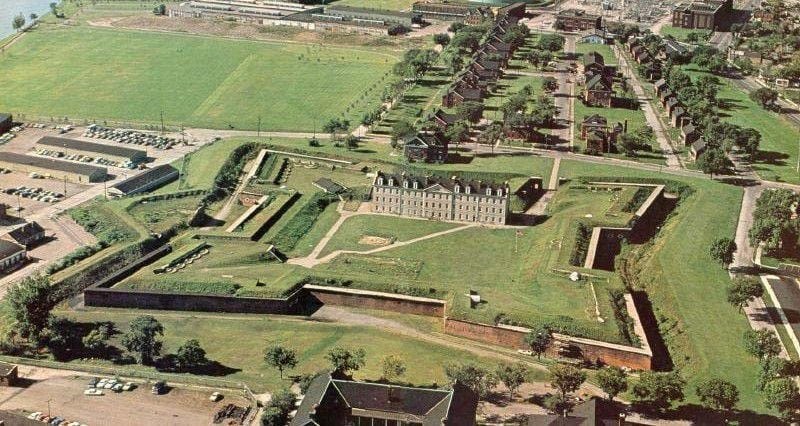
That’s the first anchor: the map comes first.
The second anchor is what comes next: the human network that rides the map.
America’s Fraternal Greek-Letter System
College fraternities feel like a modern pastime, but historically they emerge out of the late‑colonial and early‑republican elite project: training future leaders through controlled membership, shared symbols, and lifelong affiliation. Official history places Phi Beta Kappa’s founding in 1776 at the College of William & Mary, modeled partly on Enlightenment clubs and classical ideals, but quickly adopting secrecy, oaths, and internal ritual as organizing tools. From there, collegiate societies evolve into a recognizable American template—selective initiation, coded identity, alumni loyalty, and institutional continuity. By the early 19th century this structure is already functioning as a soft pipeline into law, politics, clergy, and commerce. In other words, the Greek‑letter system doesn’t arise spontaneously—it formalizes an elite social technology already in motion. Out of that ecosystem comes one of the most revealing early experiments in fraternal network engineering.
The Circle of Brothers (The Alpha Society)
College fraternities feel like a modern pastime, but historically they emerge out of the late‑colonial and early‑republican elite project: training future leaders through controlled membership, shared symbols, and lifelong affiliation. Official history places Phi Beta Kappa’s founding in 1776 at the College of William & Mary, modeled partly on Enlightenment clubs and classical ideals, but quickly adopting secrecy, oaths, and internal ritual as organizing tools. From there, collegiate societies evolve into a recognizable American template—selective initiation, coded identity, alumni loyalty, and institutional continuity. By the early 19th century this structure is already functioning as a soft pipeline into law, politics, clergy, and commerce. In other words, the Greek‑letter system doesn’t arise spontaneously—it formalizes an elite social technology already in motion. Out of that ecosystem comes one of the most revealing early experiments in fraternal network engineering.
Kuklos Adelphon: The Circle of Brothers
Kuklos Adelphon—also called the Alpha Society or Circle of Brothers—forms from members tied to Phi Beta Kappa and spreads rapidly through Southern colleges and towns. It ultimately goes defunct, but its organizing principle is explicit: brotherly love and friendship as operational infrastructure. This is templar‑style logic translated into American campus life—loyalty to the circle matters because the circle is the resource. It functions as buffer, placement network, and mutual‑coverage system. It is, effectively, a 19th‑century prototype of elite cohesion—the “X‑men,” minus the fiction.
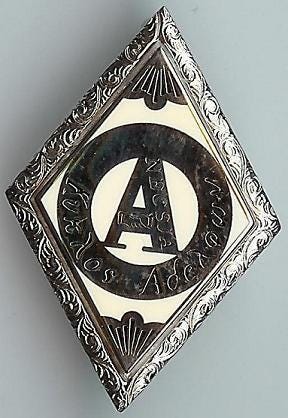
Their adopted motto, Nil ego contulerim sanus jucundo amico (“I would compare nothing, while sane, to a joyful friend”), is not decorative Latin. It encodes the whole philosophy: friendship outranks ideology, affiliation outranks abstract principle, and sanity itself is measured against loyalty to the brother. This is not sentimental language—it is a compact statement of priority ordering inside the group.
Then the Civil War arrives and that particular organism burns out.
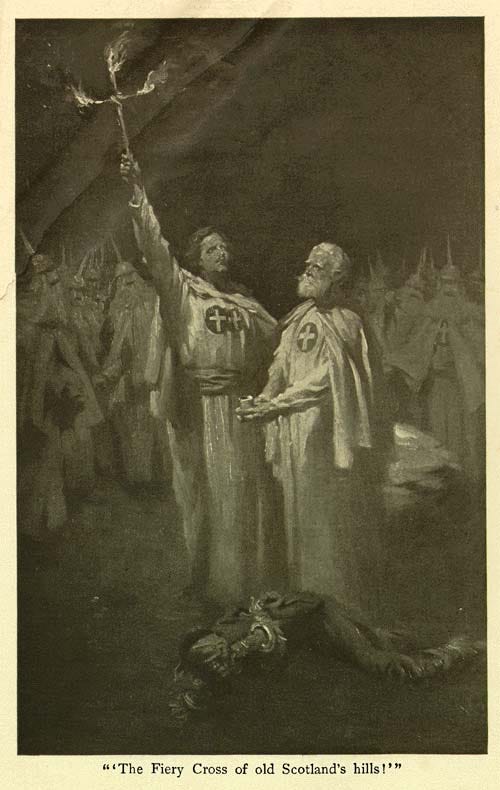
What matters is not only that it dies. What matters is that the social technology survives—and something else rises to occupy the vacuum. One of the clearest official-history signals of this continuity appears later in early Klan testimony and scholarship: John Lester, a founding Klansman, stated that the Klan’s initiation ritual was modeled on a popular collegiate fraternal order. Historian Allen Trelease went further, speculating that Kuklos Adelphon almost certainly provided that model. By contrast, Albert Stevens’ Cyclopaedia of Fraternities (1907) argued that the Klan borrowed portions of its initiation ceremony from the Sons of Malta instead—conspicuously omitting Kuklos Adelphon. Taken together, these accounts don’t cancel each other out; they reveal a shared ritual lineage. Whether traced through Kuklos Adelphon or Sons of Malta, the same initiation grammar—oaths, symbolic death, staged ordeal, and rebirth into group identity—reappears as the fraternal form mutates into the postwar Invisible Empire.
“The Order”—The Elite Pipeline
After Kuklos Adelphon collapses into history, other organizations embody the same logic in different climates—and they do it with higher selectivity. Skull and Bones at Yale is the cleanest example of the senior society as sorting machine: closed selection, ritual identity, durable alumni network, membership as a permanent credential inside an invisible architecture. Officially, it’s a Yale senior society founded in 1832, with a “Tomb” on High Street and a badge marked by a skull-and-crossbones over the number 322—a number the society itself has treated as meaningful, with archival hints that early members measured dates from 322 BCE rather than AD, tying the symbol to a specific classical hinge-point and the end of an Athenian political era.
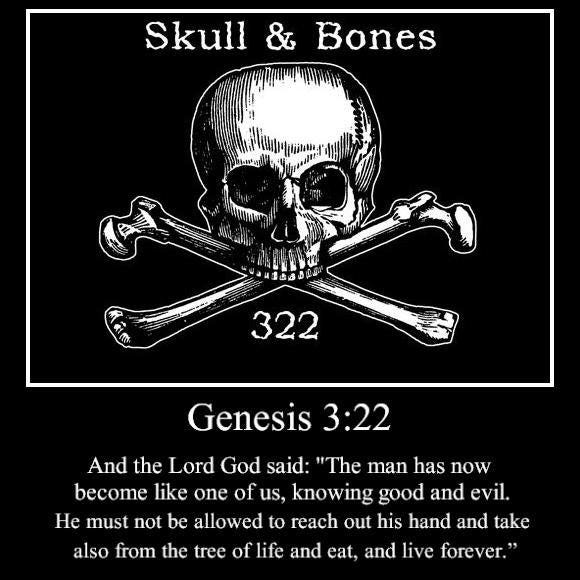
Then there’s the cultural layer—what the society became in the American imagination. The nickname matters here: “The Order.” Skull and Bones is widely referred to as The Order or Order 322, and that name alone signals a self-concept: not a club, not a pastime, but an ordering principle—membership as passage into a deeper, older structure.
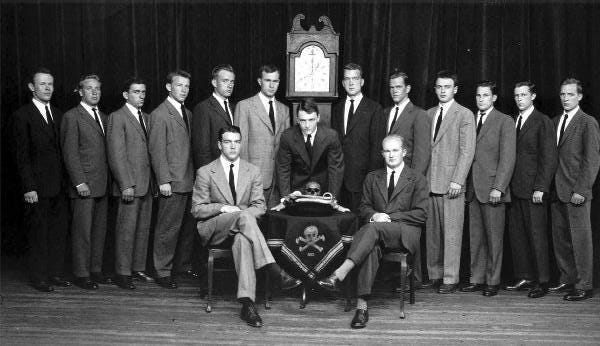
The conspiracy halo forms exactly where secrecy, elite pipelines, and symbolic theater overlap. One of the most infamous claims is the allegation that Bonesmen stole Geronimo’s skull from Fort Sill in 1918 and brought it back to the Tomb—an allegation that has circulated for decades and gained renewed attention because of contemporary reporting on letters in Yale’s archives suggesting Bonesmen themselves believed a skull had been taken. What’s provable and what’s not is the point: the story persists because it matches the society’s aesthetic—death symbolism, relic logic, the idea that membership grants access to objects that are not supposed to be moved.
322 & Secret 808’s
Taking a look at 322, we start with the official story. Skull and Bones was founded at Yale in 1832, and the number appears on its emblem as a simple origin marker. Internally, one explanation frames it as “founded in ’32, second corps,” referencing a rumored earlier German student society. Another commonly cited thread points to the Masonic Lodge of Virtue and Silence No. 322 in Suffolk, England (founded in 1811), which reframes the number around discipline and restraint—silence itself elevated to a formal virtue.
That’s the clean version.
Once you step fully into Masonic history, things widen. This is where traveling lodges matter. Unlike fixed lodges tied to a single building, traveling lodges moved with military regiments, shipping routes, and trade corridors. They carried ritual, structure, and recognition from city to city, quietly knitting together distant communities. In that context, Glittering Star Lodge 322 becomes important in lore—not as a decorative footnote, but as an example of how numbered lodges could exist before or outside the later institutional framework. Even though we cannot claim any connection between Skull & Bones and Glittering Star Lodge, the implication is simple: some lodge identities predate the formal systems that later absorbed them. In other words, the number doesn’t originate in Skull and Bones—it’s inherited.
And lodges didn’t exist in isolation.
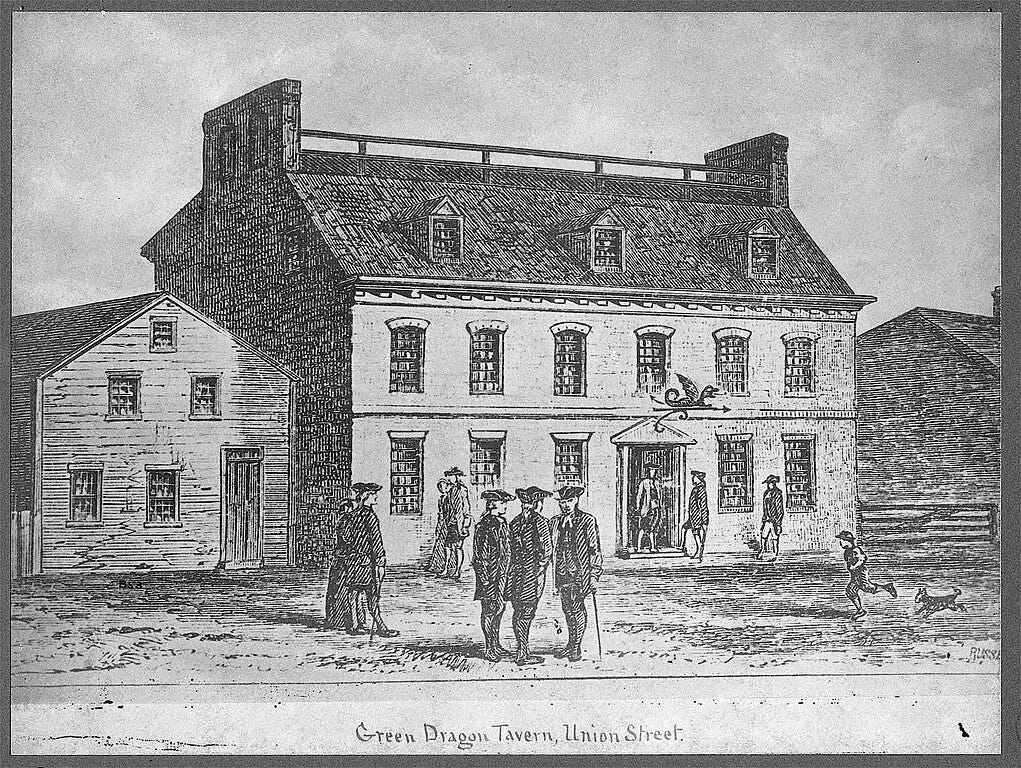
They shared space with taverns, salons, and card rooms. One of the most famous examples is Boston’s Green Dragon Tavern, which functioned simultaneously as a Masonic gathering place, a revolutionary hub, and a social club. These were hybrid environments. Political organizing, fraternal ritual, drinking, and gambling all overlapped. Inside these spaces people played cards, exchanged intelligence, and conducted quiet business.
One popular game in that world was Boston—a trick‑taking card game that circulated through exactly these kinds of tavern‑lodge ecosystems. Which brings us naturally to playing cards. Trick taking games were much more common in those days and ran concurrent with the use of tarot cards within mystic circles.
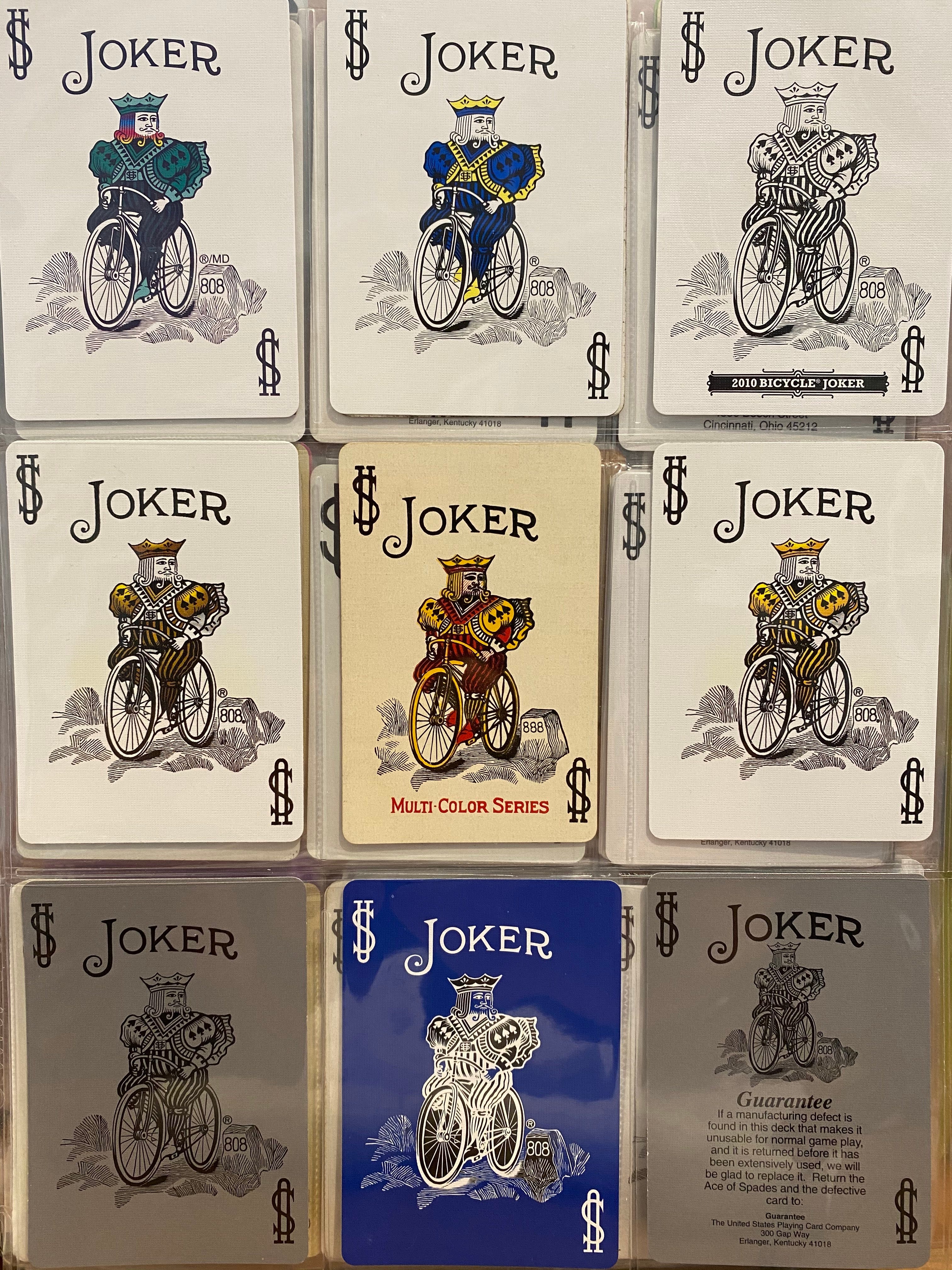
This might be a wild card so if you aren’t into ‘speculation’— forgive me. Collectors have long noticed the mysterious “808” milestone printed on Bicycle playing cards and similar decks. Some have speculated endlessly about hidden meaning. But the most grounded explanation is also the simplest: it functions as an inside joke or reference point tied to late‑19th‑century card culture and lodge‑adjacent social clubs. Not ancient symbolism—coded recreation. A nod to private games, back‑room tables, and the kind of informal fraternity that existed alongside formal ritual.
Seen this way, a pattern emerges. 322 belongs to the world of institutional secrecy—origin markers, traveling lodges, inherited structure. 808 belongs to the world of card rooms—taverns, games, insider humor. Different domains, same social fabric.
Lodges, taverns, and card tables weren’t separate worlds. They were layers of the same ecosystem, bound together by discretion, shared membership, and controlled access. What matters isn’t proving every number traces back to some singular source—it’s recognizing how symbolic language migrates between ritual halls, revolutionary meeting spots, gambling rooms, and eventually consumer design.
Kappa Alpha
To put this in proper chronological order, begin in 1825 with the Kappa Alpha Society, founded in New York. It explicitly claims to be the oldest Greek-letter fraternity in the United States and positions itself within the early American collegiate secret-society tradition that emerged in the decades following the Revolution. Importantly, the Society formally disavows any organizational connection to the later Kappa Alpha Order despite the shared name. This northern KA belongs to the antebellum era—a period when American colleges were experimenting with structured secrecy, ritual, classical symbolism, and alumni patronage networks.
Next, in 1832, Skull and Bones appears at Yale, anchoring itself symbolically to antiquity while operating inside the same expanding ecosystem of elite collegiate orders. By the mid-19th century, the American campus was already accustomed to oath-bound fraternities that borrowed heavily from Masonic structure, European student corps, and chivalric imagery.
Then comes 1865.
The Kappa Alpha Order is founded in Lexington, Virginia, in the immediate aftermath of the Civil War. The timing is not incidental. The Confederacy has just collapsed, Southern institutions are destabilized, and young Southern elites are attempting to reconstruct identity, hierarchy, and continuity in a defeated region. KA openly calls itself “The Order,” and its self-description is expansive—it has initiated more than 150,000 members and operates as a national fraternity with a lifetime alumni body.
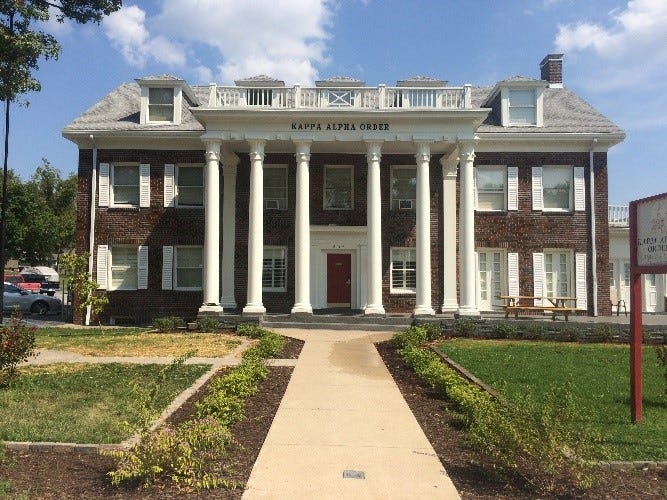
Unlike its 1825 northern namesake, this 1865 Southern Order emerges at a moment when fraternal structure becomes a vehicle for cultural rebuilding. Ritual, hierarchy, chivalric language, and controlled membership offer a framework for reasserting social cohesion in the wake of military defeat. That broader postwar context is essential.
Within the chronology of the Kappa Alpha Order’s founding, Lee occupies a unique symbolic position rather than a literal membership role. Although Robert E. Lee was not a member of the fraternity, his presence as president of Washington College — the institution where the order formed in late 1865 — made him an influential figure for the founders and early members.
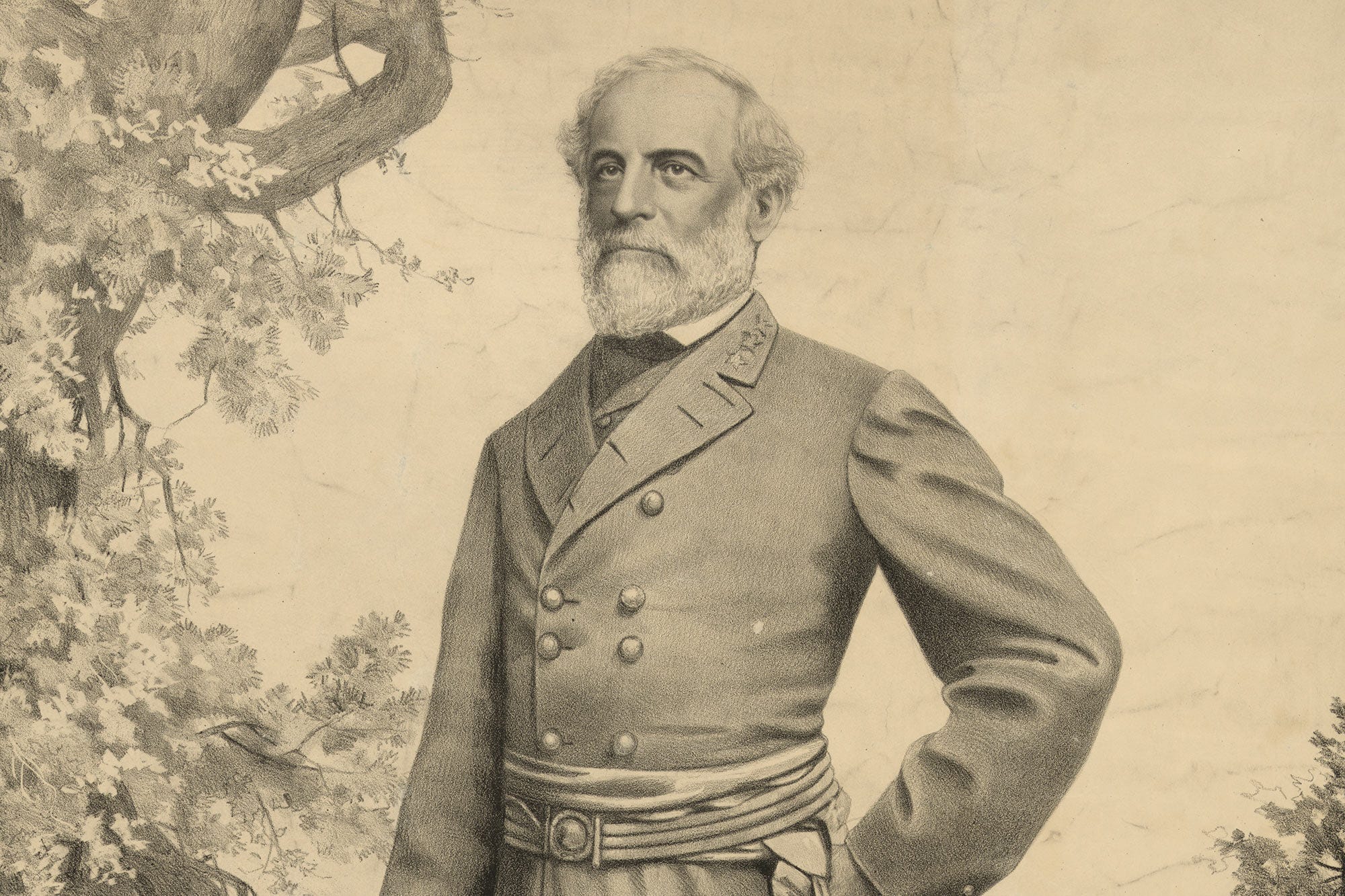
Lee’s leadership immediately following the Civil War was framed by the college as emphasizing gentlemanly conduct and moral character. His stated expectation for students — “We have but one rule — that every student must be a gentleman” — became a kind of moral touchstone for the young fraternity as it defined its ethos.
In the fraternity’s own later narrative, Lee was increasingly elevated to “Spiritual Founder” status. That designation was formalized at a convention in 1923, when a toast comparing him to the embodiment of the fraternity’s aspirational values was delivered and later incorporated into official framing. In 1994, the organization even incorporated Lee’s inspirational role into its mission statement.
Members historically described Lee as “a true gentleman, the last gentle knight,” tying his persona into the chivalric and character-based virtues that the Order’s ritual and identity purported to embody. This framing recasts post-war Southern identity not just around remembrance of military leadership but around gentlemanly conduct, duty, honor, and reverence — qualities the founders admired and later built into the ritual ethos.
KA’s own records are unusually direct about where its ritual architecture comes from. The ritual was written by founder James Ward Wood and later expanded by Samuel Zenas Ammen, described as a master mason who imported knowledge of fraternal ceremony along with a distinctly chivalric, “Christian knighthood” aesthetic. This is not casual symbolism. It is deliberate ritual engineering—written, revised, and formalized like a governance manual.
Placed on a timeline, the pattern becomes clearer: antebellum northern collegiate secrecy (1825), elite Yale consolidation (1832), and postwar Southern ritual reconstruction (1865). The recurrence of the word “Order” in this period is not random—it reflects a broader 19th-century American reliance on fraternal structure as a mechanism for authority, continuity, and identity formation. And it is in that immediate post–Civil War environment that the “Klan / Order” language begins to take on sharper historical consequences.
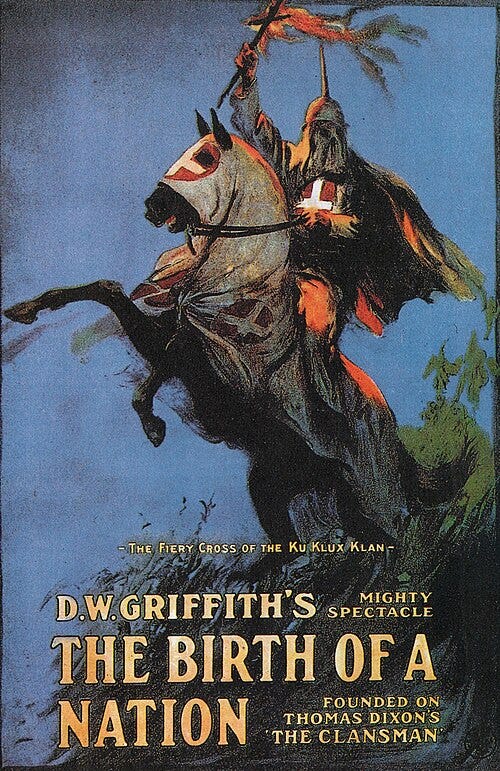
In the early 20th century, The Kappa Alpha Journal repeatedly discussed a relationship—symbolic, ideological, and sometimes performative—between KA and the Ku Klux Klan. When The Birth of a Nation released in 1915 (based on The Clansman by KA alumnus Thomas Dixon Jr.), KA members reviewed the film in the fraternity’s own journal and explicitly framed the Klan as a militant instrument serving the same ideals the Order claimed to cherish—going so far as to note that Klansmen wore the circled cross associated with KA.
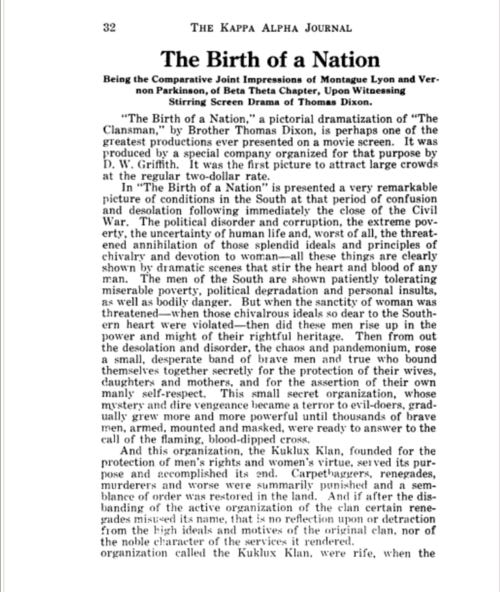
The fraternity journal also documents how casually the term “Klan” could be used internally as a self-brand: it reports alumni forming an “informal Klan” in Detroit (1917), a William & Mary chapter calling itself a KA Klan (1913), and even a Ku Klux Klan-themed dance described in the journal’s pages. Read plainly, this is a moment when “the Klan” and “the Order” could slide toward interchangeability inside the fraternal imagination—same ritual grammar, same pageantry, different degree of political violence.
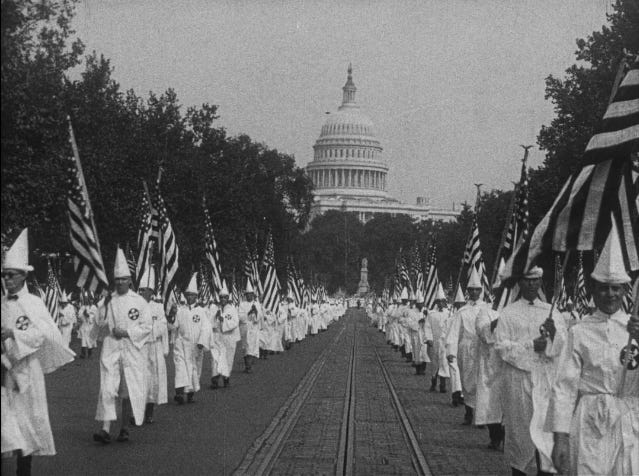
This also clarifies an important distinction the public often flattens: the first Klan (late 1860s into the early 1870s) is Reconstruction-era vigilante terrorism and postwar bandit governance; the second Klan (beginning 1915, peaking in the 1920s) is a mass-membership propaganda machine—national, bureaucratic, and explicitly political, riding modern media, modern fundraising, and modern nativism. That second wave is the one mythologized by Dixon’s novel and Griffith’s film, then ritually staged at Stone Mountain under organizer William Joseph Simmons, who crowned himself Imperial Wizard of a revived “Invisible Empire.”
The Invisible Empire
A critical pivot in this history is recognizing how fraternal structure can slide from social bonding into coercive power. After the Civil War, organizations begin to appear that explicitly adopt the language of hidden sovereignty. The Ku Klux Klan famously described itself as an Invisible Empire. Its emergence is tightly bound to the moment of Southern defeat and reconstruction—precisely when an older aristocratic identity is being dismantled publicly while attempting to survive privately.
This is not the same thing as a collegiate fraternity, but it operates using the same underlying mechanics: ritualized identity, coded membership, oath-bonds, hierarchical ranks, and a theatrical performance layer. The costume is not merely disguise. It creates a super‑identity—an abstract collective body that individuals can act through. Once that layer exists, responsibility becomes diffuse and action becomes easier.
What matters here is not symbolism but technique.
The same fraternal tools—initiation ordeals, uniforms, passwords, insider language, and reputation signaling—can serve radically different ends. In one context they produce alumni networks and mutual aid. In another they begin to resemble domestic political gangs: loyalty enforced privately, authority performed publicly, and a sharp boundary drawn between insiders and everyone else. This is the same structural pattern seen in mafia systems worldwide—private allegiance paired with public theater.
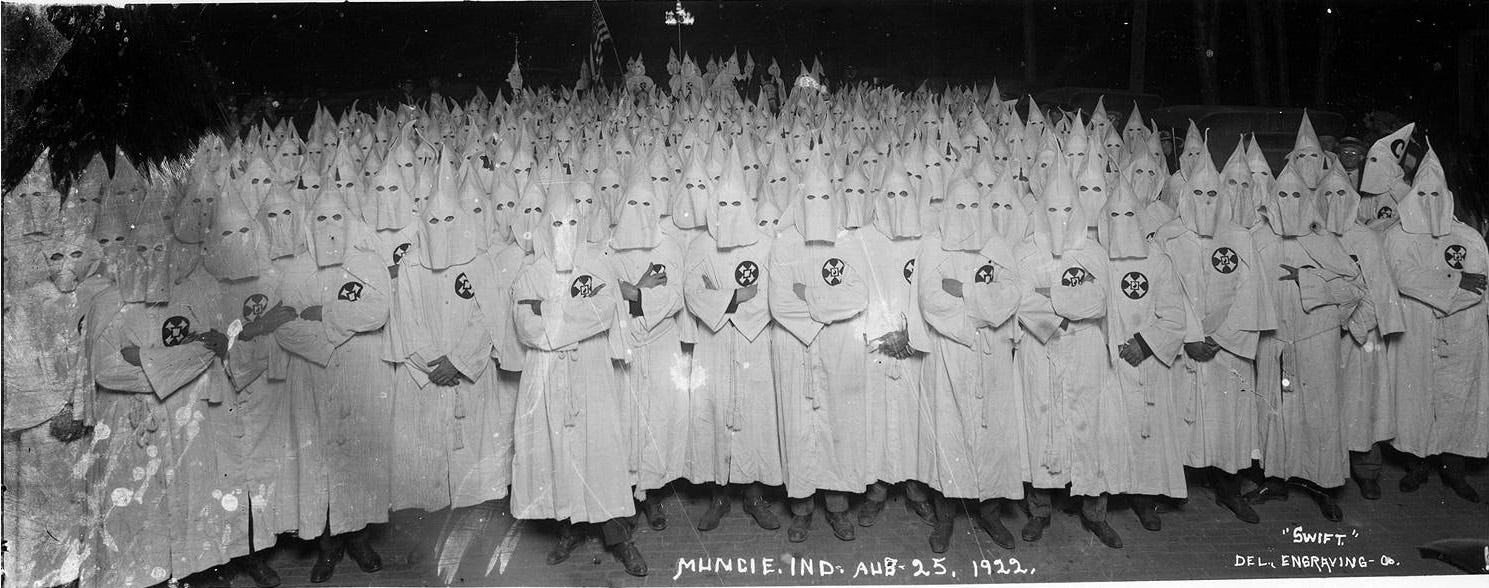
Indiana’s later reputation as a major Klan stronghold is instructive because it collapses the idea that this phenomenon was exclusively Southern. The technology migrates. The Midwest becomes a northern mirror of the same organizational logic.
This is where the question of continuity enters.
There is persistent folklore around Confederate gold and hidden Southern assets. The historical record is incomplete, but the motif itself is important. These legends function as narrative capital—“hidden asset” stories that help sustain networks psychologically even when material proof is absent. They keep the idea of aristocratic survival alive inside collective memory.
Calling yourself The Order is not decorative language. It implies that a deeper structure exists beneath society, and that membership grants access to it. Across the late 19th century, this framing becomes increasingly common as defeated regions attempt to reconstitute hierarchy through fraternal form.
Now slide this logic northward.
The Great Lakes–Ohio Valley–Wabash corridor evolves from an early trade route into a full-scale migration engine in the early 20th century. Industrialization pulls massive numbers of white Protestant migrants into cities like Detroit and other Midwestern hubs. Recruitment follows movement. Movement follows work. Fraternal technique supplies the bonding mechanism.
This is how the second Klan spreads—not randomly, but along labor corridors and transportation lines, much the way earlier empires expanded along rivers and railways. Its ideology overlaps with other far-right currents of the period: nativism, anti-Catholicism, antisemitism, and the broader atmosphere that later includes groups like the German American Bund in the 1930s.
Placed chronologically, the pattern becomes clearer. Postwar humiliation creates identity vacuum. Fraternal structure fills it. Ritual provides cohesion. Secrecy supplies power. And what begins as social organization gradually hardens into enforcement culture. The lesson of this period is structural, not moral: once secrecy, hierarchy, and ritual are combined with grievance and mass movement, fraternal form becomes something else entirely.
And this is where the corridor comes roaring back into the story.
Fort Detroit, Fort Wayne, and the Great Lakes
Start with Fort Detroit—a French corridor fort placed deliberately on moving water. The Detroit River links Lake Erie to Lake Huron, making it both choke point and hinge. From the beginning this region operated less as isolated towns and more as a single hydraulic system: rivers, portages, and fortified nodes forming a continuous logistics spine.
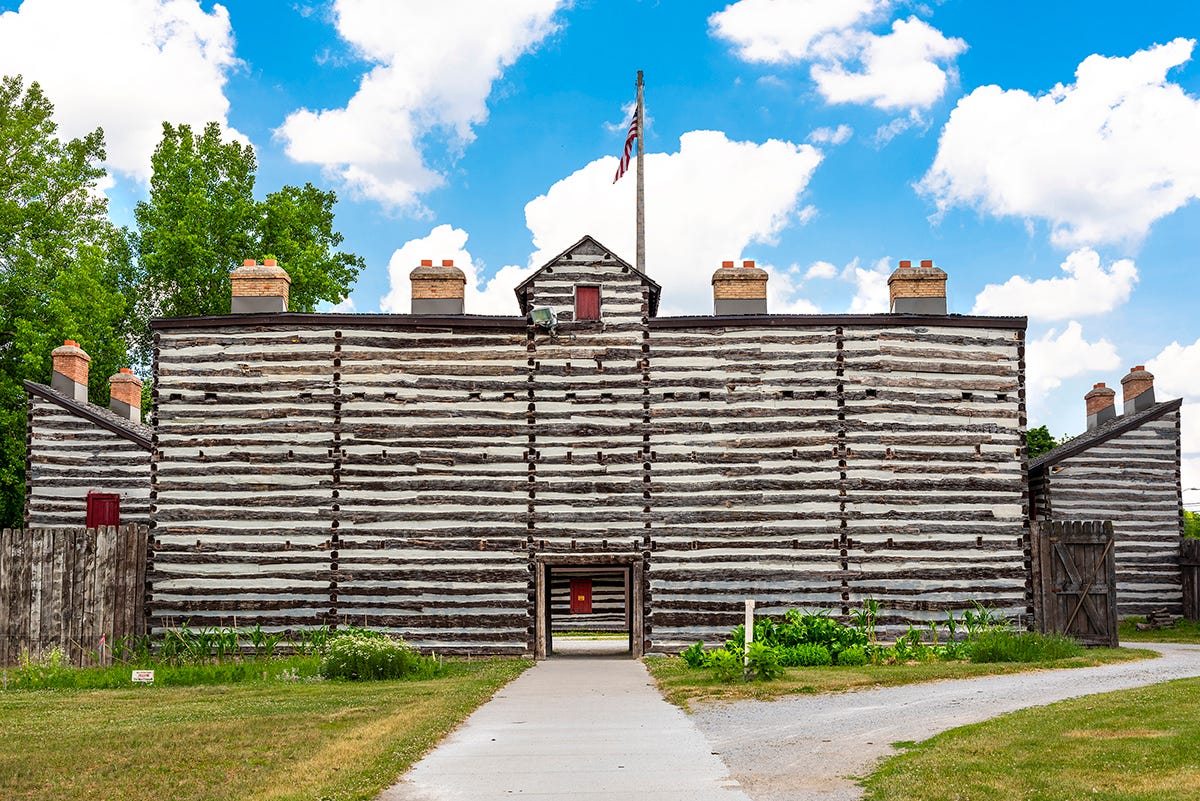
Fort Wayne matters not as a city but as a position. It sits on the historic portage between the Maumee and Wabash watersheds, where traffic from the Great Lakes had to unload, cross land, and reorganize before continuing south. That transport geometry predates American settlement by centuries. The later Revolutionary naming overlays myth onto an already ancient circulation point.
Detroit eventually gains its own Fort Wayne, creating a mirrored structure across the corridor. Symbolically and practically, this turns the route into one organism: Detroit → Fort Wayne → Wabash → Ohio → Mississippi. A single inland artery.
That artery runs south.
Mobile enters not as a peripheral Gulf town but as a foundational Catholic‑French node. Established in 1702 as Fort Louis de la Louisiane, Mobile served as the first capital of French Louisiana and was constructed in European star‑fort geometry. In 1703 it became the first French Catholic parish on the Gulf Coast, placing it directly inside the ecclesiastical infrastructure of New France. Clergy influence moved inland along the same rivers that carried trade and settlers.
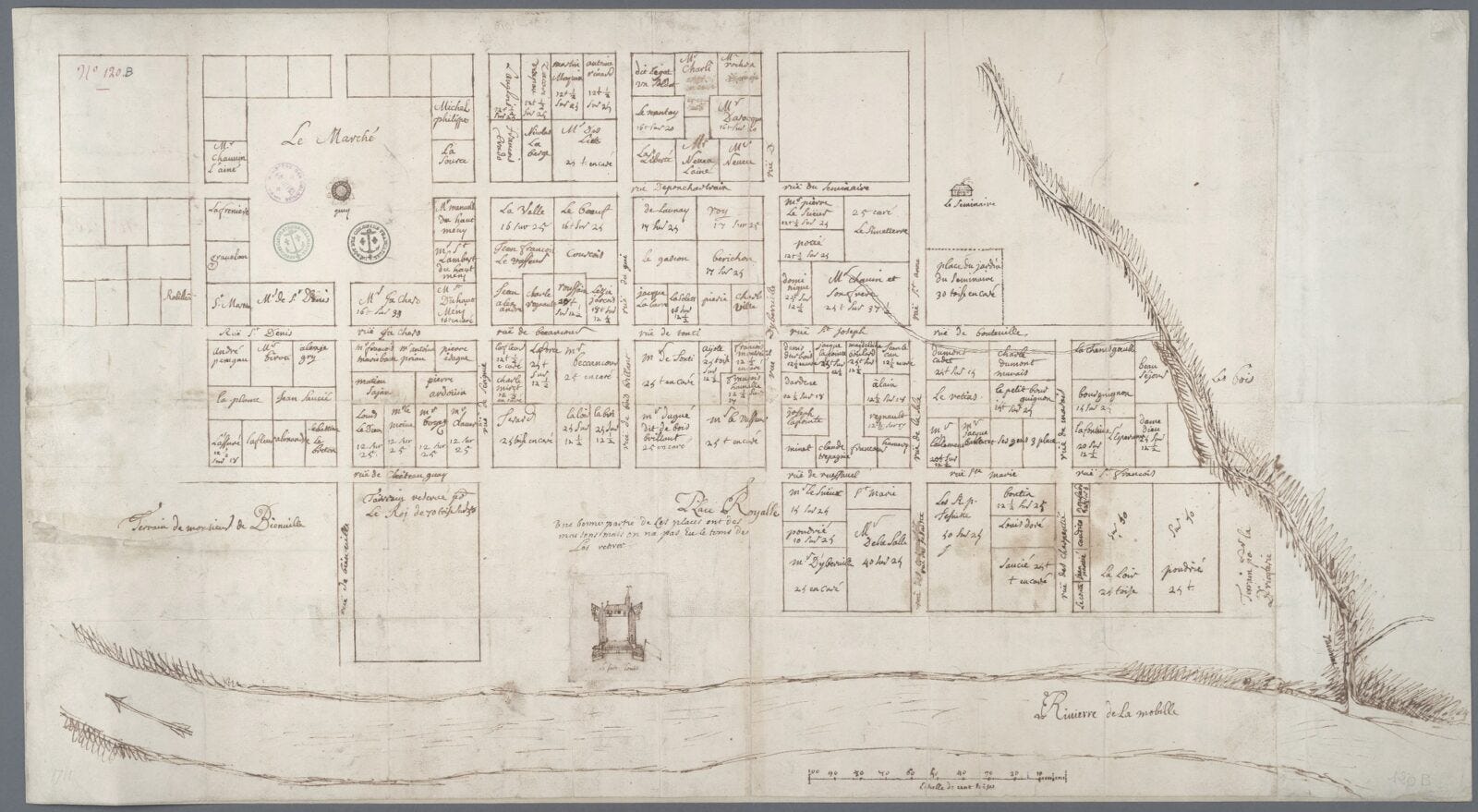
This is where the Jesuit layer becomes structural. French colonial expansion was doctrinal as much as military. Jesuit systems emphasized hierarchy, embodied ritual, mnemonic ceremony, and disciplined obedience. Those techniques traveled with missions and parishes, embedding Catholic ritual logic into frontier towns. In this framework, forts functioned as Catholic strategic geometry—planned administratively, executed through disciplined craft. Mobile also inherited a dense culture of masked civic societies and ceremonial procession from this Catholic‑French foundation. Secrecy, costume, and symbolic performance were already normalized in public life.
From Mobile’s delta, river networks feed north through Louisiana into the Mississippi, then into the Ohio and Wabash systems, reconnecting with Fort Wayne and Detroit. St. Louis sits at the hinge of this entire architecture—the control valve between Gulf access and the interior. Rivers were the original highways, intelligence channels, and supply chains. People, money, doctrine, rumor, and ritual all moved along the same water.
French star forts, Catholic administration, and river corridors created a continental circulation system long before American fraternal orders appeared. What follows grows out of that hydraulic infrastructure.
Sons of Malta: The “Mockery” That Might Not Be a Joke
Contemporary newspapers and later summaries often describe the Sons of Malta as a fraternal novelty—an organization remembered primarily for theatrical or prank‑like initiation rites. That surface interpretation misses the structural pattern common to many 19th‑century orders: parody operating as camouflage. When an organization presents itself as absurd, outside scrutiny weakens. Ridicule becomes insulation. Serious coordination can exist beneath a deliberately unserious exterior.
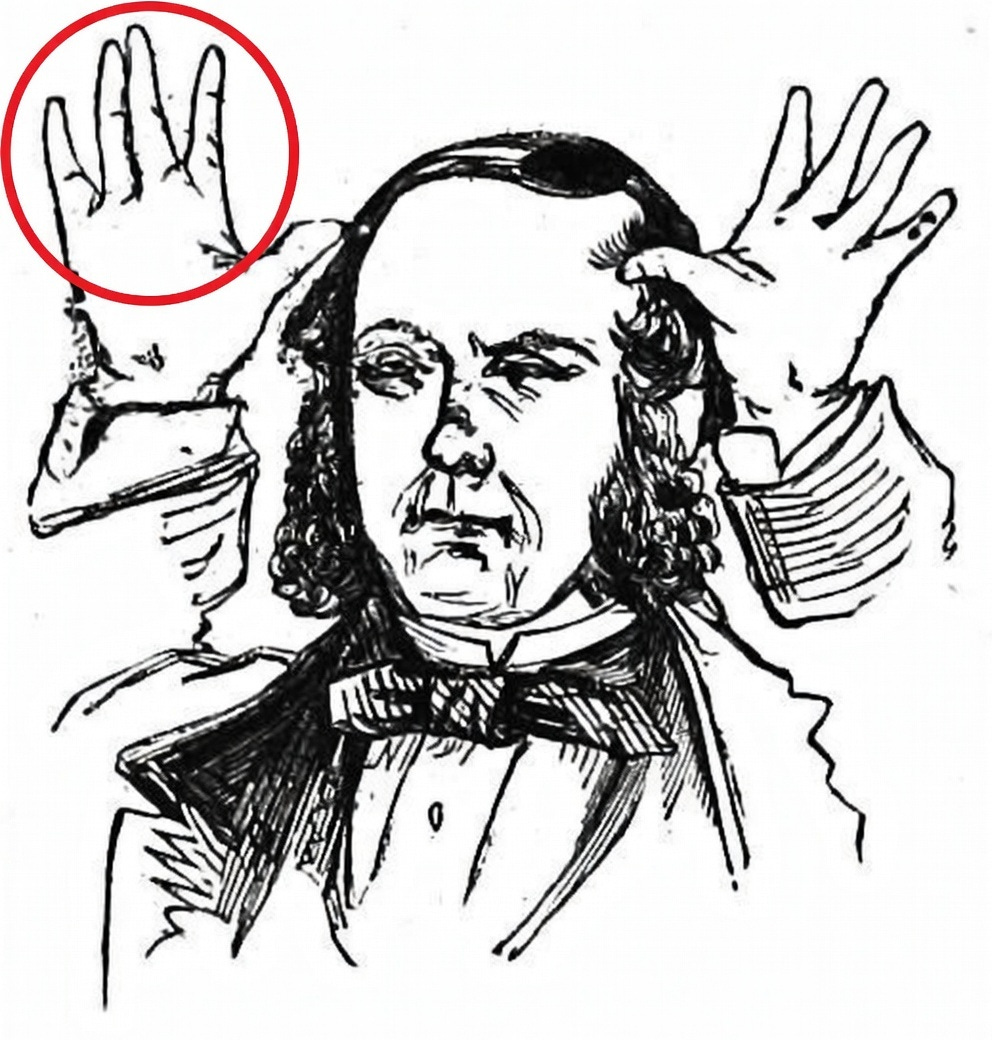
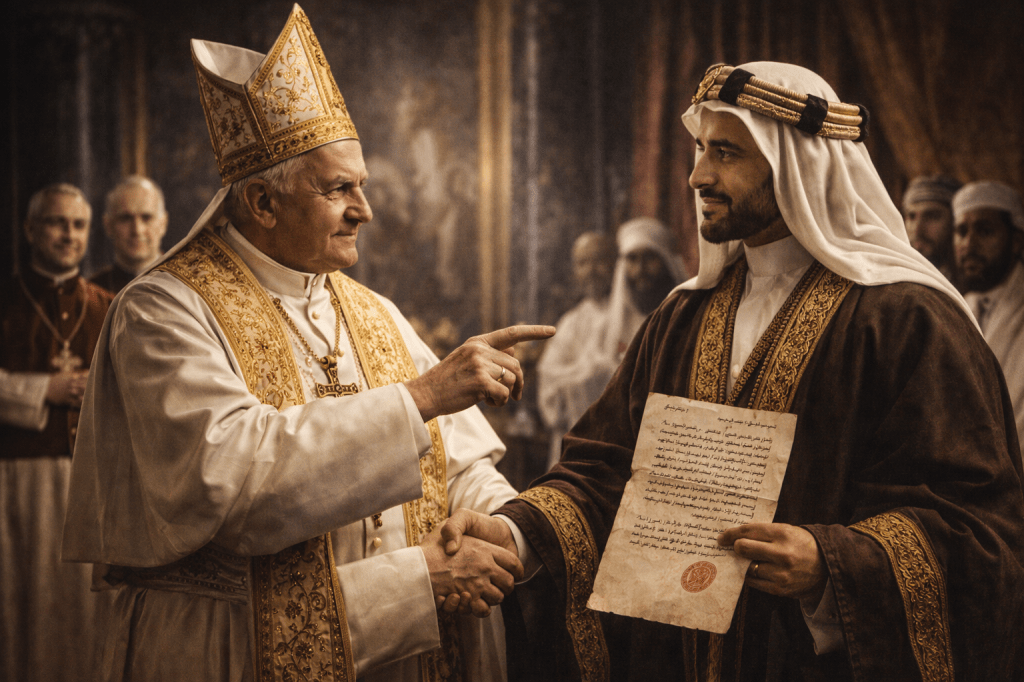
Placed chronologically, the Sons of Malta belong to the antebellum fraternal explosion of the 1850s, the same period that produced dozens of oath‑bound societies blending ritual, mutual aid, political networking, and social theater. Seen above, it’s thought that this greeting shown might have been a mockery of the Order of the Elks. To understand their position fully, they must be situated alongside two parallel formations: the New York–based Order of the Lone Star and the earlier Northern Kappa Alpha Society at Union College. Together, these illustrate how elite fraternal architecture migrated from collegiate literary secrecy into political paramilitary aspiration and then, in certain cases, into burlesque or masked form.
The Kappa Alpha Society, founded in 1825 at Union College in Schenectady, New York, was the prototype of the American Greek‑letter fraternity system. It established the structural grammar: centralized ritual, local chapters, oath‑bound membership, symbolic insignia, alumni networking, and elite recruitment through education. This was not mere collegiate amusement; it was a blueprint for disciplined, scalable secrecy among upwardly mobile young men in the North. By the 1840s and 1850s, that model had matured into a portable technology of organization.
The Order of the Lone Star emerged within that same Northern fraternal ecosystem. An organization called the Order of the Lone Star was formed in New Orleans shortly after Narciso López’s execution in 1851 at the offices of the Lafayette True Delta, with rituals written by Senator John Henderson. Yet contemporary recollections indicate the Order existed prior to López’s raids, suggesting its roots were earlier and broader. The Times‑Picayune of New Orleans ran announcements of meetings of Division No. 2 of the Order of the Lone Star from November 5, 1851, through August 11, 1854. The Daily Globe of Washington, D.C., pronounced the Order “dormant” on September 29, 1854. The structure—divisions, formal notices, ritual authorship by political figures—mirrors collegiate fraternal architecture, but weaponized for expansionist purpose.
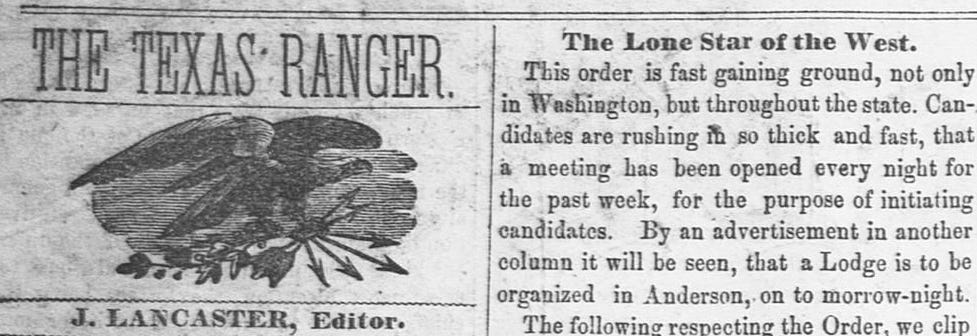
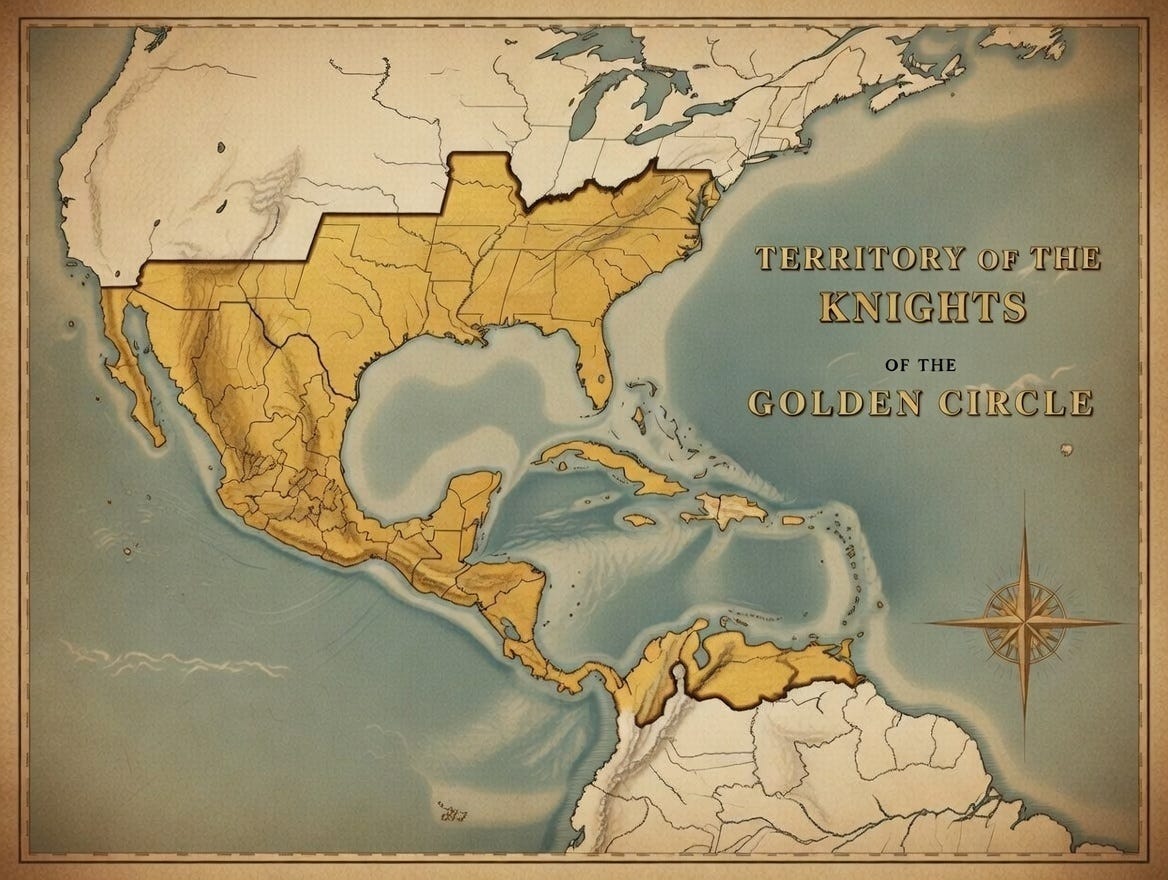
The Order of the Lone Star was explicitly tied to filibustering ambitions. Under its auspices, men and means were raised for the López raids upon Cuba in 1850 and 1851 and for subsequent forays into Central America under William Walker, the “grey‑eyed man of destiny.” When these hostile designs failed, the Order fell into disrepute. Yet its organizational form did not vanish. In Texas, the Order of the Lone Star of the West appeared as a regional branch, embedding itself in frontier networks before being absorbed into the Knights of the Golden Circle. The Knights inherited not only membership but logistical channels, ritual discipline, and ideological framing. The transformation from Northern expansionist lodge to Southern secessionist infrastructure was not abrupt; it was an evolution along an already established fraternal template.
It is within this transition period that the Sons of Malta appear in the record with peculiar timing. On November 17, 1854—two months after the final Times‑Picayune notice for a Lone Star meeting—the same newspaper carried a notice: “I. O. S. M.—Brahmah Lodge No. 1 There will be a regular meeting of this lodge THIS EVENING, at the Mechanics Institute Room 4, at 7 1/2 o’clock.” The sudden replacement of Lone Star notices with Independent Order of the Sons of Malta notices in the same paper, in the same city, invited speculation even in the 19th century.
One account declared that the Order of the Lone Star, having failed in its Cuban and Central American ventures, “fell into disrepute, and its secrets were exposed and burlesqued by the Sons of Malta.” Phocion Howard’s recollections likewise referenced A. L. Saunders’ claims of involvement in both circles. In 1883, K. Loric wrote that a quarter century earlier a secret society known as the Sons of Malta had sprung suddenly into existence in New Orleans, originally aimed at the capture of Cuba, with prominent Southern military men as leading spirits. According to that narrative, when filibustering plans were abruptly squelched, a well‑known newspaper man transformed the initiation machinery into a series of elaborate practical jokes and theatrical sells. Dr. Rob Morris of Kentucky, writing in 1885, identified that newspaper man as George D. Prentice, editor of the Louisville Journal. Morris described Prentice’s irreverent initiation into Freemasonry and claimed that in the same spirit he prepared the celebrated travesty entitled “The Sons of Malta,” blending sacred tenets into parody. Morris did not ascribe direct ritual borrowing from the Order of the Lone Star, but he acknowledged the structural lineage: a serious initiation framework repurposed into burlesque form. By Morris’s account, the Sons became the “mother of many other fraternities of the sort,” spawning caricatures of established orders in community after community.
Whether parody replaced politics or concealed it remains unresolved. What is measurable is the network spread. By the mid‑1850s, Sons of Malta lodges existed in multiple major American cities and even in Ottawa, Canada. National conventions and grand assemblies were reported. Newspaper coverage oscillated between amusement and suspicion. A Boston correspondent for The New York Times in July 1858 recorded circulating fears that the Sons of Malta were engaged in covert political activity, though no conclusive proof was offered.
Filibustering rumors followed them persistently. Reports alleged lodges in Michigan, Illinois, Ohio, and Wisconsin were purchasing lake clippers for overseas ventures, with Cuba repeatedly named as the target. Spanish authorities were said to have stationed spies in New York after intelligence suggested the Sons constituted a well‑organized movement aimed at Cuban conquest. Washington dispatches echoed these concerns. Even William Walker was humorously reported as seeking membership, supposedly intending to convert jovial Maltese into active filibusters. Whether satire or signal, the rumors align geographically and temporally with the fading Lone Star network and the rising Knights of the Golden Circle.
Mobile and New Orleans provide critical environmental context. Both cities possessed dense cultures of masked civic orders and mystic societies long before formal Mardi Gras krewes crystallized in New Orleans. Annual parades, costume traditions, ritual secrecy, and logistical coordination were embedded in public life. An 1886 account by Phocion Howard describes A. L. Saunders retrieving John Forsyth of the Mobile Register during a yellow fever outbreak to help organize the Independent Order of the Sons of Malta. Journalism, river transport, Gulf commerce, and secret ritual intersected in a port environment already fluent in masked organization.
The symbolic register reinforces the ambiguity. “Malta” invokes crusading orders and militant Christianity, while “Lone Star” invokes frontier sovereignty and Texian identity. Both draw from chivalric reservoirs. The Knights of the Golden Circle would later fuse similar romantic martial imagery with explicit secessionist intent. The difference lies not in structural grammar but in declared mission. The same fraternal architecture—oaths, divisions, hierarchical titles, ritual ordeal—appears across collegiate fraternities, expansionist lodges, secessionist circles, and parody societies.
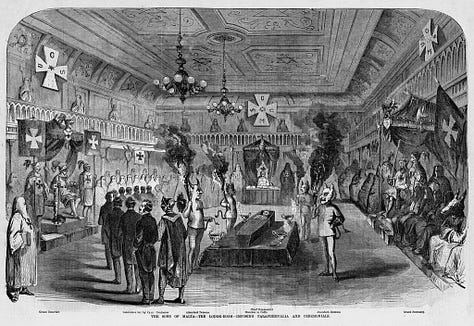
Initiation descriptions attributed to the Sons of Malta include coffins, candles, swords, draped figures, staged ordeals, and death‑and‑rebirth symbolism. These are not inventions of burlesque; they are the standard symbolic technologies of oath societies. Humor does not erase function. It reframes perception. If the Order of the Lone Star’s secrets were indeed exposed and burlesqued, then parody may represent mutation rather than termination—a transformation from overt political mobilization into socially tolerated carnival form.
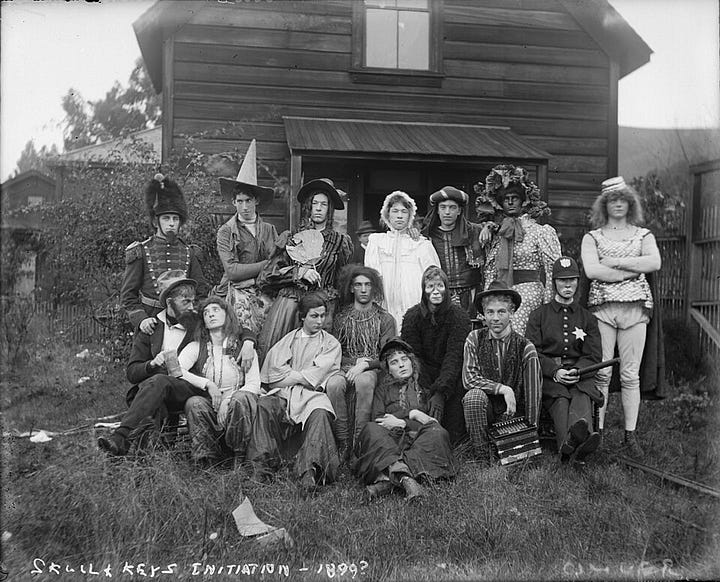
In the early twentieth century, Skull & Keys at the University of California, Berkeley emerged as a kind of ritualized parody of East Coast senior societies—borrowing the theatrics while amplifying the irreverence. Its founders, some of whom had Yale connections, adopted elements associated with Skull and Bones, including “tap day” selection rituals and the construction of an off-campus “Tomb,” clearly signaling inspiration from Yale University traditions. Yet unlike the tightly managed austerity of Yale’s order, Berkeley’s version leaned into spectacle and excess, cultivating a reputation closer to collegiate satire than establishment grooming. In that sense, Skull & Keys fits within the broader American lineage of fraternal mock-ritual culture exemplified by the Sons of Malta—groups that mimicked secret-society form while turning ceremony into performance, blending elitist aesthetics with burlesque irreverence.
Viewed in sequence, the pattern becomes coherent. The Kappa Alpha Society demonstrates the early Northern mastery of scalable ritual organization. The Order of the Lone Star adapts that architecture for expansionist and filibustering aims, forming divisions in New Orleans and extending westward into Texas before feeding into the Knights of the Golden Circle. The Sons of Malta emerge in the same cities at the same moment Lone Star notices disappear, inheriting either its membership, its ritual scaffolding, or at minimum its cultural space. Publicly they laugh. Privately they organize. Whether as successor, mask, or mutation, the overlap was strong enough that contemporaries insisted a connection existed.
In mid‑19th‑century America, secrecy was not an anomaly. It was infrastructure. The difference between a college fraternity, an expansionist lodge, a secessionist circle, and a parody order often lay in declared purpose rather than in structural design. Ritual supplied cohesion. Geography supplied opportunity. Humor supplied cover.
Not isolated phenomena.
A continuum.
Mystic Societies, Mardi Gras, and the “Fake Rex” Tradition
The Mistick Krewe of Comus appears here for a structural reason. Comus is one of the clearest examples of a so‑called “mock empire” that nonetheless operates as a gated order. Founded in New Orleans in the mid‑nineteenth century, Comus did not simply add color to Carnival; it formalized hierarchy inside spectacle. Its secrecy, its closed membership rolls, and its carefully controlled invitations created a social architecture that mirrored the very imperial forms it theatrically parodied.
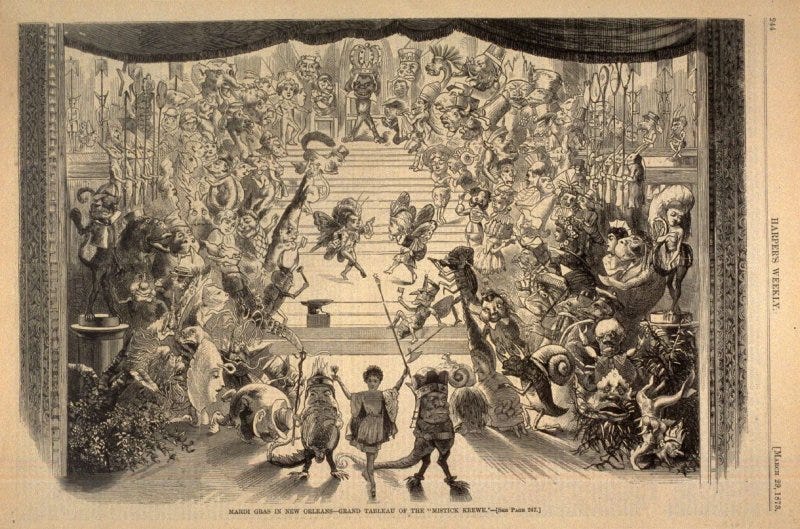
Comus is not merely a parade organization. It functions as an invitation economy in which access itself becomes currency. Membership is controlled and lineage matters. Invitations to balls were elaborate, engraved objects—coveted artifacts signaling entry into an inner circle that few could access. Secrecy is maintained not as mystery for its own sake, but as a boundary. Participation becomes a credential, a mark of social alignment. At the same time, Comus openly performs myth, costume, and dream‑empire, drawing on classical allegory, anthropomorphic hybrids, and Hellenistic pageantry that reach back to ancient procession culture. Animal‑human figures, masked courtiers, and staged tableaux are not arbitrary decoration; they are survivals of an older Mediterranean carnival grammar where empire, satire, and ritual inversion coexisted. It presents itself as spectacle while quietly organizing hierarchy. The symbolic layer becomes real precisely because people behave as though it carries authority.
This marks the transition point in the corridor narrative.
Mardi Gras operates as a parody of empire while reproducing imperial form. The crowned “Rex” appears theatrical, yet the role still structures real social alignment and civic attention. A ceremonial king presides over routes, schedules, and gatherings that shape the city’s rhythm. What appears playful performs serious coordination. Carnival itself descends from older Roman festival traditions—public procession, inversion, masked revelry tied to the liturgical calendar that survived through Catholic Europe and was carried into French colonial culture. The Roman circus, the Vatican hill festivals, and later French carnival traditions provided the template: pageantry as social ordering mechanism disguised as celebration.
This is the same pattern visible in the Sons of Malta: mockery as cover, mockery as interface, mockery as socially acceptable mask for order. An organization that claimed medieval chivalric origin while staging comic procession in sheets demonstrated how parody can shelter structure. The documented account of a long spectral march, draped in white and observed by an entire town, illustrates how theatrical absurdity can normalize coordinated presence in public space.
At this point the analysis shifts back upstream to Mobile. Mobile functions as the feeder system that precedes New Orleans in this lineage. Long before formal krewes consolidated in Louisiana, Mobile already normalized masked societies, ritual procession, and controlled civic spectacle. In Mobile, ceremonial secrecy is not exotic—it is native, embedded in colonial Catholic festival culture and adapted to Gulf Coast civic life. The technology of masking, of invitation, of selective visibility, was already operational.
From this environment emerges a portable cultural technology that sits at the intersection of local politics, fraternal organization, and esoteric theater. Masked societies behave less like hobby clubs and more like embedded civic networks with ritual language: locally anchored, membership‑controlled, symbolically armored. They occupy the space between performance and power, between festival and coordination.
A mystic krewe is structurally analogous to a street crew. It is also structurally analogous to a fraternal order such as the Sons of Malta. The comparison is not aesthetic but functional. Membership is gated. Identity is reinforced internally through ritual and costume. Public spectacle conceals private selection. Allegiance is maintained through repeated ceremonial participation. Each maintains active ties to local political and economic reality even while appearing playful.
The proliferation of hundreds of krewes matters because it demonstrates scale. This is not an isolated club phenomenon but an ecosystem—a regional method of organizing people through ceremony, hierarchy, and controlled visibility. The networked density of these societies suggests a culture accustomed to layered belonging and stratified access.
Southern French Catholic influence and Carnival form provide the symbolic vocabulary, but the mechanism itself is practical: selective belonging wrapped in theatrical disguise. Orientalist motifs, classical allegory, and esoteric aesthetics slide naturally into this structure not as random costume but as operating language. They signal antiquity, mystery, and continuity while the real work—social sorting, alliance building, prestige signaling—happens beneath the mask.
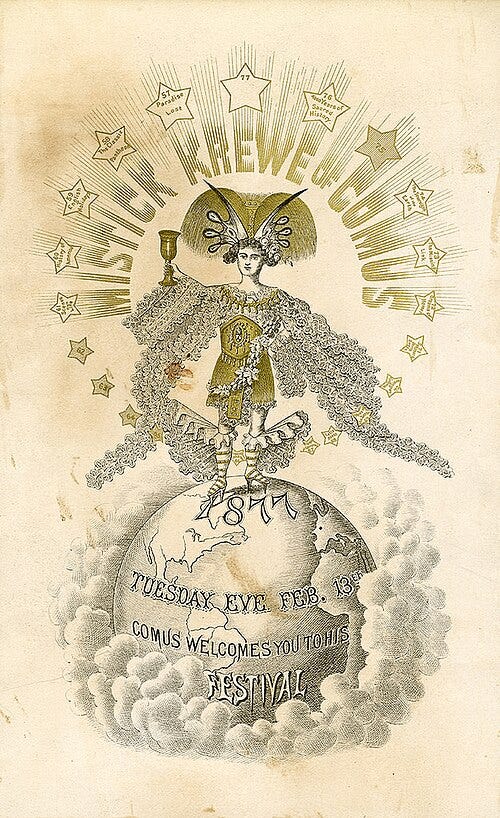
This is the point where lodge culture folds back into street formation. Formal fraternities, mystic societies, and civic crews converge into the same underlying pattern: ritualized access, symbolic authority, and localized power moving through performance. The corridor does not produce secrecy out of nowhere; it inherits, adapts, and redeploys a much older imperial grammar in a distinctly American civic environment.
Pirates, the French Quarter, and the Underworld Economy as Substrate
New Orleans has always been more than pageantry. The French Quarter is the visible face, but the engine underneath is older: port logistics, shadow trade, and the kind of corridor economy where legal commerce, illegal commerce, and political patronage share the same docks. This is the substrate. It is the same substrate that can carry pirates in one century, fraternal societies in the next, and formal “respectable” clubs in another—each layer offering cover, access, and coordination.
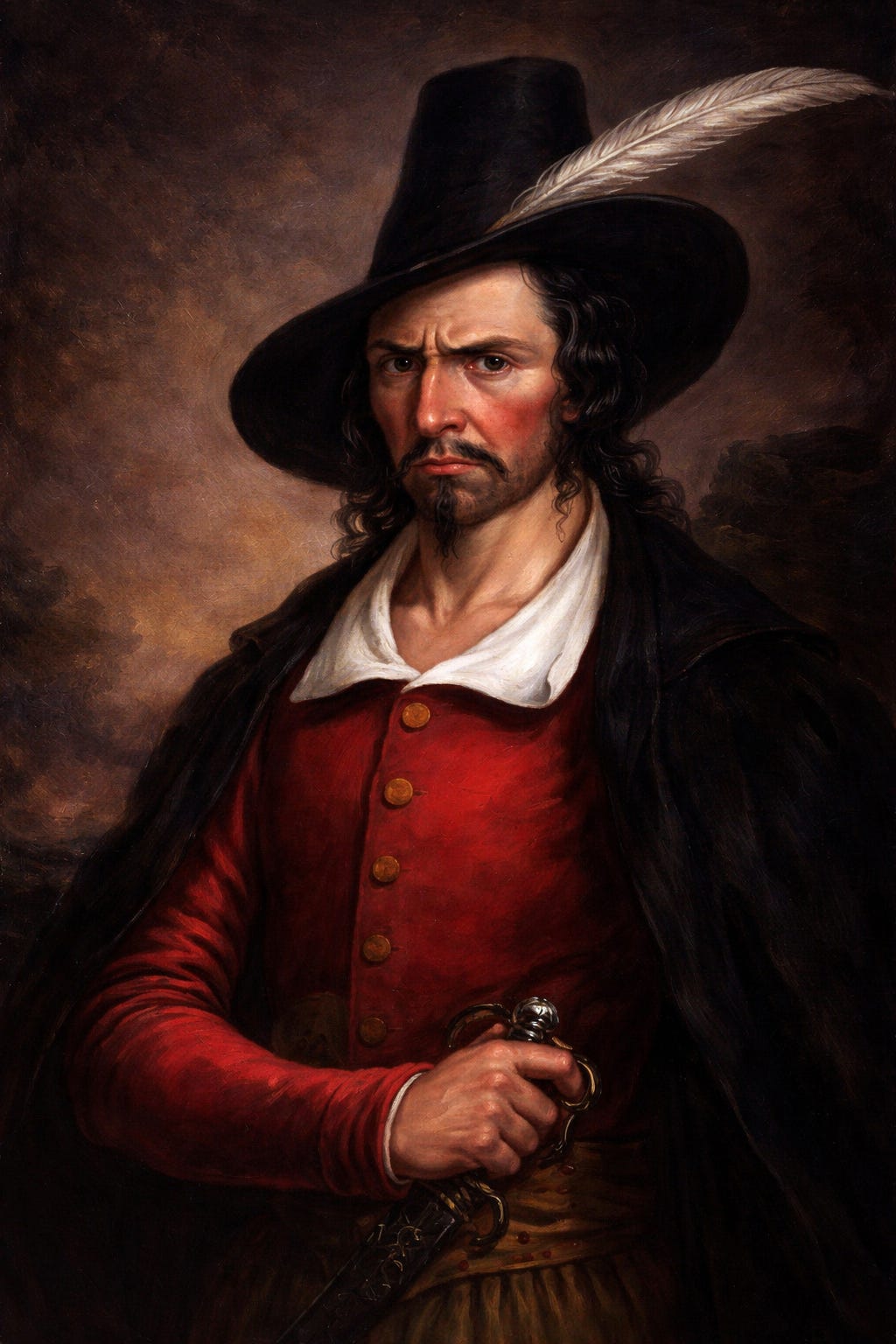
In this story Jean Lafitte is not a romantic outlier. He is an emblematic node in a port organism that naturally produces shadow logistics: control of routes, management of risk, moving goods outside official channels, and negotiating immunity through influence. That is why New Orleans matters as a bridge between Detroit and the Gulf. The corridor is not only geographic; it is behavioral. Once the French river world is established—Detroit, the inland lakes, the Mississippi system, Pontchartrain, the Gulf—an underworld economy becomes a predictable companion to the official one. The “mystic” societies imported with the French fit cleanly into that environment. They are not treated here as supernatural engines, but as social technology: invitation networks, oath culture, private rooms, and a ritualized language that provides plausible deniability for coordinated activity.
That port substrate is where the Bonaparte pattern is stitched in.
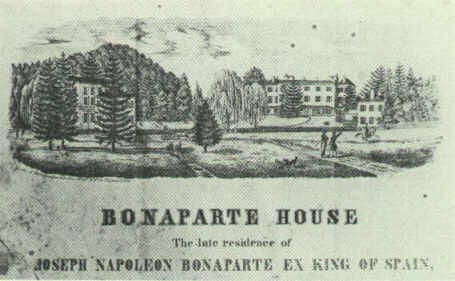
After Waterloo, Joseph Bonaparte arrives in the United States as an exiled king moving under an assumed name. In New Jersey he builds a court-in-miniature: Point Breeze as a social node that functions like an American Green Dragon for transatlantic elites. The point is not that he “plugs into” American power structures as a client. The point is the opposite. The Bonaparte logic arrives with its own gravity—an imperial family used to treating prestige, access, and loyalty as infrastructure. Joseph’s estate becomes a salon-state: banquets, visitors, quiet diplomacy, and money moving through a space that is culturally insulated and socially selective.
The same pattern reappears farther south and west through port culture and the pirate economy. If Joseph is the exiled king building a node in New Jersey, New Orleans is the port ecosystem where nodes become routes. The Lafitte story matters here as a functional possibility: a pirate with access to Gulf corridors is precisely the kind of operator who could be tasked—directly or indirectly—with a rescue attempt, a cutout mission, or a logistics problem that respectable society cannot touch. The claim is not that the paperwork survives; the claim is that the port environment makes the idea coherent.
From New Jersey the model shifts into Baltimore, because Baltimore is where the American Bonaparte line turns the imperial template into an American institutional interface.Jérôme’s marriage into the Patterson world is treated here as the first major splice: an imperial surname grafted onto a port-city merchant family with shipping and armament-adjacent wealth. Their son—“Bo”—then marries into the Williams line, tying the Bonaparte name into the Baltimore and Ohio Railroad ecosystem at the exact moment rail becomes the new nervous system of the republic.
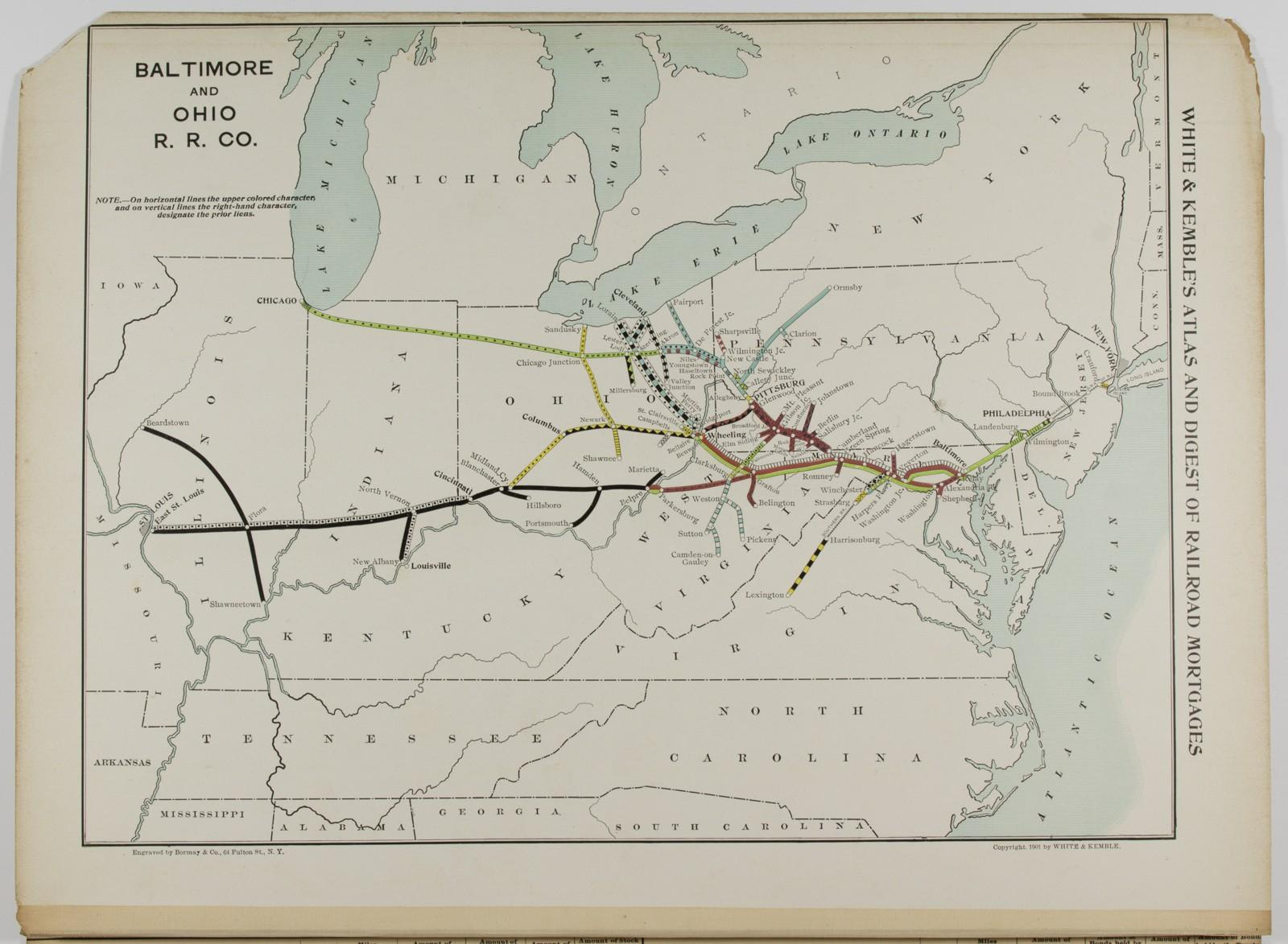
This is the key conversion: river-world shadow logistics becomes rail-world shadow logistics. Once rail exists, control of territory is no longer only about docks and delta channels; it becomes a question of bridges, junctions, depots, schedule discipline, and security.
The Maryland Club enters the narrative here simply as a fixture of Baltimore’s elite social landscape. Founded in 1857 by James I. Randolph and other prominent Baltimore men, and choosing Jérôme Napoléon Bonaparte—nephew of Napoleon I—as its first president, it functioned as a private gentlemen’s club where figures in business, law, and politics gathered. While not founded by a Bonaparte, the Bonaparte family had already been woven into Baltimore’s upper social fabric decades earlier through Jérôme Bonaparte’s marriage to Elizabeth Patterson and the continued prominence of their descendants in Maryland civic life. That Napoleonic residue in Baltimore society forms part of the wider backdrop against which institutions like the Maryland Club operated. During the Civil War it was shuttered by federal authorities due to Confederate sympathies among its membership, and in the decades that followed it maintained a reputation for exclusivity and resistance to reform movements such as Prohibition. At this stage in the draft, it stands not as a hidden engine but as an example of how elite social spaces operated in border cities—places where influence, allegiance, and identity were negotiated within the formal setting of a club.
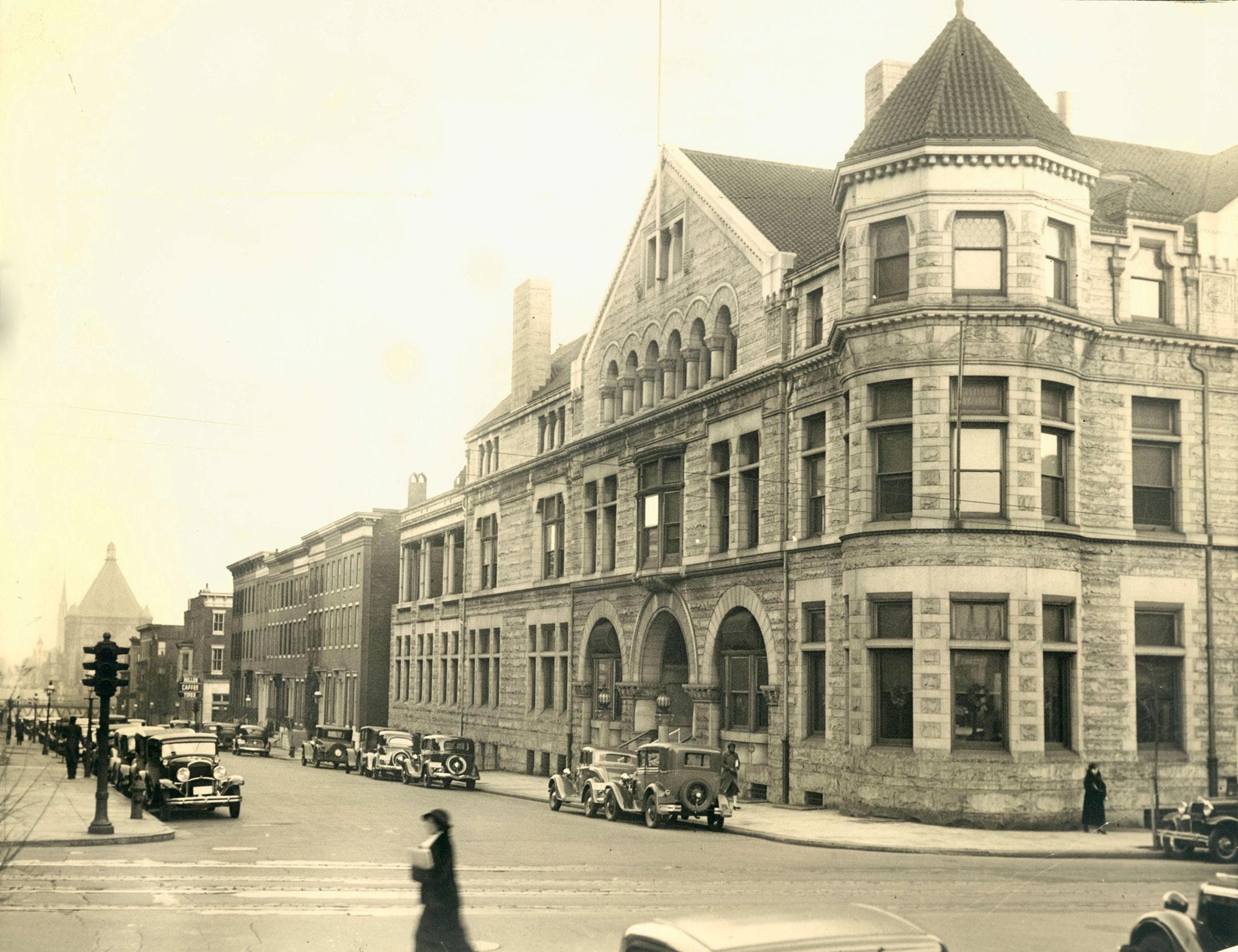
The Maryland Club enters the narrative here simply as a fixture of Baltimore’s elite social landscape. Founded in 1857 by James I. Randolph and other prominent Baltimore men, and choosing Jérôme Napoléon Bonaparte—nephew of Napoleon I—as its first president, it functioned as a private gentlemen’s club where figures in business, law, and politics gathered. While not founded by a Bonaparte, the Bonaparte family had already been woven into Baltimore’s upper social fabric decades earlier through Jérôme Bonaparte’s marriage to Elizabeth Patterson and the continued prominence of their descendants in Maryland civic life. That Napoleonic residue in Baltimore society forms part of the wider backdrop against which institutions like the Maryland Club operated. During the Civil War it was shuttered by federal authorities due to Confederate sympathies among its membership, and in the decades that followed it maintained a reputation for exclusivity and resistance to reform movements such as Prohibition. At this stage in the draft, it stands not as a hidden engine but as an example of how elite social spaces operated in border cities—places where influence, allegiance, and identity were negotiated within the formal setting of a club.
This is where the Baltimore Plot becomes useful as a narrative hinge. The plot functions as the first clear moment where the rail corridor, the border-city underworld, contested national politics, and elite salons overlap in the same frame. Lincoln’s transfer through Baltimore becomes a vulnerability not because Baltimore is exotic, but because a station transfer is the physical moment when the entire system must briefly expose itself: crowd density, timing, police presence, rail scheduling, and the volatile friction point between North and South.
The broader political context matters. Lincoln’s election in 1860 was deeply fractured. The Democratic Party had split between Northern and Southern factions, dividing its vote and allowing Lincoln to win without carrying a single Southern state. His victory was therefore lawful but politically combustible, and his journey to Washington occurred in a climate where secession conventions were already forming. Allan Pinkerton had been tasked with securing Lincoln’s passage to the capital, and his later accounts—while sometimes dramatized—frame Baltimore as a city thick with Confederate sympathy and informal networks capable of rapid mobilization.
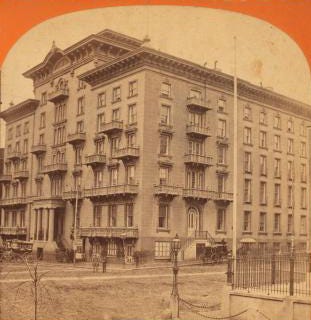
The Barnum Hotel enters as a key social node in Pinkerton’s telling. It functioned as more than lodging; it was a hub of political talk, rumor exchange, and elite patronage. Cipriano Ferrandini appears in this narrative as the loud edge of that environment—a barber operating within the Barnum ecosystem who used proximity to clientele, gossip, and political agitation as a recruiting mechanism. Whether one accepts Pinkerton’s version in full or reads it as heightened counterintelligence theater, the story situates conspiracy not in secret chambers but in semi-public commercial spaces where class, loyalty, and ideology mingled.
The detail of marked ballots or symbolic commitment gestures is treated here not as proof of occult orchestration but as consistent with the fraternal culture of the period: distributed culpability, ritualized commitment, and engineered feelings of selection. Lincoln’s nighttime passage through Baltimore—disguised, rerouted, and later mocked in the press—became part of the mythology. Newspapers coordinated ridicule, portraying the precaution as cowardice. Yet the episode underscores the instability of the moment: a president-elect moving through a divided border city under threat.
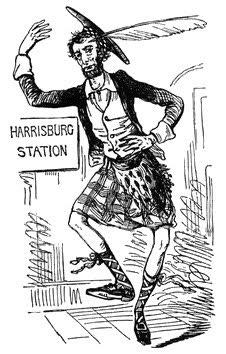
Lincoln was not “installed” by secret orders, but his path to office was undeniably shaped by factional division. Political allegiances at the time often overlapped with fraternal, civic, and regional affiliations, meaning that party fracture had social depth beyond ballots alone. The Baltimore Plot therefore stands as a moment where corridor logistics, partisan rupture, and the informal ecosystems of clubs, hotels, and networks converged in a single, exposed transit point.
The investigation then pushes outward to Mexico and militia culture, because that is where the Bonapartist template looks most like a sovereign cutout. In some nineteenth‑century accounts and later retellings, Allan Pinkerton’s tracking of Cipriano Ferrandini’s network extends beyond Baltimore into broader Confederate and expatriate circles, including activity in Mexico during the era of French intervention. While documentary proof of a direct Ferrandini–Bonaparte militia collaboration remains thin, the image of Bonapartist figures circulating in Mexico during Maximilian’s imperial experiment provides a plausible theater in which displaced dynastic ambition and militia culture overlapped. A Bonaparte presence in Mexico becomes, at minimum, an emblem of dynastic competence operating outside a stable state structure. It also becomes a narrative bridge tying Ferrandini’s orbit to a Bonapartist orbit: the Baltimore underworld does not have to be formally “directed” to be functionally aligned with imperial residue networks. It only needs overlapping recruitment channels, ideological sympathies, and a shared belief that legitimacy can be manufactured through oath, spectacle, and protection.
At the same time, the rail story widens into imperial Russia through the very real figure of Thomas Winans, the Baltimore industrialist whose work on Russian railways linked American capital and engineering expertise to the Romanov state. Introducing Winans explicitly grounds the Moscow reference in documented history: he and his family were deeply involved in building rail infrastructure for Tsarist Russia. That connection matters here not as a conspiracy claim but as structural evidence that mid‑Atlantic commercial actors operated transnationally during the Lincoln era. Rail becomes the connective tissue—a sovereignty tool that crosses regimes. Once that is accepted, the Bonaparte thread stops looking like an isolated American curiosity and begins to sit alongside other imperial machines, showing how corridor actors could move between Baltimore, Mexico, and Moscow within the same nineteenth‑century geopolitical field.
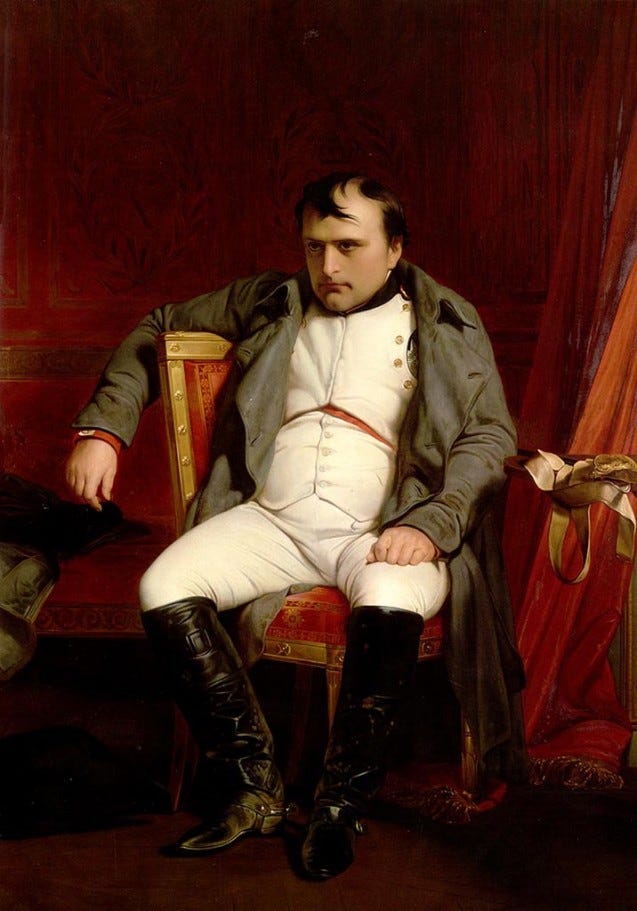
This is the point where the “Cosa Nostra patronage” language becomes precise. It is not about crime as vice; it is about governance as an architecture. Napoleon’s core move was not merely conquest; it was installation. Brothers on thrones, marshals as territorial captains, prefects as district managers, honors as loyalty currency. That is the Commission idea before the Commission is named: a federated system of regional authorities who hold territory, arbitrate disputes, and answer upward to an apex patron. The Legion of Honor becomes the emblem of credentialed belonging—an outward sign that loyalty has been recognized and that access follows.
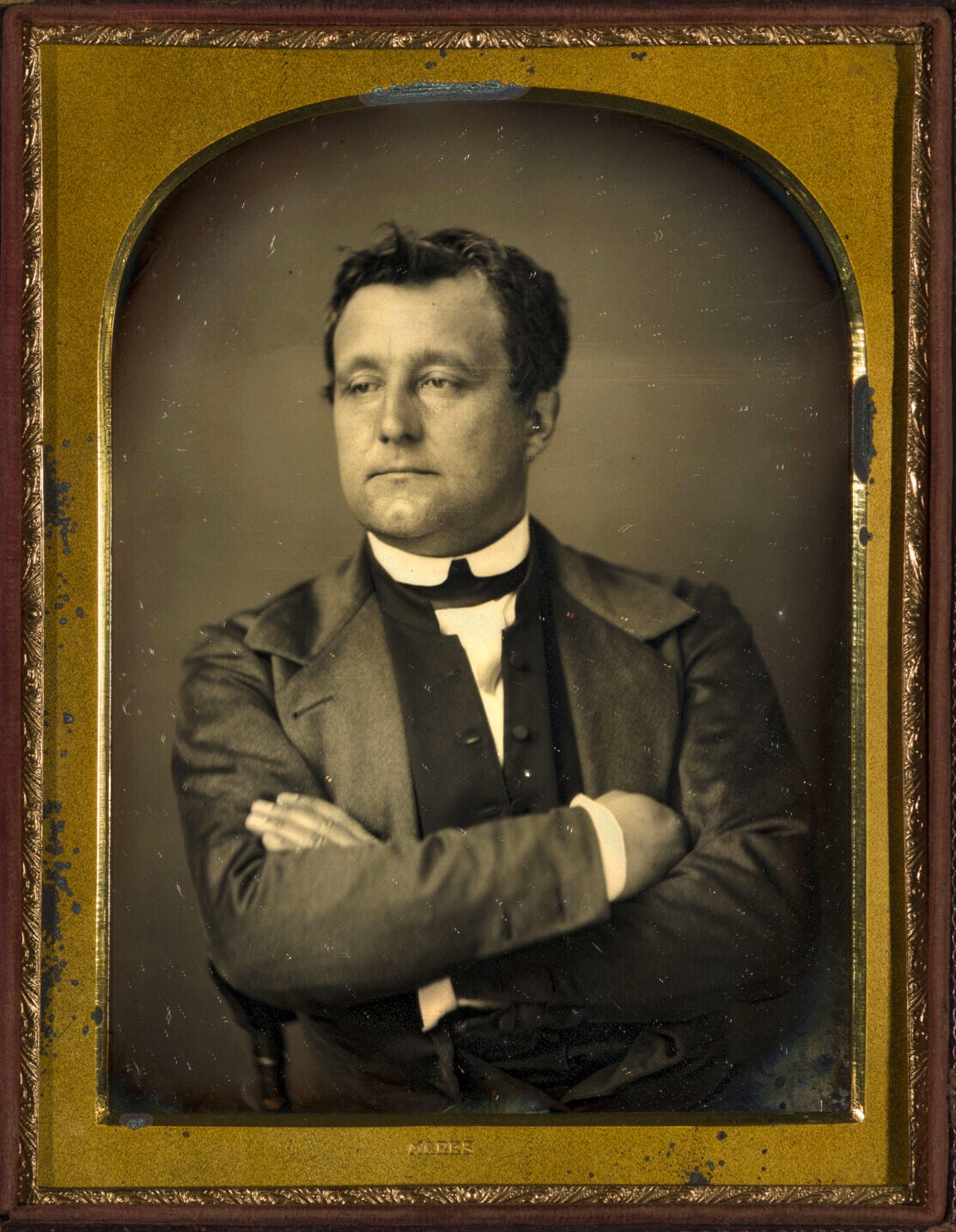
When the empire collapses, the template does not vanish; it disperses. It survives as residue: veterans, administrators, oaths, and the habit of treating order as a logistics problem. Italian unification and the emergence of mafia governance become useful in this framework not as a literal genealogy, but as a historical rhyme: regime change produces enforcement gaps; enforcement gaps invite private arbitration; private arbitration stabilizes into a federated territorial system. The Bonapartist holdover network becomes a displaced imperial ecology that can operate in that same manner—cutouts, brokers, intermediaries, protected corridors.
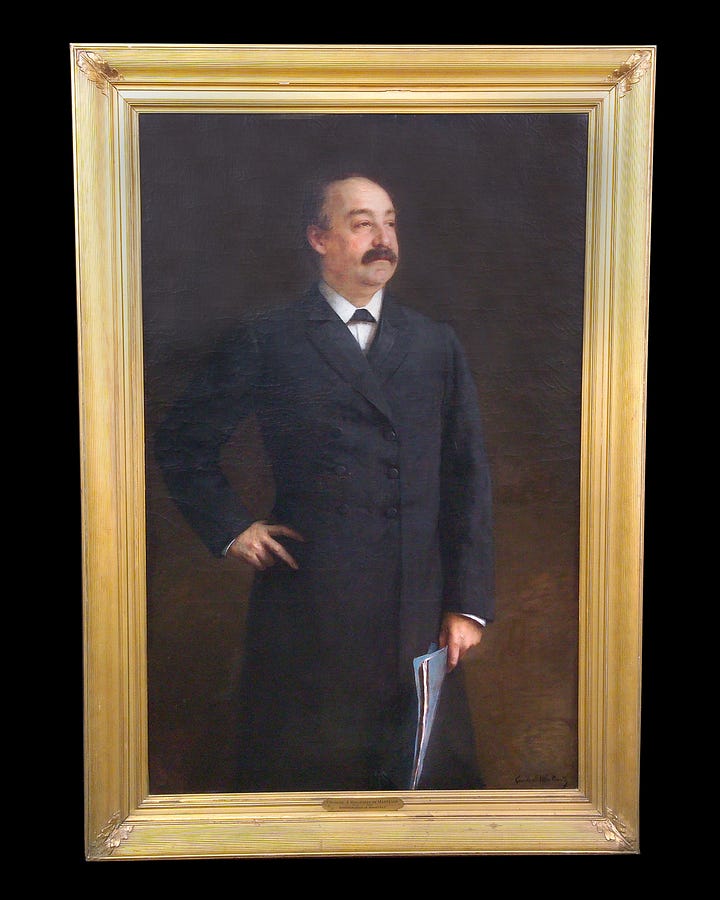
That is why the American Bonapartes are framed as more than a genealogical curiosity. The line from Joseph’s New Jersey salon-state to Baltimore’s club-and-rail interface shows the conversion of imperial residue into American institutional power. The Jérôme–Patterson splice ties the name into maritime wealth. The Bo–Williams splice ties it into the first major rail system in the country. The Maryland Club functions as the public room. And then the family produces a figure who moves directly into the state: Charles Joseph Bonaparte as Secretary of the Navy, as Attorney General, as a founder of what becomes the federal investigative apparatus, and as a Roosevelt-era hinge where private network logic becomes formal government structure. Before that federal role, however, Charles Joseph Bonaparte helped found the Signet Society at Harvard in 1870, an elite literary fraternity whose Greek motto—often rendered as “create art and live it”—signals the fusion of aesthetic cultivation and lived practice. The Signet circle would include members from families such as the Roosevelts, reinforcing the way elite social, intellectual, and political lineages braided together. In that light, the Bonapartist symbol of the bee—Napoleon’s emblem of disciplined industry, of many working toward a single hive—reads less as decorative heraldry and more as metaphor: institutions producing honey through coordinated labor, small circles generating influence that later crystallizes inside the state.
All of this loops back to New Orleans because New Orleans is the oldest American laboratory for the merger of port commerce, shadow logistics, and fraternal cover. The French Quarter is not merely aesthetic; it is a node in a corridor civilization that runs northward through Detroit and southward through the Gulf. Pontchartrain is not a decorative name; it is the inland hinge between lake, river, and sea. The “mystic” societies are not treated as fantasy; they are treated as imported social technology that makes coordination culturally normal and publicly deniable. It is in this Gulf ecosystem that speculation about Bonapartist underworld reach finds its most dramatic expression.
After Napoleon’s first exile to Elba and his return during the Hundred Days, the possibility of rescue from St. Helena lingered in political imagination. Some later writers and commentators have speculated whether Joseph Bonaparte—living in relative comfort in the United States—ever entertained plans to liberate his brother from the Atlantic prison. Anecdotes circulated that Joseph and Napoleon resembled one another closely enough to serve as stand-ins, fueling romantic theories of substitution or exchange, though no documentary proof confirms such a switch. Alongside those rumors sits the more adventurous claim that Joseph might have considered commissioning a maritime rescue with the assistance of Gulf privateers such as Jean Lafitte. Whether legend or exaggeration, the persistence of these stories matters for structural reasons: they reveal how easily Bonapartist myth fused with pirate networks and port-world improvisation.
In this world, the underworld economy of New Orleans is the substrate, the Bonapartes provide a portable patronage template, and the rail-and-club interface in Baltimore shows how that template can embed into the American state. Lafitte sits at the doorway not as confirmed co-conspirator but as emblem of the port ecosystem’s capacity to generate cutouts—men who move between legality and outlaw commerce with fluency. The rest is pattern: corridors create shadow logistics; shadow logistics produces private arbitration; private arbitration stabilizes into federated authority; federated authority eventually seeks a seat inside the formal state.
The White League
The White League was a white supremacist paramilitary organization formed in the Reconstruction South, openly dedicated to restoring Democratic rule and dismantling Black political participation through intimidation and violence. It was not merely fraternal pageantry—it was organized coercion operating in the space between politics and insurgency.
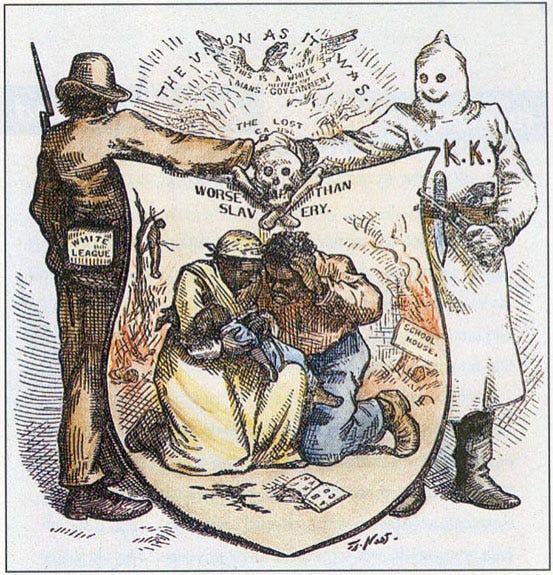
This discussion is not an endorsement of the racial ideology that animated such groups. It is an examination of how a parallel pseudo-legal culture developed alongside formal governance. In places like Louisiana and Alabama, especially in port cities and river corridors, fraternal structure, racial identity, and political mobilization fused into a binding glue. Race functioned as an organizing principle—an adhesive that allowed members to trust one another, coordinate action, and justify enforcement outside official law. The point is structural: the same civilization can generate both masked revel societies and armed political leagues using adjacent social mechanics—membership oaths, insider language, local elite coordination, performative symbolism, and controlled visibility.
This is where the term “white societies” in New Orleans and the broader Gulf South becomes analytically important. Certain elite social formations, operating under civic, celebratory, or cultural cover, existed in proximity to reactionary political networks. That proximity does not make them identical, but it shows how shared ritual technologies—uniforms, secrecy, hierarchy, spectacle—could move across moral boundaries.
The broader thesis remains intact: ritual infrastructure is morally neutral. It can build social cohesion, mutual aid, and celebration. It can also build exclusion, intimidation, and parallel enforcement. In Reconstruction Louisiana and Alabama, the racial element intensified that cohesion, turning fraternity into political force.
Krampus, Ghost Costumes, and the Night Performance of Power
Long before the Ku Klux Klan standardized the white hooded robe, European and American communities already had traditions of masked winter masquerade, sheet disguises, and nocturnal “scaring” customs. In parts of Central Europe, figures like Krampus accompanied St. Nicholas during Advent, appearing in fur, horns, and grotesque masks to frighten children into moral obedience. In the British Isles and colonial America, winter traditions such as mumming, wassailing, and charivari involved masked participants moving through towns at night, sometimes playfully, sometimes coercively.
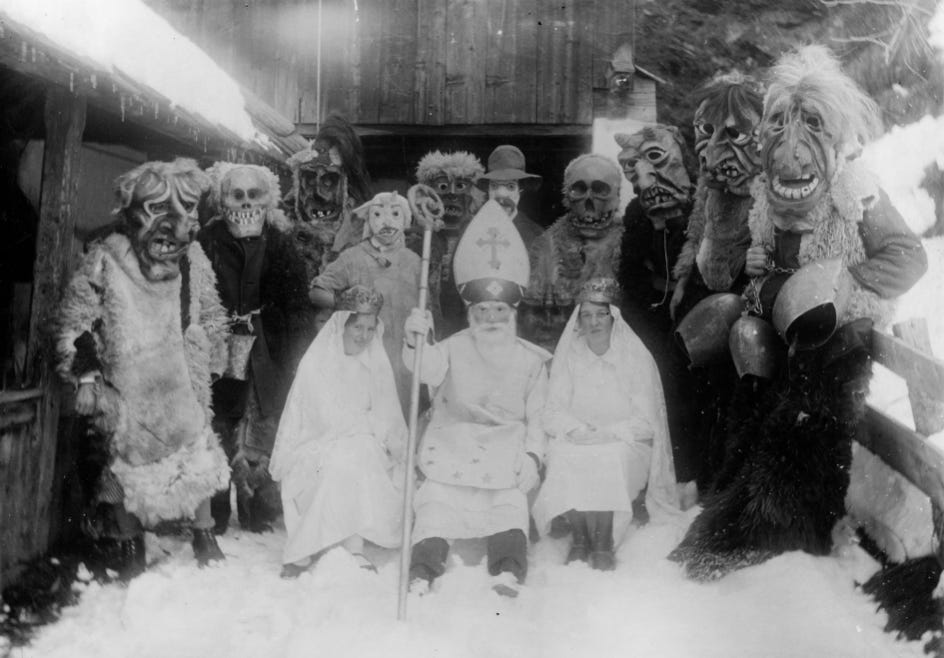
In the American South specifically, there are documented references in the 18th and early 19th centuries to individuals draping themselves in white sheets or improvised ghost costumes to frighten neighbors, settle pranks, or enforce informal social discipline. These performances drew on a shared folk belief in spirits and apparitions. White cloth was practical—it was available, inexpensive, and visually striking in moonlight. Over time, that visual shorthand hardened into the popular American ghost image: the sheeted specter.
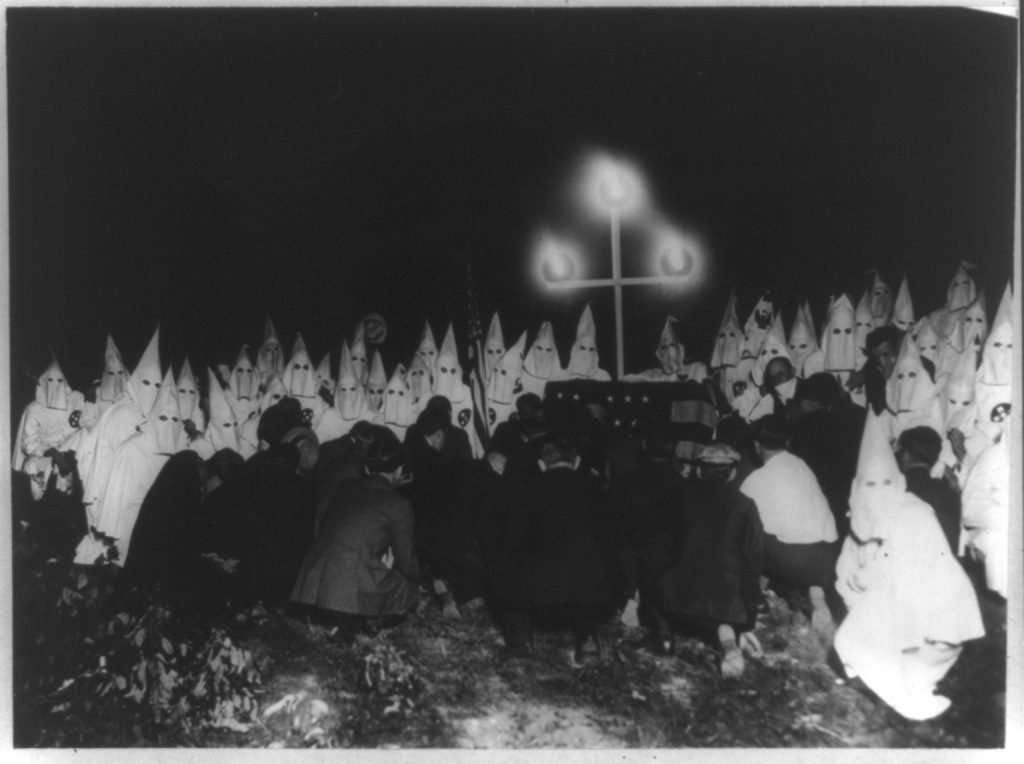
The Sons of Malta provide a revealing documented example of how this theatrical grammar functioned in fraternal culture. Contemporary accounts describe the order as claiming an origin among “the persecuted saints of the Isle of Malta in the fifteenth century,” though even observers at the time noted that this lineage was likely more fiction than fact. Its precise character and object were “never definitely disclosed.” The public impression was that the society cultivated the comic, the droll, and the ridiculous—yet it had sufficient membership to stage a long spectral procession, the marchers draped in sheets, which nearly the entire town came out to witness. That detail matters. The sheeted procession was not an isolated prank; it was organized, coordinated, and publicly legible. It demonstrates that long before the Klan institutionalized the white robe, fraternal bodies were already experimenting with mass nocturnal spectacle under the cover of humor and parody.
This matters because the first Ku Klux Klan explicitly exploited an already existing cultural script. Early Klan members described themselves as the ghosts of Confederate soldiers and used white costumes to amplify supernatural intimidation. The disguise worked not because it was invented from nothing, but because communities already recognized the theatrical language of masked night visitation. The Klan did not invent hooded ritual from whole cloth; it appropriated and distorted older European traditions of masked brotherhood, penitential costume, and clan identity. The word “clan” itself carries Scottish Highland lineage, referring originally to kin-based social organization. In medieval Britain that clan culture had already been shaped by Norman French feudal structures, blending Celtic kinship with continental chivalric hierarchy. By the nineteenth century in the American South, fragments of these inherited forms—oath culture, secrecy, costumed ceremony—remained available as symbolic raw material.
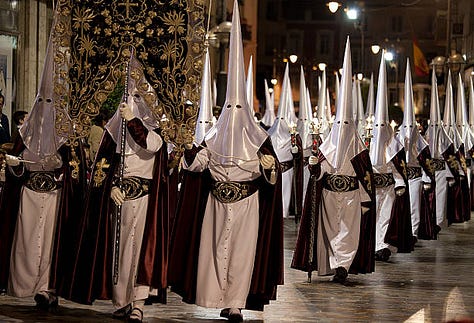
The white hood and robe were not medieval Highland attire, nor were they authentic relics of Norman knighthood. They were theatrical exaggerations layered onto the idea of spectral visitation. European Catholic traditions offer an important parallel vocabulary. In Spain, during the period of the Inquisition, the capirote or coroza—a pointed paper hat—was imposed on the accused as a sign of public humiliation during an auto-da-fé. Different colors signified different judgments.
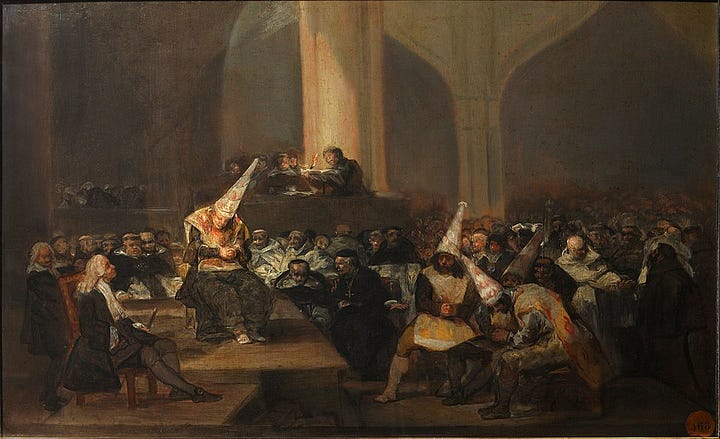
When the Inquisition ended, the capirote did not disappear; it was transformed. Catholic brotherhoods retained the form as a penitential garment, now covered in fine fabric and worn during Holy Week processions, particularly in Andalusia. Penitentes walk in public wearing the pointed hood with eye slits and embroidered insignia, not as spectacle of terror but as ritualized repentance.
The pointed hood therefore has a documented history as a sign of penance and communal religious discipline. Over time, the shape migrated in popular imagination. The “dunce cap” legend—often misattributed to medieval scholastic punishment—reflects a later cultural reinterpretation of conical headgear as a mark of humiliation. In modern fantasy iconography, the wizard’s pointed hat likely draws from a mixture of medieval scholastic imagery, folk costume, and caricature, rather than a single origin. What matters structurally is that conical and hooded garments carried long associations with marked identity—heretic, penitent, scholar, initiate—before the Klan ever appropriated the form.
The tradition of bones, guardianship, and hooded custodianship likewise has deeper European precedents. In Rome, at Santa Maria della Concezione dei Cappuccini, the Capuchin crypt houses the bones of thousands of friars arranged as memento mori displays. The Capuchin order—whose members wore hooded habits—framed the preservation of bones not as macabre spectacle but as a meditation on mortality. Brotherhoods such as the Sacconi Rossi, formally the Brotherhood of the Devotees of Jesus at Calvary and Holy Lady Mary of Sorrows in Relief of the Holy Souls in Purgatory, functioned as custodians of remains, guardians of the dead, and ritual caretakers beneath the city.
Early Christians likewise met in underground spaces in Rome to honor martyrs such as Saint Peter, embedding the idea of sacred custodianship of bones within Western religious memory.
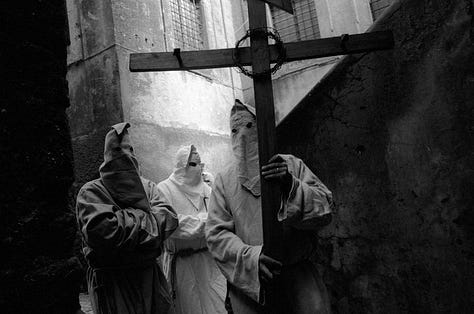
The key point is not that Catholic penitents, early Christians, or European brotherhoods are equivalent to the Klan. It is that the symbolic grammar of hood, bone, night procession, conical headgear, and oath-bound brotherhood long predates Reconstruction. Winter masquerade traditions across Europe normalized the idea that masked figures could appear at night to discipline, mock, or frighten. In Reconstruction America, that inherited ritual vocabulary—stripped of devotional meaning and redirected toward racial ideology—was weaponized for terror and political coercion. The Klan’s power lay not in originality, but in its ability to appropriate and invert existing symbols, transforming penitential or communal forms into instruments of intimidation.
When you line this up with later Indiana Klan activity, the pattern becomes clearer. The United States already possessed cultural scripts in which masked performance was socially legible. That legibility could be turned toward celebration—Mardi Gras krewes, Christmas mummers, carnival royalty—or turned toward intimidation—night riders, vigilante leagues, and paramilitary enforcement.
That’s why the phrase “Invisible Empire” resonates. The costume does more than hide identity. It transforms the individual into a symbol. The sheet, the mask, the hood—these are technologies of collective embodiment. They create the illusion that the actor is not a person but a force larger than any single man.
Rome, the Vatican Hill, and the Continuity of Spectacle
Carnival is not a novelty of the Gulf Coast but an inheritance of Roman civic spectacle. The Roman circus tradition, the regulated procession, the ritualized occupation of public streets, and the structuring of time through seasonal festival were not incidental entertainments in antiquity; they were mechanisms of cohesion and control.
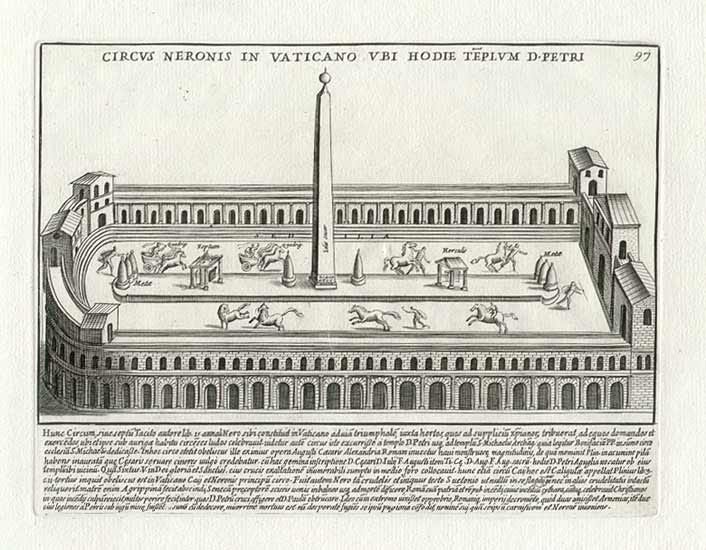
On and around Vatican Hill, religious procession and imperial pageantry intertwined, turning calendar days into instruments of authority. Rome mastered the art of choreographing crowds, assigning routes, staging entrances, elevating figures, and sanctifying spectacle.
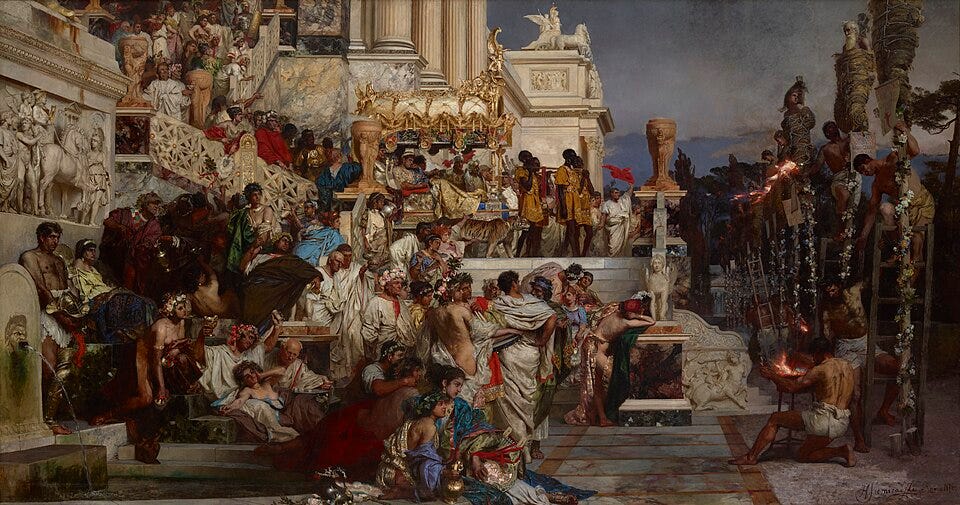
When the Western Empire dissolved politically, these performative technologies did not vanish. They were preserved in Catholic liturgical time and carried forward through medieval and early modern Europe, particularly in France and later Spain, where royal ceremony and civic festival fused into an enduring public grammar.
Through French colonial culture, that grammar crossed the Atlantic. In Louisiana, especially in New Orleans, the form survived in remarkably intact fashion. Mardi Gras is not simply a party; it is a calendrical hinge embedded in Catholic time, a sanctioned inversion period framed by Lent. The parade routes function like temporary circuses—linear arenas where hierarchy is staged and witnessed. The great causeways, the mass movement toward a fairground or riverfront, echo the older European tradition of “going to the fair,” itself a descendant of Roman market festivals and imperial games. People do not merely attend; they process, they gather along defined paths, they accept that certain figures will be elevated above them, masked, crowned, or enthroned.
Whether framed as direct institutional continuity or as durable cultural memory, the structural point remains: empire’s most lasting tools are not always legions. They are calendars, parades, choreographed streets, and permission structures that determine who may appear, who may be masked, and who may be seen. A parade route is a map you walk on. A ball invitation is an invisible passport. A costume is a role conferred by sanction rather than birth. In that sense, Mardi Gras is less a break from empire than a continuation of its most refined civic technology—the management of space, time, and spectacle. And sanctioned performance is power.
If all of this is held in one frame—French corridor mapping, Great Lakes–Wabash logistics, forts and portages, early collegiate fraternities, Southern circles, elite “Orders,” parody societies, mystic krewes, pirate economies, postwar invisible empires, Indiana Klan presence, New Orleans “white societies,” and explicit leagues like the White League—the pattern stops looking scattered and starts looking structural.
French North America built the corridor, and the corridor determined where bodies moved, where goods accumulated, and where towns calcified into durable nodes. Those towns did not just produce commerce; they incubated fraternal form as a civic technology. Selection created hierarchy. Ritual created cohesion. Oath created loyalty. Mutual aid created resilience. Identity created internal discipline. The map shaped the settlement, and the settlement shaped the brotherhood.
Then the mask became the interface. Sons of Malta demonstrated how parody could operate as operational cover, how humor could cloak organization, and how a spectral procession could be read as spectacle rather than structure. Mardi Gras krewes refined the formula, turning mock empire into a social ordering engine. A staged “Rex” could coordinate real elites. A ball invitation—beautiful, scarce, and personal—could function as currency, passport, and boundary marker all at once. The anthropomorphic costumes, the hybrid mythic figures, the controlled procession routes, the calendared inversion inherited from Roman civic spectacle and carried through France into Louisiana—none of it was random. It was choreography. It was inherited pageantry functioning as civic architecture.
In periods of political rupture, the same machinery could invert. Brotherhood could harden into an “Invisible Empire.” The parade costume could shift from carnival anonymity to intimidation anonymity. Civic ritual could become coercive ritual. The network that once placed members in business or politics could mobilize them as a paramilitary body. The racial element in the Reconstruction South intensified that cohesion, acting as adhesive inside certain white societies and leagues, allowing parallel enforcement cultures to develop alongside formal governance. The structure did not change; the moral valence did.
This does not mean every group is the same organization. It means the United States repeatedly reuses the same underlying mechanics: ritual plus selection plus anonymity plus corridor logistics equals durable power. The joke layer is not proof of harmlessness. Often it is proof of sophistication, because ridicule is a powerful solvent. When outsiders laugh, they stop investigating. When something looks theatrical, it appears unserious. Meanwhile, invitations circulate, positions are filled, alliances are reinforced, and mobilization capacity accumulates.
The American fraternal story is therefore not merely Greek letters and campus nostalgia. It is a long inheritance of corridor-building and mask-wearing: the fort and the costume, the portage and the procession, the lodge and the tavern, the order and the joke. From Roman circus to French Carnival to New Orleans krewes; from Boston taverns and Masonic lodges to Yale senior societies and Southern orders; from parody processions to spectral intimidation; from pirate economies to political leagues—the grammar persists.
And the unsettling possibility at the center of this theory is not that there is one hidden hand, but that there is one reusable script. The most serious networks understand that spectacle can conceal coordination, that pageantry can naturalize hierarchy, and that empire can be rehearsed as theater before it is exercised as force.
Sometimes the best way to build an empire is to pretend you’re mocking one.

 Unnameable Media
Leave a comment