
The death of MAGA and the making of a new American aristocracy.

On November 19, 2026, while Donald Trump was in Shenzhen negotiating with the presidents of Russia and China, Jack Posobiec was broadcasting from Shenzhen. If you had told somebody in 2016 that Posobiec would one day cover a meeting between three of the most consequential nuclear powers from China itself, it would have sounded like the premise of one of the more ambitious political memes circulating on Twitter. Ten years later, the man had a television program, access to the traveling presidential press corps and a rather better subject for his afternoon broadcast than most of the people who made their names on the internet with him.
Elon Musk was there, too. Reuters reported seeing him in a vehicle carrying members of the American delegation into Shenzhen. He had just spent hundreds of millions of dollars trying to preserve Republican control of the country and was now publicly questioning what MAGA even meant. The Republican Party had lost both houses of Congress and the governorship of Texas. None of this had cost Musk his relationship with the American president. In a single week he could contemplate the political future of a state in which he builds cars and satellites, disavow the movement he had spent a fortune supporting, and go to China with the head of the United States government.

Five days earlier, several hundred people had gathered in Irving, Texas, for a conference called Christ Is King: America After Trump. Alex Jones spoke. Tucker Carlson’s brother Buckley was there. Nick Fuentes delivered the closing address. The conference followed the Republicans’ November electoral defeat, and much of the discussion concerned what to do with the party once Donald Trump was no longer in a position to dictate its future. The president himself, evidently, had other things on his mind. The dispute over the war with Iran had already driven figures from across the old MAGA coalition into opposition to his administration.
One of the great absurdities of American life in November 2026 is that the people quarreling over the inheritance of MAGA are concentrated in the same part of the country as the man who can afford to lose half a billion dollars trying to keep it alive. In Austin, where the movement acquired much of its cultural character, an extraordinary collection of people has assembled around the production and distribution of American opinion. There are comedians, radio men, preachers and industrialists. A man running a political livestream and a man building a satellite network may find themselves communicating with the same public on the same afternoon. If the last decade was the story of Donald Trump coming to power, the next one may be the considerably stranger story of the people who came to power on account of Donald Trump.
For all the talk of Trump as an aberration in American politics, the office he occupies is the result of a fairly continuous historical development. Arthur Schlesinger Jr. published The Imperial Presidency in 1973. The president of the United States already had at his disposal military installations all over the world, a nuclear arsenal and an intelligence apparatus that conducted American foreign policy in countries whose inhabitants had never seen an American ballot. The dollar and the international financial system extended that power into commercial life. What Trump has added to the imperial presidency is an almost unprecedented degree of personal visibility. In Trump, the apparatus acquired a personality that could speak directly to an audience in almost any country on earth.
Consider the photograph from Shenzhen alongside the old one from Yalta. The point is hardly that Donald Trump, Xi Jinping and Vladimir Putin have agreed to divide the world between themselves; their meeting produced no great breakthrough on nuclear arms. But the ceremony itself expresses something the American political class spent much of the post-Cold War era trying to avoid. There are other centers of industrial civilization, and Washington is going to have to negotiate with them. The American government is entering the age of artificial intelligence with the institutional inheritance of the nuclear age and the political culture of the smartphone. It may well become a different kind of empire in the course of the next presidency.

The language of the administration’s 2025 AI Action Plan is interesting in this respect. It envisages the export of an American technology stack, from hardware to the models and applications that run on it. Countries that take American equipment, software and technical standards will be making choices about the future organization of their own economies. Sovereignty in the twenty-first century may involve the ability to operate a computational system just as it once involved the ability to issue money, manufacture weapons or maintain a merchant fleet. The argument over whether the state or the corporations will end up running the thing is still in its infancy. An American president who understands the implications of this technology will possess instruments of authority that the men at Yalta could scarcely have imagined.
Against this enormous expansion of the practical business of governing, consider the rather limited development of the political imagination of the country. In ten years Donald Trump has become so central to American public life that millions of people have effectively made a profession out of having an opinion of him. Even some of his most vehement opponents would have difficulty explaining what they intend to do with themselves when he is gone. He has been like a sun sitting in the middle of the American political system, evaporating much of the intellectual material in his vicinity. MAGA held together an extraordinary collection of people because the heat and light came from the same place. The libertarian did not have to reconcile his idea of government with that of the Christian nationalist; the Silicon Valley capitalist did not have to explain his economic program to the man who worked in a Michigan automobile plant. Trump made their disagreements temporarily unimportant. Now that they have become important again, we are finding out what survived the heat.
I think MAGA is dead in that original sense. It accomplished the remarkable feat of returning Trump to the White House, and a great many of its voters are still there. But a decade spent contemplating the political personality of one man has left his supporters in a rather peculiar position when they try to construct an intellectual life without him. The really disturbing possibility is that the few personalities who remain visible are being mistaken for the cream of American thought simply because everything else evaporated.

In 2008, when Ron Paul was the most interesting Republican in the country and the banks were falling apart, the appeal of alternative politics lay partly in the discovery that American power had a history. You could start with the Federal Reserve on a Friday night and end up the following week reading about the British East India Company, the Dulles brothers, the Bank for International Settlements or the assassination of John Kennedy. It was a wonderful time to be interested in things that the people around you had never heard of. Much of what you encountered was rubbish, and part of the education consisted in learning to recognize it. The important thing was that there was somewhere else to go after you had watched the documentary.
The summer of 2020 produced a second eruption of this curiosity. With a large part of the population suddenly at home, American history became something like an open intellectual question. People wanted to know who funded the organizations in the streets, how the public health establishment worked, what legal powers governors possessed, where the police came from and what had happened to the American economy. The discoveries of that period were subsequently distributed to an audience that had become accustomed to TikTok. Something rather unfortunate happened in translation. The intellectual life of an entire political movement started to consist of references to things its participants had already seen. The memes became a means of recognizing other people from the same corner of the internet.
The left had done much the same thing with its own dialect of academic and activist terminology. You could meet an otherwise perfectly intelligent person who had spent so much time among people with the same political education that he was unable to discuss an ordinary human problem without recourse to expressions acquired at a seminar. The anti-woke reaction was very funny while it was exposing that phenomenon. It is considerably less funny now that you can spend an evening listening to the vanguard of American nationalism and be fairly certain that a conversation about the American labor force will at some point deteriorate into a discussion of whether somebody is an NPC.
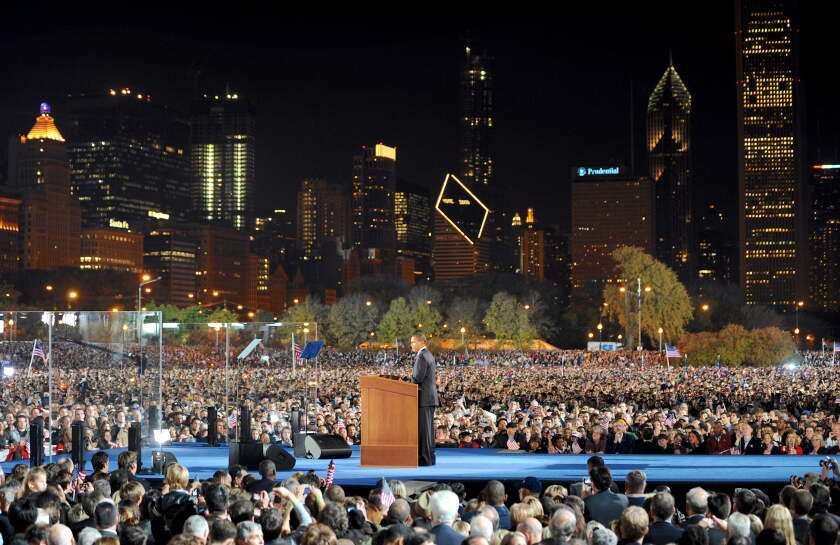
One of the interesting things about going back to Barack Obama in this context is the opportunity to reconsider Saul Alinsky, who during the Obama years became a kind of household demon among American conservatives. Alinsky’s techniques are rather familiar now. Find an issue around which an organization can be built, identify an antagonist, keep the pressure on him, and make the political conflict intelligible to the people whose participation matters. Ridicule was particularly useful because it made the target ridiculous to people who might otherwise have been intimidated by him. Obama belonged to the Chicago community-organizing tradition that Alinsky had helped establish, though the two men never met. Anybody who sat through a Tea Party meeting in 2010 will remember how much the subject once occupied the American right.
It ought to occupy it again. The most effective figures on the contemporary right work with many of the same instruments of agitation. Fuentes was encouraging Republicans to vote for Democrats in the midterms because he believed the political consequences of Republican defeat would provide his faction with an opportunity. The socialist organizers he studied understood the same principle. The anti-woke entertainer needs the woke entertainer. The communications company needs both of them. What appeared to be antagonistic political philosophies turned out to be remarkably compatible businesses.
There is an almost industrial character to the dialectic. Each controversy generates organizations, careers, markets and grievances that survive the circumstances that brought them into existence. The security politics of the Bush years helped bring Obama to power; the Obama years produced the social and political conditions from which Trump emerged; Trump’s presidency created an immense industry devoted equally to his defense and to his removal. Discontent with the results of the Trump project now furnishes the audience for the next generation of nationalists. None of this requires that Obama personally directed the events of the following eighteen years. It is a much more interesting form of controlled chaos if one understands the people who learn to profit from it at each stage. They need only manage the conflict that is already occurring. The corporations that sell advertising against it are paid regardless of the result.

Consider what happened to Austin during the pandemic. In 2020 Joe Rogan left California for Texas. So did Elon Musk. Alex Jones had already spent decades demonstrating that a national broadcasting enterprise could be built in the city. People tend to discuss these developments independently, as though the migration of the comedy business, the migration of the technology business and the development of the alternative political press had occurred in three separate countries. By the end of 2024 their histories had converged in the election of the same American president.
If you want to understand the emergence of the new American cultural aristocracy, the Comedy Mothership is as good a place to begin as any think tank in Washington. Joe Rogan used the extraordinary success of his podcast to purchase and renovate the old Ritz on Sixth Street, and in 2023 he opened the thing to the public. Hollywood had spent years alienating a considerable part of the audience for American comedy. Here was a man with enough money and enough cultural influence to do something about it. I like the idea of the Mothership. I particularly like the fact that an American entertainer who talked about independence actually went out and bought a building where people could work. There has been far too little of that in the internet age.
There is an enormous factory east of the city on the Colorado River. Tesla transferred its headquarters to Austin in December 2021, and the following spring Musk inaugurated the Gigafactory with an extravaganza called the Cyber Rodeo. A bit further east, in Bastrop County, his companies established facilities for manufacturing Starlink equipment and the headquarters of X, the old Twitter. SpaceX’s rockets are developed and launched much farther south at Starbase. The announced Terafab project in Grimes County would add advanced chip manufacturing to that Texas industrial geography. The people on Sixth Street have developed a substantial part of the country’s new entertainment business within driving distance of facilities that manufacture the equipment through which an entirely different generation of entertainment will be delivered.

What Washington has witnessed in the years since is the arrival of an unusually powerful sort of American courtier. An oilman in the twentieth century supplied the fuel of the imperial state. The proprietor of a newspaper could supply its opinions. Musk has interests in several of the industries on which the coming state will depend, including satellite communications, rocket launches, autonomous vehicles and artificial intelligence, as well as a social network on which much of the political argument over those technologies takes place. In 2025 he even acquired the opportunity, through DOGE, to participate in an attempt to reorganize the federal bureaucracy. The people talking about America’s technological destiny on X are having that conversation inside a commercial system that belongs to one of the men most capable of determining it.

Rogan’s contribution to this arrangement is easy to overlook because he has had the good fortune of making it look like a bunch of people sitting around talking. On October 25, 2024, Trump spent nearly three hours in Rogan’s studio. On October 27, Tony Hinchcliffe was at Madison Square Garden performing for Trump’s supporters. On the evening before the election, Rogan circulated his conversation with Elon Musk on X, publicly endorsed Trump and credited Musk with making the case for him. The episode was a beautiful demonstration of how little of the old American media establishment was required to conduct a national political campaign. The studio was in Texas, the public conversation was taking place on a privately owned network, the man being interviewed owned the network, and the man they wanted to elect would shortly have access to the powers of the executive branch.

The Austin comedy scene therefore deserves to be examined as something considerably more interesting than a town full of podcasters. In 2024 it had briefly become one of the places an aspiring American president needed to visit. In 2026 its leading personalities and the industrialist who helped make their political coalition possible are reconsidering the wisdom of the whole affair. Musk’s factories, contracts and communications infrastructure will still be there when Trump leaves office. So will the comedians, assuming they can continue to sell tickets. The succession crisis is going to reveal a great deal about which of these forms of influence was ever dependent on Trump in the first place.
Rogan has a theory about the historical importance of the enterprise. In his conversations about stand-up there are only a few hundred people on earth who are genuinely good at the profession. He has also described comedians as a last defense against ideological conformity. There is a perfectly valid point in all of this. The comedian who has to stand in a room full of strangers and produce laughter has acquired a skill most of the people paid to communicate ideas to the American public do not possess. During the woke era it was frequently a comedian who could express an observation that had somehow become unavailable to a professor of political science.
The trouble began when the comedians themselves got interested in their place in the history of Western civilization. Somewhere between the defense of free speech and the third conversation of the afternoon about who gets to work which room at the Mothership, the comedy scene acquired the atmosphere of a very small royal court. There are the favorites, the younger aspirants, the people who used to be favorites, the visiting dignitaries and the man whose opinion everybody would rather not offend. The virtues ascribed to membership in the court are supposed to include an extraordinary aversion to conformity. It is very difficult to watch any length of the programming without becoming aware of how much conformity is required to inhabit it comfortably.

Tony Hinchcliffe has built something rather more consequential than the average podcast in this environment. Kill Tony is a beautifully simple piece of American show business. A bucket full of names supplies an inexhaustible cast; a struggling comedian gets sixty seconds onstage; an audience, a band and a panel of professional entertainers determine what happens next. You can watch a person acquire a career in a matter of minutes. You can also watch him make an ass of himself in front of several million people. There is a live room underneath the digital phenomenon, and it is the actual room that makes the clips work. The tension of the thing would be almost impossible to reproduce with the ordinary machinery of the internet content industry.
That is a rare achievement. There are more people in America who can manufacture an entertaining three-minute video than there are people who can produce an entertaining three-hour evening. The latter have something resembling the old vaudeville impresario’s capacity to discover talent, combine it with other talent and make a business out of the result. Netflix’s arrival in this world in 2025 was an acknowledgment of the fact that an enormous piece of American popular entertainment had developed outside its control. It was also a sign that the Austin rebels had become part of the establishment they had spent several years making fun of.

The Elephant Graveyard is particularly funny about the whole situation because the creator understands the value of allowing the people involved to furnish their own material. The 2025 video How Comedy Was Destroyed by an Anti-Reality Doomsday Cult and its 2026 successor amount to an extended examination of what happens when the comedy industry becomes obsessed with its own political and spiritual significance. You needn’t accept the creator’s entire theory of the entertainment business to enjoy the spectacle. The funniest thing about the Rogan universe at the moment may be the growing body of comedy devoted to the Rogan universe.
Rogan’s subsequent discussion with Ron White about the perception of a walled garden gets to the heart of the matter. The young Joe Rogan spent a considerable part of his career getting into rooms controlled by other people. The successful Joe Rogan has rooms of his own. Of course there will be a garden. Everybody who has succeeded in doing what Rogan has done will have a relatively small circle of people whose talents and judgment he trusts. But it is difficult to reconcile the importance of being admitted to such a circle with the larger claim that the comedians exist to ridicule every form of pretension and authority. The most interesting comedian in Austin would be the one capable of making Joe Rogan ridiculous in Austin. You could learn something about the state of Western civilization from what happened to his career afterward.

Consider Hinchcliffe’s appearance at Madison Square Garden again. The jokes about Puerto Rico became the subject of a political controversy, but I am more interested in how the comedian got himself in front of that lectern in the first place. The Republican campaign coveted something Hinchcliffe had acquired at a comedy club: access to an audience that could spend an entire evening listening to somebody who wasn’t a politician. A campaign advertisement would have ruined precisely the quality of the performance that made it valuable. What the Republicans wanted was the atmosphere of the club, the sense of participating in an illicit joke. The national campaign was practically auditioning for the approval of the entertainment business that had come into existence during the years of its candidate’s exile.
In the older court, the jester was one of the few men permitted to tell the sovereign something unpleasant. In the contemporary American court he can deliver an audience of millions to the sovereign and go on Netflix afterward. Somebody should be having a good time with the history of what the presidency has become. The real absurdity would be to arrive at the end of that history and discover that the jesters are among the most credible applicants for the position of public intellectual.
A few miles from the comedy club there is another tradition of live performance that long predates the Mothership. Alex Jones spent years developing a form of broadcasting for which the American internet turned out to be exceptionally well suited. The audience could spend the afternoon with him and come back the following day to see what had happened in the interval. A press conference, a Supreme Court decision or some absurd little item from a congressional hearing could be incorporated into the show as it happened. The whole thing had the continuity of a radio program in an age when television news was losing its audience to the internet. Infowars was a studio and a name; the form of entertainment travels with Jones and the people who learned to do it in that environment.
The larger orbit of Jones, Rex Jones, Owen Shroyer and the people who have spent time behind those microphones is interesting precisely because the audience does not have to be attached to one company forever. There is a second generation of talent there. Chase Geiser’s Guess Who’s Bak, with Steven Bak, strikes me as one of the better emerging shows. I would much rather watch two people capable of doing something with a live situation than another carefully manufactured personality reading yesterday’s headlines into a camera. There is still a tremendous amount of room for invention in the medium. It would be a shame if its only legacy were a dozen versions of the same political opinions.
The most important cultural consequence of Jones’s career was that there was room for a kind of conversation that would never have made it past the producers at a major network. A man could get on the radio and spend an hour talking about the relationship between the American intelligence services and the historical development of a corporation. Whether he had the whole thing right was another matter; we have the responsibility to check what he says. But the territory itself had value. The great achievement of the older alternative media was to make people interested in the stuff that had been omitted from their education. That achievement has to be carried forward by people who have something to add to it.
The people at CNN were making television about Donald Trump in 2015 while Joe Seales and Right Side Broadcasting Network were making television of Donald Trump. There was a very simple distinction between the two products. RSBN left the camera on. It also pointed the camera into the crowd, where the television audience could see people whose existence had become a subject of political controversy without anybody seeming terribly interested in what they had to say. There were hours of footage where nothing much happened, and audiences watched it anyway. It was an entirely different idea of live political television.

Real America’s Voice is the more developed political machine. RAV and RSBN are separate enterprises, and they do different things. Robert Sigg’s Performance One Media built RAV into a network capable of providing continuous programming. Steve Bannon has, through War Room, given its schedule a political center of gravity; Posobiec’s Human Events Daily connects it to a generation that cut its teeth on social media. RAV can leave the camera running through the Trump rally and then have a series of personalities tell the audience what the rally meant. The operation has many of the characteristics of Bannon-era Breitbart, with the addition of an actual broadcast network. The president and Bannon helped shape its political character, although neither should be confused with the owner of the company. The history of the two networks is worth following because it is a history of the conversion of audiences into access.

There is a particular irony in Bannon arriving at this position. One of the more extraordinary figures in the financial history of the MAGA media world was a Chinese man named Guo Wengui. The story should be told in America much more often than it is. Guo had been an extremely wealthy businessman in China before his emergence in the United States as an opponent of the Chinese Communist Party. He had contacts, money, an excellent sense of theater and a very determined interest in persuading Americans that the CCP was their enemy. Bannon, the former chairman of Breitbart and one of the principal architects of American nationalist politics, found himself an ally.

It was during the Hong Kong protest era that the political alliance made the most intuitive sense. The MAGA audience was being introduced to a world of Chinese anti-communists who regarded American power and American communications infrastructure as instruments of liberation. Guo and Bannon announced a New Federal State of China in 2020, and the enterprise acquired the trappings of a government in exile. There were flags, broadcasts and declarations, as well as an enormously complicated assortment of corporations and financial enterprises. Documents reported by Axios in 2019 showed a lucrative consulting arrangement between Guo’s media operation and Bannon. GTV was a part of that larger world, and the family foundation’s connection with GETTR would later be acknowledged publicly. The Trump internet, it turned out, had a much more international history than the nationalism associated with its public face would have suggested.

There is a fairly important qualification to the Guo story. In June of this year he was sentenced to thirty years in federal prison after his conviction in a fraud case involving more than a billion dollars. Many of the people victimized in that business were exactly the sort of Chinese people he had presented himself as trying to liberate. The Justice Department’s account is well worth reading. The criminal history of the enterprise makes the case for scrutinizing its finances considerably stronger than anything Guo’s nationality could tell us about it. There were legitimate Chinese opponents of the CCP who wanted nothing to do with him, just as there were American supporters of Trump who did.
Nevertheless, imagine explaining the Guo episode to some of the people who have arrived in American nationalism through the racial preoccupations of the Fuentes world. The Chinese fellow who wanted to destroy the CCP, who identified himself with the cause of Hong Kong and who put money into communications enterprises used by American conservatives was in some respects closer to their stated political project than millions of white Americans who had no interest in it whatsoever. The world has always been inconvenient for people who insist on interpreting it through ethnic categories. It became especially inconvenient for American nationalists when a Chinese businessman helped finance a piece of the infrastructure with which they intended to save America. Bannon knew perfectly well that his anti-communist project possessed an international dimension. His younger would-be successors seem intent on reducing the political imagination of the movement to questions of racial belonging.
The fraud sentence and the anti-CCP affiliation can be true at the same time. What is harder to explain is the easy conversion of a complicated political and financial character into the abstraction of a Chinese billionaire, as though the interesting part of the whole story had been settled upon identifying the man’s country of origin. The American nationalist who doesn’t know much about Chinese history will have to take an American political personality’s word for what China means. Posobiec, at least, was in China yesterday.
The contrast between Guo and Musk is worth lingering over. Guo’s circle attempted to build its own media apparatus through GTV and the political networks associated with Bannon; GETTR’s financial history also involved money from Guo’s circle. Musk simply acquired Twitter. The latter enterprise became a central venue for the American political conversation in which one of the most influential Chinese opponents of the CCP could be reduced to a racial category by an ascendant faction of the right. Musk, meanwhile, has a major industrial business in Shanghai. A man who wishes to understand American nationalism in the age of artificial intelligence is going to have to learn to distinguish the Chinese state, the Chinese economy, the Chinese diaspora and the individual Chinese person. There is a limit to the usefulness of a politics that would rather put all four in the same meme.
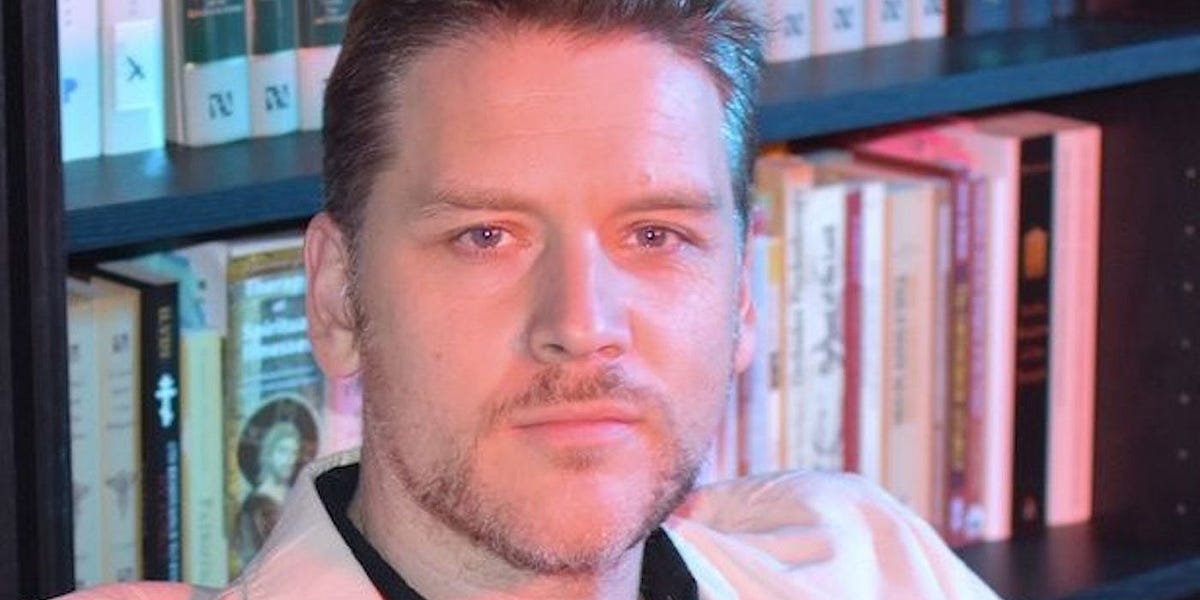
Tucker Carlson occupies a peculiar position in the new court. He possesses the resources and the audience of a major television personality without the need to persuade a network to air his interviews. One month the people being introduced to a national audience include an Orthodox apologist like Jay Dyer; another month they include Nick Fuentes. His interview choices offer a far more interesting account of the direction of American intellectual life than many of the arguments people have about him.
Dyer’s July 2026 conversation with Carlson covered Byzantine history, theology, Hollywood and American intelligence. It is encouraging that there is an audience for such material. In a sense Dyer operates one of the largest virtual Orthodox congregations in the West. I am speaking figuratively, of course. A man without ecclesiastical office can now furnish the religious education of thousands of Americans in a way that even a bishop cannot compete with numerically. There is an important distinction between what happens when a person listens to Dyer explain the Trinity and what happens when that person begins to participate in the life of a parish. Dyer can direct him toward an institution whose existence and authority do not depend upon Dyer. It is one of the more intellectually interesting possibilities of internet broadcasting: the audience can leave the broadcaster and acquire an education elsewhere.
Nick Fuentes has a rather different relationship to his congregation.

I have never considered Fuentes a stupid person. Watch him for any length of time and you will encounter observations about the Republican Party that its professional commentators have somehow been incapable of making. He has the timing of a comedian, an exceptional instinct for the fragility of other people’s arguments and a good enough memory to put the evening’s events into the context of an argument that might have been going on for several years. He is also a panderer of the first order. Somewhere in almost every discussion there is a point at which he could take the audience somewhere it has not been before. The easier and commercially more rewarding thing to do is to give it the joke it came for. He nearly always knows what the joke is.
The striking thing about Tucker’s interview with him in October 2025 was the extent of the ensuing controversy within institutions like the Heritage Foundation. A man who had spent years talking to the camera was now a subject of considerable anxiety among the people who had once been able to determine who constituted the conservative intellectual class. That power had passed to a large extent to people like Tucker Carlson. The audience’s discovery of Fuentes was accomplished with the assistance of one of the principal personalities of the Republican establishment. By November 2026 Fuentes was considering what might happen if his audience acquired some of the actual political machinery of the Republican Party.
The American historical figure who comes to mind when watching Fuentes is Joseph Smith. In 1844, in Nauvoo, Smith was putting together a presidential campaign and organizing a body known as the Council of Fifty. That council envisioned a political order informed by divine authority, and within its proceedings Smith was recognized as a political as well as a religious leader. The arrival of thousands of people in Illinois who understood the meaning of American history through the teachings of the same man had furnished him with a rather unusual instrument of power. The Smith analogy is quite American: a disenchanted population, a brilliant charismatic figure, a body of knowledge that explains its discontents, and the eventual discovery that the congregation possesses political possibilities.
There is no need to transfer Smith’s theology to Fuentes to appreciate the resemblance. The internet has made it possible to assemble something like the Nauvoo congregation without having to raise a town hall or build a temple. It can exist in every state at once. Its participants have developed a vocabulary, a sense of their own historical importance, elaborate disputes over the legitimacy of various dissidents and the assurance that their own leader will explain the news to them in the evening. All of that can be maintained through a man sitting in front of a camera. It also gives him a formidable incentive to maintain the intellectual boundaries of the group. Even the prophet becomes dependent upon the congregation’s recognition of his prophecies.
At Irving, Fuentes looked to the Democratic Socialists of America as an example of insurgent political organization. It was an intelligent observation and an enormously revealing one. The man whose constituency is supposed to usher in the chud revolution is studying the organizational successes of the American left. There is Alinsky again, in a new suit. The problem with Fuentes’s politics is that even some of his better observations are delivered within an ideological framework so beholden to race and so full of old antisemitic explanations of the world that it becomes difficult to imagine his followers making significant use of what they learn outside that framework. An audience that can be counted on to laugh at the same racial joke every night is not necessarily prepared to understand a foreign civilization.

The other great youth political operation of the Trump era belonged to Charlie Kirk, who had the good sense to build Turning Point USA into something that could continue without him. The public largely knew him through the debate table, a format now used by a considerable number of American entertainers. Myron Gaines is one of the more recognizable people to have come into that space since Kirk’s death. He brings with him the preoccupations of the manosphere, which the audience seems quite capable of combining with a political education. This is one of the stranger developments of the decade: the American boy has come to understand his political identity partly through the status games involved in getting a girl to like him.

I have no objection to public debates; they are often very entertaining. But the test most of these fellows have devised for the next great American intellectual appears to involve taking nineteen-year-olds off the sidewalk and giving them five minutes to invent a position on a subject the man with the microphone has been discussing for six years. I am much more interested in what happens when a political personality is introduced to somebody who knows more about a subject than he does. You will find out in the space of an afternoon whether you are dealing with an inquisitive man or a man whose occupation requires him to be correct.
The election results are particularly inconvenient for the notion that the internet’s political celebrities speak for an American generation. According to the preliminary Tufts CIRCLE analysis, roughly two-thirds of young voters backed Democratic candidates in the 2026 House elections. The millions of Americans who are not presently participating in the right’s online revival meetings have their own concerns about the economy, the cost of living and war. The left, after years of irritating ordinary people with its own private vocabulary, has discovered how valuable it is to talk about the cost of a house. There is a lesson in that for any fellow who thinks a chud revolution means something to the woman who has run the only grocery store in her town for twenty years.
One of the more absurd features of the Fuentes phenomenon is that the same alternative media culture that interested people in America’s postwar dealings with Nazi Germany has now produced an audience interested in the spectacle of an American saying nice things about Hitler. Fuentes has openly expressed admiration for Hitler and denied the Holocaust. That is part of his public record. In the older alternative media, the historical point of interest was what had happened to the German industrial and intelligence establishment after the death of Hitler. It was a hell of a story, and the Americans had considerably more to do with it than most people knew.

Operation Paperclip brought German specialists and their technical knowledge into the United States. Reinhard Gehlen’s organization was assisted by the American military and subsequently became part of the institutional history of West German intelligence. The records released under the Nazi War Crimes Disclosure Act provide an enormous amount of material concerning the moral and strategic compromises made in the construction of the postwar intelligence system. The American absorption of expertise from a defeated enemy is among the more interesting examples of the continuity of institutional power across a change of political regime. Who got the patents? Who had the scientific records? What happened to the men whose political associations were suddenly a liability when their technical skills were still of considerable value?
There is a peculiar irony, then, in seeing the Jones and Fuentes worlds converge at the Texas conference. The generation that inherited the audience for the older historical investigations could be taking them much further. We have better access to American government documents than Jones had when he began broadcasting. There is a great deal of living memory left in the American industrial communities whose institutions expanded during the early Cold War. Instead of getting much further into the history, a substantial amount of the cultural energy of the younger audience is being invested in the pleasure of transgression. The person who can get a room full of people to laugh at the mention of Hitler has accomplished something in the field of entertainment. He may have done absolutely nothing to acquaint them with the history of American intelligence. In some respects the spectacle is a perfect way of bringing the historical inquiry to a halt. Nobody is obliged to explain what the United States actually did in 1945 once the entire conversation has deteriorated into a referendum on the social acceptability of a joke.
Imagine the alternative media of 2008 possessing the infrastructure of alternative media in 2026. You could put a scholar on the radio for two hours and have a million people listen to him. You could send an independent reporter to China. You could build a national television network, a comedy industry, an organization with chapters in the universities or a program that introduced Americans to the history of the Byzantine Empire. These things are no longer imaginary possibilities. They have all happened in various forms. The remarkable disappointment of the era is that we have acquired the machinery first and are still waiting for an intellectual culture of an equivalent caliber.
In Texas there is now a particularly good example of the limits of the machinery. Musk’s extraordinary investment in the 2026 midterms failed to prevent a Democratic takeover in Washington or the election of a Democratic governor in Texas. On November 18 he acknowledged that he felt foolish about the amount he had spent. The following day the president still described him as a friend. It turns out that the proprietor of a social network and the producer of rockets can retain the friendship of the emperor without possessing the ability to elect the emperor’s preferred candidates. The American citizen remains a rather inconvenient figure in this new aristocratic arrangement. There is a good deal to be said for preserving his capacity to be inconvenient.

Trump will eventually leave the White House. Some of the people in Austin will outlast him by decades. The next president will have to contend with the power of the companies Musk has built and with the forms of political culture produced in the studios of people like Rogan and Jones. An American entering public life today ought to be capable of understanding both: the machinery of the state and the strange new machinery through which the citizens of that state form their opinions. I hope he will have found time in the course of his education to get past the chud revolution and the quarrels of the Austin comedy scene. I hope he will have become interested in Chinese history. I hope he will have learned enough about his own country to explain it to a Chinese man.
The most interesting thing the American court could produce between now and then would be somebody of sufficient intellectual independence to make the court irrelevant to him.