
On April 23, 2026, Peter Thiel went to see Javier Milei at the Casa Rosada. He had brought with him Matt Danzeisen of Thiel Capital and Matias Van Thienen of Founders Fund. The subject that interested him, according to subsequent reporting, was what would happen to the Argentine president’s reforms once the president himself was gone. It was an appropriate question for a man who had begun moving his affairs to a country whose political fortunes have historically changed with remarkable speed. Thiel had already had one expensive lesson in the difference between owning a piece of a country and possessing the authority to do what he wanted with it.
Elsewhere in Buenos Aires, on the very same day, officials of the United States and Argentina inaugurated the Regional Information and Analysis Center on Organized Crime, or CRIACO. The center was intended to improve the exchange of intelligence concerning the criminal organizations operating across South America. Asked whether Palantir might be involved, American undersecretary Thomas DiNanno said he did not know the details but left open the possibility. There was no announced contract with the company, and the Argentine government would subsequently deny that such a contract existed. Nevertheless, it was a curious day for the chairman of Palantir to be at the presidential palace.

The company’s original intelligence platform bears the name Gotham. There is something amusing about the fact that a billionaire whose business involves making the world visible to governments has spent so much of his fortune looking for a place in which to disappear. In the comic books, Bruce Wayne is able to leave the city altogether without relinquishing his influence over it; the operations of his private intelligence establishment continue beneath the house. The appeal of such a fantasy has changed considerably in the age of artificial intelligence. A man can now contemplate physical exile while retaining an interest in the software through which an army receives its orders, a government maintains its records or an intelligence service interprets the movements of people thousands of miles away.
Thiel had intended to establish a retreat on a former sheep station overlooking Lake Wānaka in New Zealand. The architects were Kengo Kuma and Associates, and their drawings depicted a vast private lodge fitted into the contours of the land, with much of the structure concealed behind great stretches of grass-covered roofing. It was the press that characterized the project as a doomsday bunker. Whatever its intended use, the objection of the local authorities was to its effect on the landscape. Planning permission was refused in 2022 and his company’s appeal was dismissed in May 2024. Thiel had possessed the land for nearly a decade and still could not build the house.

Two years later he was living in Argentina. The New York Times reported on his family’s relocation, and Bloomberg subsequently identified fear of a nuclear catastrophe as an important motivation for his interest in the country. There are perfectly ordinary reasons for a billionaire to find Buenos Aires attractive, especially under a president who regards the accumulation of private wealth as a virtue. But if the intention is to establish a position from which one might survive a breakdown of the industrial order, Argentina is a considerably more interesting choice than Acapulco. It has the agricultural capacity to feed a large population, a domestic nuclear industry, vast energy resources and a southern interior in which entire industrial establishments can exist at a great distance from the centers of European and North American political life. It also has some experience with the peculiar class of visitor who arrives from abroad with knowledge and capital acquired in one political order and intends to put them to work in another.
In the closing months of the Second World War, American intelligence officers understood that the defeat of Germany had created an enormous international market in scientific knowledge. The engineers who had constructed the German missile program could be transported to another country and given laboratories, salaries and a future. Their new employers were quite capable of making distinctions between the political system that had produced the weapons and the utility of the weapons themselves. The Soviets came to much the same conclusion, and the former German specialists found themselves contributing to the development of competing military establishments on either side of the Cold War. A great part of the scientific rivalry between the superpowers took shape in the ruins of the same defeated European state.
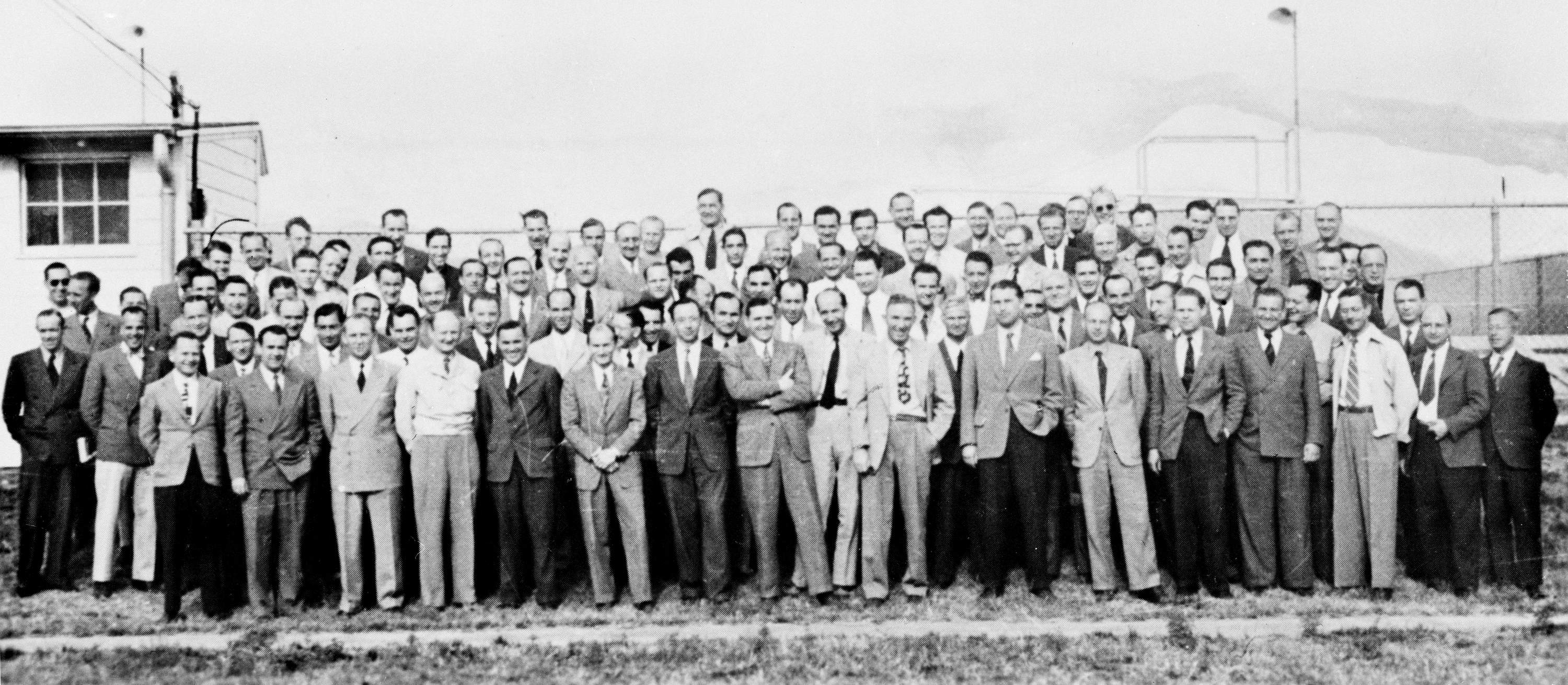

Juan Perón believed that Argentina could acquire something from the dissolution of that world. Kurt Tank, the former Focke-Wulf designer, arrived in Argentina and led a team that produced the Pulqui II jet. For a time the country appeared to be on the verge of joining the handful of nations capable of developing advanced military aircraft. A little farther south, on an island off Bariloche, the Austrian physicist Ronald Richter convinced Perón that controlled nuclear fusion was within reach. The president financed a secret laboratory on Huemul Island, and the project advanced to the point at which Perón publicly announced a scientific achievement that had in fact never occurred.

The exposure of Richter’s claims eventually helped clear the way for a more serious Argentine nuclear establishment. The Bariloche Atomic Centre and the Balseiro Institute trained generations of scientists; the industrial capabilities that would later give rise to INVAP extended into reactors, radar and satellites. Argentina had discovered that the pursuit of strategically important technologies could generate a domestic scientific culture of considerable international significance. When it commissioned its first commercial nuclear reactor at Atucha in the 1970s, the supplier was Siemens of West Germany. The country’s technological relationships with Europe continued long after the original generation of postwar recruits had departed.

There was another side to the traffic in human beings out of occupied Europe. Among the people who made it to Argentina were Adolf Eichmann and Erich Priebke, men escaping responsibility for the crimes of the old regime. Priebke lived for decades in Bariloche, in the vicinity of the new scientific establishment. Thiel reportedly visited the city in 2026. The proximity makes for tempting speculation, but the history is more useful when the actual relationships can be established. The Argentine nuclear research institutions were developed principally by Argentine scientists, and Thiel’s visit establishes no connection with the former Nazi fugitives. His father’s work as a chemical engineer in the uranium industry of apartheid-era southern Africa is another interesting piece of Cold War biography; there is no known evidence that it brought the Thiel family into the Argentine networks.
The man whose career actually bridges the European war and the South American intelligence system is Klaus Barbie. The former Gestapo chief in Lyon was employed after the war by American Army counterintelligence, which ultimately assisted his escape to South America. The Americans had acquired an asset whose utility they placed above the French government’s interest in bringing him to justice. By the time Barbie had established himself in Bolivia, the knowledge that had made him valuable to intelligence officers in occupied Germany was finding new applications in a country divided by its own political conflicts. He entered the business of advising military regimes and cultivating paramilitary associations. The old European intelligence operative had become a participant in the political life of another continent.

In July 1980, General Luis García Meza seized power in Bolivia in what became known as the Cocaine Coup. Argentine military intelligence assisted the regime, which had associations with figures in the narcotics trade. Barbie’s connection with paramilitary groups involved in the drug economy forms part of the subsequent American investigation into his activities, though his personal involvement in particular drug transactions was not established. The episode supplies something that a general account of Nazi escape routes cannot: a documented instance in which the personnel of the defeated Reich, the apparatus of the Cold War and the private fortunes accumulating around a criminal industry occupied parts of the same political territory.
By then the South American intelligence services had already established Operation Condor. Its members exchanged information about political opponents and participated in cross-border operations, including kidnapping, torture and murder. Condor made use of a shared communications system and computerized records to overcome the territorial limitations of individual security services. A man who had escaped the jurisdiction of one military government could find that information about him had arrived in the next country before he did. The technical achievement was to make the national frontier less significant to the intelligence officer than it was to the person being pursued.

The historical connection worth pursuing in the present day is the transformation of that capacity over half a century. Condor was organized by military governments, with a political objective that cannot be equated with contemporary cooperative policing. Its machinery was operated by human intelligence officers. But the problem that confronted them then is still the problem that confronts the governments of South America today: information is dispersed among jurisdictions, and the money, people and organizations in which the governments are interested move between them. Intelligence agencies consequently have a powerful incentive to establish a common means of seeing the continent.

Today some of the most formidable organizations exploiting those borders have grown out of the cocaine economy. Brazilian criminal enterprises such as Primeiro Comando da Capital have extended their influence far beyond the places in which they originated. In a modern criminal investigation there may be financial records in one country, telecommunications records in another, the movements of a vehicle in a third and a shipment whose manifest has to be interpreted in a fourth. The ideal intelligence system would allow investigators to do something with all this material before the organization under investigation has an opportunity to reorganize itself. A properly governed version of that system would be a valuable instrument of law enforcement. Its potential for political surveillance is inseparable from the question of who receives permission to use it.
Milei had already begun reconstructing the Argentine intelligence establishment. In 2024 he dissolved the Federal Intelligence Agency and brought back the old SIDE name. His government issued Decree 941/2025 at the end of the following year, expanding and reorganizing intelligence functions in a manner that raised concerns about domestic surveillance. After CRIACO opened in April 2026, Argentine legislators began asking about its technological infrastructure. Resolution 3166-D-2026 specifically raised the possibility of arrangements involving the United States, the Argentine telecommunications company ARSAT and Palantir. ARSAT operates a national data center at Benavídez. The question of which software handles the intelligence was thus inseparable from the equally important question of which institution has custody of the computers on which the information resides.

For the time being, the government’s denial of a Palantir agreement stands. The point of following the CRIACO procurement is that it offers a concrete way of establishing whether Gotham will acquire an Argentine institutional presence. There is more to the question than the fate of a particular contract, however. The company is developing an increasingly expansive conception of the uses of its software, and the diplomatic circumstances under which Argentina is rebuilding its intelligence apparatus belong to a technological struggle that extends far beyond the hemisphere.
On November 19, 2026, Donald Trump was asked during an interview from China about espionage between the United States and the People’s Republic. His description of the relationship was unusually frank: “We spy on China, they spy on us.” There was little in his response to suggest that he intended to stop American intelligence work against Beijing, and consequently little reason to expect the converse. At the same time as the two governments were dealing with the consequences of their respective espionage activities, Trump and Xi were discussing rules for artificial intelligence. The United States was attempting to protect its lead in advanced semiconductors; American businesses had an interest in selling those semiconductors to an enormous foreign market. China wanted access to technologies that could accelerate its own development while building an industrial system that would eventually reduce its dependence on the Americans. These negotiations were taking place even as their intelligence agencies endeavored to learn what the other side possessed.
The Hegelian character of the rivalry becomes apparent when one considers what each country is being obliged to construct. An improvement in the American ability to observe, analyze and act gives the Chinese an incentive to acquire some equivalent capacity. The successful development of Chinese capabilities, in turn, supplies the justification for further American expenditure. The politicians go home and tell their constituents about the differences between the two systems, while the engineers are given increasingly similar problems to solve. Washington and Beijing have every reason to remain genuine competitors. The competition itself nevertheless encourages the two states to assume comparable computational forms, in much the same way that the nuclear rivalry produced elaborate establishments for the research, manufacture and management of atomic weapons on either side of the Iron Curtain.

The cybersecurity industry already has a language for this relationship, borrowed from military exercises. A red team is employed to find the vulnerabilities in a system; a blue team is charged with its protection. In November 2026 the FBI warned of malicious actors adapting ARTEX, an AI-enabled penetration-testing framework, for offensive purposes. The change of consequence was the increasing delegation of work to specialized software agents that could pursue different parts of an operation at the same time. What formerly demanded a group of experienced technicians could increasingly be undertaken by a much smaller organization possessing access to the requisite software. For the institutions defending themselves against such organizations, there is a corresponding pressure to automate.
CrowdStrike’s account of intrusions against South Korean financial institutions makes the nationalist character of much of the public discussion about AI seem almost quaint. Among the technologies associated with the operation were DeepSeek and GLM, developed in China, alongside Claude and Grok, developed in the United States. The operators were apparently more concerned with the usefulness of the available models than with the flags of the countries in which they originated. Similar speculation arose about Iranian hackers using Chinese AI in connection with American infrastructure disruptions later in the year, although American intelligence officials said they had not identified a coordinated foreign attack behind those outages. Even without that particular attribution, the emergence of agents capable of using internationally available models changes the significance of the arms race. Its industrial products can circulate beyond the two governments around whose rivalry the industry is organized.
For the company selling protection against the resulting threats, this opens up a remarkable market. The ambitions of Palantir and NVIDIA were made explicit in March when the companies announced a reference architecture for a Sovereign AI Operating System. The expression is significant. For much of the history of computing, governments purchased computers and software in order to carry out functions whose nature had already been determined by the institutions themselves. The prospect now is that the operating system will have a much deeper role in determining how the institutions can work. An intelligence analyst may be able to ask questions of material assembled from a dozen databases; an agent may be authorized to initiate an action based on the answer; the system governing those operations may also determine which officials are permitted to know what has taken place.
Palantir’s military intelligence business has grown around this effort to reduce the distance between the acquisition of information and the exercise of power. It is easy to see its appeal in a war, where an hour can determine whether someone lives or dies. The same software architecture is increasingly applicable to the ordinary administration of a country. Once its use becomes widespread, the rules governing access to a database, the definitions of the objects represented in it and the permissions given to agents acquire something approaching constitutional importance. A decision about who is allowed to change a record can become a decision about who is allowed to exercise a particular form of public authority. Some of these rules will have been established by governments, others by the designers of the software and still others in negotiations between them. Much of the public may never know the distinction.

Alex Karp discussed the construction of national AI ecosystems at the 2026 G20 innovation ministerial, recognizing China’s capacity to build an independent stack. He did not announce an intention to bring China into Palantir. Yet the international market of the future is likely to contain countries negotiating with suppliers from both sides of the rivalry, even when particular security systems are kept rigorously separate. Argentina is already such a country. Milei’s ideological hostility to communism has coexisted with the renewal of Argentina’s currency-swap arrangement with the People’s Bank of China. And on a tract of land outside the city centers of Neuquén is an unusually visible illustration of the extent to which the country can accommodate a major strategic installation of a foreign power.

The Espacio Lejano station, with its great white antenna rising out of the Patagonian landscape, belongs to China’s deep-space communications network. Its stated function is the tracking of scientific missions; the military affiliations of the Chinese organization operating the installation have also raised questions in Argentina and the United States. There is no evidence that the station has anything to do with Thiel’s presence in the country. What makes its existence interesting is that a foreign technological establishment of this character can operate in Argentina at the same time as the country pursues a much closer intelligence relationship with Washington. The geography in which Perón once entertained aspirations of scientific independence has acquired renewed importance to actors on both sides of another great-power struggle.
There is a more direct American commercial connection to the Argentine space industry. In February 2022, long before Milei’s election, the Argentine-founded satellite company Satellogic announced a strategic partnership with Palantir. A satellite equipped with Palantir onboard AI was launched aboard a SpaceX mission that April. The prospect of combining commercially acquired imagery with information already held by customers was particularly valuable to a company whose business was the integration and interpretation of large volumes of data. Photographs of the earth could be brought into the same environment as records concerning the people, installations and economic activity on its surface.

The founder of Satellogic, Emiliano Kargieman, subsequently helped establish Sur Energy. In October 2025 the latter signed a letter of intent with OpenAI to explore the possibility of an enormous AI computing installation in Argentina. Another founder of Sur Energy was Stan Chudnovsky, a veteran of PayPal and Meta. The project remains a proposal; its association with Satellogic through Kargieman does not make it a Palantir facility, and the presence of a former PayPal executive does not give Thiel a proprietary interest in it. It does, however, illustrate the migration of expertise from the generation of enterprises that developed the financial and communications infrastructure of the internet toward a new generation of enterprises developing the computational infrastructure of the AI economy.

Thiel himself has acquired an interest in one of the industries that could provide the material basis for that economy. In November, El País reported that his investment vehicle had substantially increased its holding in Vista Energy, a major producer and exporter operating in the Vaca Muerta shale formation. The disclosed position was worth approximately $123 million at the time. The petroleum investment may have been made for the entirely sufficient reason that Vaca Muerta offers good commercial prospects. Still, the long-term viability of the computing ambitions being advertised in Argentina depends upon the country’s capacity to produce energy at an attractive price. The political fortunes of artificial intelligence will ultimately be tied to those of the people who own power stations, cables, pipelines and the industrial land on which its equipment can be installed.

When Milei wrote for the Financial Times in June 2026 inviting AI to establish itself in Argentina, his proposal extended considerably beyond the normal business of attracting foreign investment. He contemplated a legal environment in which corporations could be operated entirely by artificial intelligence and proposed giving businesses considerable freedom in choosing their governing arrangements. His historical reference was the Dutch Republic, an interesting choice for a president contemplating a new era of corporate organization. The great chartered companies of the early modern world had learned to organize political and economic affairs over distances that made ordinary supervision by their investors impractical. Their ships could remain away for years and their representatives could negotiate with foreign rulers. In time the enterprises were exercising extraordinary powers of their own.

The investor in Milei’s prospective AI corporation would have a different problem of distance. Having provided the capital and established the legal entity, the owner could delegate an increasing proportion of its business to software. A company might acquire its computing services in Argentina, hold property in another country, sell goods in a third and conduct much of its financial activity without observing the business hours of any of them. The implications for the owner of an international portfolio are considerable. Thiel’s earliest great fortune came out of PayPal, an attempt to change the way money moved through the emerging communications infrastructure; his subsequent interest in Bitcoin, stablecoins and programmable payments belongs to a world in which capital might circulate with still greater autonomy. Milei’s proposed corporations would supply a legal personality to enterprises capable of utilizing that infrastructure at machine speed. Whether Argentine law ultimately permits that experiment, and who would bear liability for the actions of the software, remain questions for its legislature and courts.
Argentina has already had an instructive exposure to the sort of speed available in the new financial economy. In February 2025 Milei promoted the cryptocurrency token $LIBRA, which rose spectacularly and collapsed in the space of hours. An association with the presidency was sufficient to draw an enormous amount of attention and money into a venture whose political and commercial relationships proved extraordinarily difficult to establish in the subsequent controversy. Allegations were contested, and in 2026 the investigation involving Milei and his sister was reportedly dismissed. There is no demonstrated connection between Thiel and the token or the South American cocaine trade. What the episode exposed was the difficulty of exercising public accountability in an economic system where a presidential intervention, a private interest and the transfer of vast sums of money can occur within the lifespan of a single news cycle.

The same problem of time arises in the intelligence business. The drug investigator wants to know where the money has gone before it moves again. The cryptocurrency entrepreneur wants to move it without waiting for authorization from a succession of institutions. The cybersecurity officer wants to detect hostile activity before an autonomous agent can complete its work. The owner of the autonomous enterprise wants his agents to be able to act while he is asleep. These interests will not always be compatible, and the conflict between them may become an important part of the politics of Argentina’s technological revolution. A system built to reconcile them would necessarily contain enormous discretion over what people and corporations are permitted to do.
This brings us back to the peculiar religious interests of the man at the center of the story. In 2025 Thiel gave a series of lectures on the Antichrist. The danger as he understands it arises out of the capacity of fear to persuade people to accept a single authority exercising power over the entire world. An approaching nuclear war or a catastrophe involving artificial intelligence would furnish the prospective ruler with a persuasive argument for the surrender of national sovereignty. In the version of the story that Thiel has been exploring, the Antichrist may arrive with a promise of peace and physical security. Humanity’s concern about its own survival is precisely what gives the universal political project its legitimacy.

Thiel has long been interested in Carl Schmitt, the German jurist whose intellectual accommodation with Nazism included an extensive defense of the regime’s authority. Schmitt explored the Christian concept of the katechon, the power that restrains the coming of the Antichrist. His writings acquired a considerable readership in Argentina, including among scholars of constitutional law during and after the Perón era. There is thus an actual line of intellectual history that connects the Nazi period, the political thought of Argentina and Thiel’s theological vocabulary. Its significance lies in the problems of authority they have in common. In his 2025 conversation with Ross Douthat, Thiel entertained a disturbing possibility inherent in the concept of the katechon: that the very power entrusted with preventing the Antichrist could become the power it had been constituted to restrain.
It is difficult to think of a better description of the dilemma facing the modern intelligence industry. The networks that will be employed against the most frightening manifestations of artificial intelligence will themselves make extensive use of artificial intelligence. The greater the danger, the greater the volume of information institutions will be asked to disclose and the wider the authority they may be willing to give to automated systems. A tool designed for the investigation of international criminals can acquire new uses in the course of a national emergency, and the data it has accumulated may become attractive to an entirely different administration. Every government will want to be sure that the constraints imposed on such a system by the enemy do not prevent its own people from using it to their full advantage. The American–Chinese rivalry makes international restraint especially difficult.


Thiel has not severed his connection with the business of building these systems. As of the autumn of 2026 he was still the chairman of Palantir, a company whose formative years included financial support from the CIA’s venture-capital arm. Founders Fund’s backing of Anduril places another portion of his fortune in the development of autonomous military technology. The private investor concerned about a catastrophic concentration of political power is therefore in a position to participate economically in the technological process from which such a concentration could arise. His personal arrangements in Argentina might allow him to put considerable physical distance between himself and the consequences of that process without diminishing his financial interest in it.
There is no evidence of a secret Palantir headquarters in Patagonia. The proposed hyperscale computing project, the petroleum investment, the financial ventures, the satellite partnership and the Argentine intelligence reforms are separate developments, and no record establishes that Thiel directs them as a common enterprise. The Gotham South scenario is a way of examining what might happen if many of the necessary components of a privately administered technological sanctuary were to become available in a single accommodating jurisdiction. Its progress can be judged through the decidedly unromantic business of procurement records, corporate registrations, data custody agreements and industrial power contracts. They will tell us who owns the infrastructure, who has permission to use it and whose government has the final authority to turn it off.
The distinction between the twentieth-century refuge and the twenty-first-century one is that earlier exiles had to establish new lives in the countries to which they fled. Their skills, money and connections could survive the journey, but much of their ability to exercise power depended on the patrons they found there. Thiel belongs to a generation of financiers who can establish themselves at an extraordinary physical distance from the governments and industries upon which their fortunes depend. If Milei succeeds in changing the nature of the corporation, even the people required to administer those fortunes could become increasingly unnecessary. The man in the hills would still be in business on the other side of the world.
Argentina’s own ambitions will determine a great deal about the outcome. It could acquire an industrial establishment capable of giving its citizens more independence from foreign powers, much as Perón once hoped. It could also find that the people capable of financing the new establishment possess a degree of mobility and independence that Argentines themselves do not enjoy. The people who use the intelligence system and the people whose lives are represented inside it will have different relationships to the technology. The question is whether those being observed will retain a government sufficiently independent to protect their interests when the company furnishing the instruments of government can operate from somewhere else.
There is an extraordinary difference between the survival of civilization and the survival of its owners, a difference that tends to disappear in the billionaire’s account of the future. The aircraft engineers, intelligence officers and financiers of the old order discovered in South America a place where some of their careers could outlive the political world in which they had begun. In the age of artificial intelligence, it may be possible to preserve one’s place in the commanding heights of that world while preparing for its demise. The retreat on Lake Wānaka was a house that Peter Thiel could not build. Gotham South, if it ever comes into existence, would embody a more consequential ambition: the ability to leave a society without relinquishing power over it.