
The old Maxwell House Hotel in Nashville survives in popular memory mostly as a coffee label. That memory is almost comically harmless next to what happened inside the building during Reconstruction.
In April 1867, before the hotel had formally opened, men from the rapidly spreading Ku Klux Klan gathered there and tried to turn a scattering of local secret societies into a coordinated political organization. The Tennessee Encyclopedia dates the Klan’s reorganization into a political and terrorist movement to that April, when Tennessee’s conservative Democratic leadership met at the Maxwell House to bring the expanding order under tighter control and adopted a prescript setting out administrative procedure and secrecy. Tennessee Encyclopedia


Three Maxwells run through this story, and it is worth saying at the outset that as far as surviving genealogy shows, they are not one family. There is the Maxwell of the hotel, Harriet Maxwell Overton. There is Lucien Bonaparte Maxwell, who ended up controlling one of the largest private landholdings in American history. And there is a Bonaparte who was not a Maxwell at all but who built the federal machinery that would one day investigate the Klan. The name is a coincidence. What the records show underneath it is not.
Follow the people behind the hotel backward and a road appears. The Overton family leads into Andrew Jackson’s land-and-political machine. Jackson’s world leads into Indian treaties and western land speculation. A French political network running from Joseph Bonaparte’s New Jersey estate through the Marquis de Lafayette touches Jackson, Overton, and, within a single week in 1825, a French-Canadian trader on the Mississippi named Pierre Menard. Menard learned his trade at Vincennes on the Wabash, supplied the traders who married into Potawatomi and Miami families, and then sat on the federal side of the table while those same families’ lands were ceded. His grandson was Lucien Bonaparte Maxwell.
None of this proves the Klan, the Bonapartes, the Maxwell Land Grant, and the Wabash trading families were one secret organization. They were not. What the documents reveal is more useful: successive political and commercial networks occupying the same machinery (land, treaties, hotels, roads, Indian trade, law, and private organization) each time control of the North American interior changed hands.
What Happened at the Maxwell House
Colonel John Overton Jr. began building the hotel in 1859 and named it for his wife, Harriet Maxwell Overton; locals nicknamed the long-delayed project “Overton’s Folly,” and it did not open until the fall of 1869. Enslaved laborers worked on it before the war. After Nashville fell to Union forces, the unfinished shell served as barracks, prison, and hospital. Wikipedia
By April 1867 it had acquired a different significance. The Klan convention held there produced the Prescript, a constitution establishing ranks, procedures, and secrecy requirements for what had been a loose federation of “dens.”
Two cautions keep the story honest. The first concerns Nathan Bedford Forrest. Popular accounts have him sworn in at Room 10 and made Grand Wizard on the spot, but those accounts come largely from much later recollections by Klansmen and Lost Cause writers. Historian Elaine Frantz Parsons reports finding no evidence that Forrest associated himself with the Klan before 1868, by which point it had already spread across the South. The second concerns what the convention actually achieved. The Prescript drew a tidy chain of command from local dens up to a national headquarters, but the local units never really adopted it and continued operating on their own, so the county, district, and state tiers it envisioned never materialized. ThereconstructioneraNew World Encyclopedia
That second point matters more than the Forrest legend. The Maxwell House convention did not create a functioning hierarchy. It created a paper architecture for a network that stayed decentralized in practice. The important fact is not whether every dramatic detail attached to Room 10 is true. It is that Nashville’s premier elite venue became the place where men attempted to give clandestine political violence an administrative form.
It would overstate matters to call the hotel a Klan institution. It remained a commercial hotel and later one of Nashville’s principal social centers. But the first-class hotel of that era was more than lodging. It was a business exchange, political salon, and neutral ground where men arriving by rail or river could assemble privately at the center of a city. That is exactly the sort of place where a dispersed organization tries to become a network.
And the family that built it had an older relationship with American land politics.
Behind the Hotel Was the Overton Machine
John Overton Jr. inherited more than a surname. His father, Judge John Overton, was among Andrew Jackson’s closest friends, a fellow Nashville lawyer, his land-speculation partner from 1794, and an architect of the “Nashville Junto” that promoted Jackson’s presidential ambitions. The family seat, Travellers Rest, still stands south of Nashville.


The partnership’s defining asset was a tract at the Chickasaw Bluffs on the Mississippi, bought in the 1790s while the surrounding country was still Chickasaw land. For that claim to become a town, the Chickasaw title had to be extinguished. In 1818 it was, and the men who negotiated the extinguishment matter.
Jackson and former Kentucky governor Isaac Shelby were appointed to conduct the 1818 negotiations, and they secured the western Tennessee tract for three hundred thousand dollars. The Tennessee Encyclopedia is blunt about the methods used across the Chickasaw cessions: Jackson and his fellow commissioners relied on threats, economic coercion, and bribery. The charges were made at the time too. Shelby’s son later wrote publicly that his father had come home from the treaty convinced Jackson’s conduct there had been arrogant, selfish, and, he believed, corrupt. Jackson Purchase | Tennessee Encyclopedia +2
The following year Jackson, Overton, and General James Winchester founded Memphis on the bluffs.
So the lineage behind the Maxwell House runs backward through a very particular kind of American enterprise: a private land claim, a federal treaty negotiated in part by one of its holders, a town, and a political organization built by the same circle. Keep that pattern in mind. A federal commissioner with a commercial stake in the land being ceded is the hinge of this entire story, and it is about to appear again four hundred miles north.
None of this establishes an unbroken “Overton command” from Jackson to the Klan. It does show why a hotel built by the next generation of this family sat at the center of Nashville’s command geography.
The Lafayette Hinge
There is no evidence that Joseph Bonaparte, Napoleon’s elder brother and former king of Spain, had anything to do with the Klan. He died in 1844, more than two decades before it existed. The connection worth tracing is an older social one, and its real hinge is not Bonaparte but Lafayette.
After Waterloo, Joseph settled at Point Breeze near Bordentown, New Jersey. The estate became a center of Delaware Valley society, where he received French émigrés, Philadelphia elites, diplomats, and naturalists; American politicians, the Marquis de Lafayette, and even Mexican revolutionaries came to seek his counsel. Little of the mansion survives, but the gardener’s house still stands on the grounds. Encyclopedia of Greater Philadelphia


So within roughly a week, the most famous Frenchman in America passed from Menard’s Kaskaskia to Jackson’s Nashville, carrying with him a social network that included Point Breeze and the woman about to buy land through Jackson and Overton. That does not make Bonaparte, Lafayette, Menard, and Jackson partners in anything. It shows that the French world of the Mississippi Valley and the Jacksonian land world of Tennessee were not sealed off from each other. They shared guests.
A few accounts also describe Joseph being received by Jackson during his presidency, but the documentary bridge that holds weight here is Lafayette, because both ends of every link are independently visible.
The Other Bonaparte Road Begins at Vincennes
The man who became one of the greatest private landowners in the American West was named Lucien Bonaparte Maxwell. He was not a member of Napoleon’s family. He was born in September 1818 at Kaskaskia to Irish-born Hugh Maxwell and Marie Odile Menard, Pierre Menard’s daughter. Family tradition holds that Hugh chose the Napoleonic names partly out of anti-British feeling.
That could pass for a naming fashion until you examine the grandfather.
Menard was born in 1766 at Saint-Antoine-sur-Richelieu near Montreal and went west to the Illinois Country as a teenager; by the early 1790s he had his own trading business, with his Kaskaskia ledgers recording transactions from the spring of 1791. Before Kaskaskia he learned the trade at Vincennes in the service of François Vigo, the merchant who had financed George Rogers Clark. His reach extended well beyond Illinois. When Manuel Lisa launched his first expedition to the upper Missouri in 1807, Menard was his partner, which is to say the grandfather helped finance the Rocky Mountain fur trade the grandson would later enter. WikipediaWikipedia
And Menard never stopped supplying the Wabash. The best evidence comes from the Warren County, Indiana trader Zachariah Cicott, whose trading post site was excavated in the early 1990s and is now a county park at Independence. Cicott held licenses in 1824 and 1825 to trade with the Piankashaw, Wea, Kickapoo, and Miami, and the ledgers of Menard’s firm, Menard and Vallé, record numerous dealings with him; a single entry dated November 3, 1826 lists more than $1,500 in goods, including over fifty blankets, several dozen knives, 500 gunflints, four kegs of powder, and 150 small lead bars. npshistory
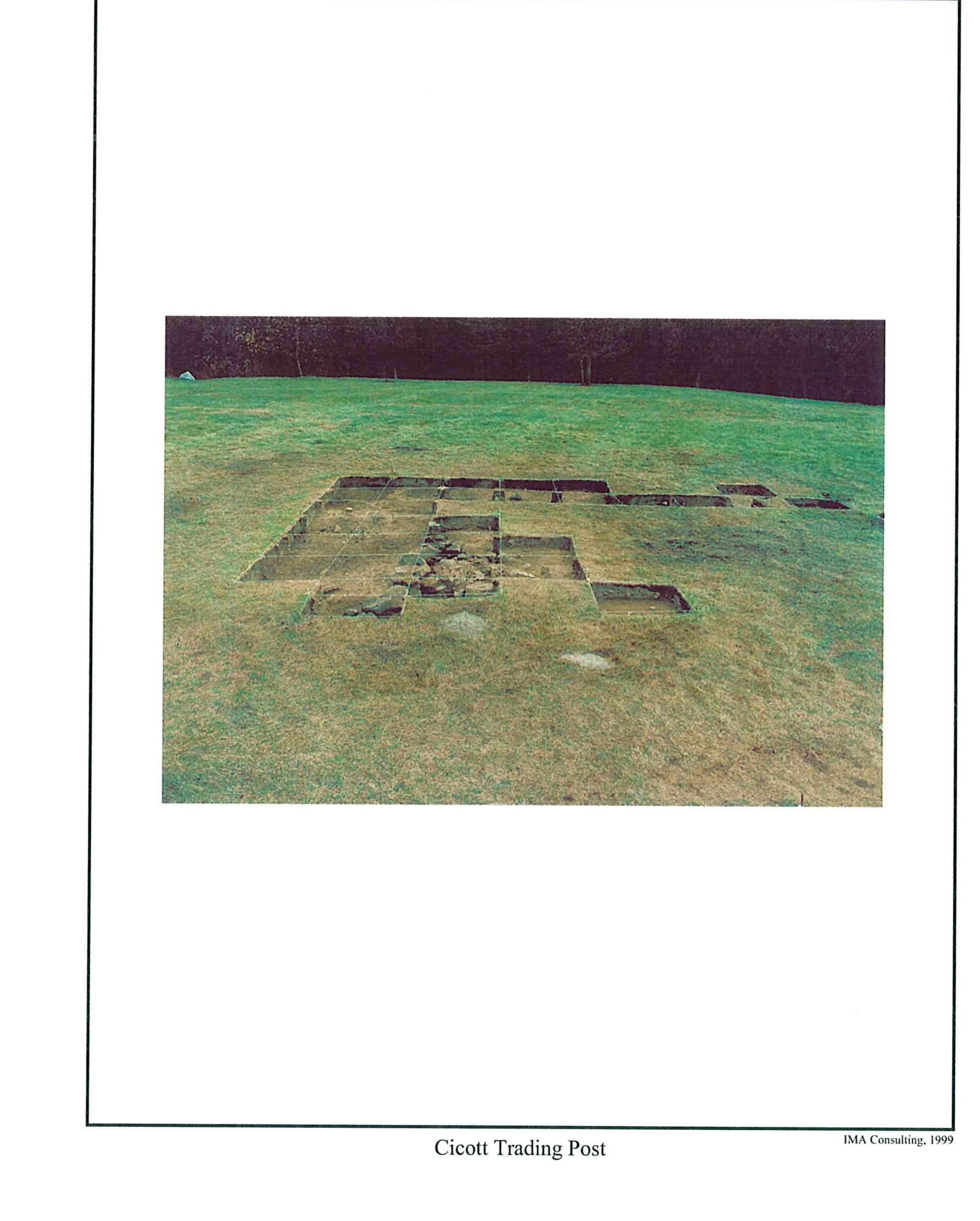


Farther north, French-Catholic trading families such as the Bertrands helped the Pokagon Potawatomi resist removal.
These families were not simply surviving beside American expansion. They held land, extended credit, translated, supplied goods, witnessed and signed treaties, married into leadership families, and ran ferries, taverns, and trading houses. They were the intermediaries through which the United States acquired the Wabash country.
Pierre Menard Changes Sides of the Table
By 1828 the man whose firm supplied Cicott was a federal treaty commissioner.
On September 20, 1828, at the mission on the St. Joseph River, Lewis Cass and Pierre Menard signed as commissioners for the United States in a treaty by which the Potawatomi ceded a tract running from the mouth of the St. Joseph to the northern Indiana line and west to Lake Michigan. Weeks earlier, Menard had also served at the August 25, 1828 treaty at Green Bay with the Winnebago and the united Potawatomi, Chippewa, and Ottawa, which dealt with white miners pushing into unceded lead country. FcpotawatomiDigitreaties
Read the September treaty’s text and Menard’s old world is all over it. A supplementary article places one woman’s reservation on the north side of the Eel River between Peerish’s village and Louison’s reservation, almost certainly the village of the same headman whose sister married Menard’s customer. An appended schedule of traders’ claims includes $200 to a J. B. Godfroy for goods previously sold to the Indians. Debt owed to traders was being settled out of the cession itself. OkstateFcpotawatomi
So Menard’s career traces an extraordinary arc. He enters the French-Indian commercial world at Vincennes, grows wealthy supplying it, and then sits on the American side of the table converting Native territorial rights into federal land, with provisions shaped around the families and debts of the trade he knew.
Now set him beside Jackson in 1818: a federal commissioner negotiating a cession of land in which his own circle had a direct commercial stake. The two men never needed to coordinate. They were running the same play.
That is not a conspiracy theory. It is in the treaties.
The Year 1818
The two roads cross in a single year with uncanny tidiness. In 1818 Lucien Bonaparte Maxwell was born at Kaskaskia. That October the Treaty of St. Mary’s created the Miami reserves and the Perig section that later passed to Cicott’s son, and Jackson and Shelby closed the Chickasaw purchase that made Memphis possible. That December Menard took office as Illinois’s first lieutenant governor. Wikipedia
Coincidence of dates proves nothing by itself. But it marks the moment when the old French-Native order on both sides of the Ohio was being converted, treaty by treaty, into American title, and the grandson of one of its converters was born into the middle of it.
From Vincennes to the Maxwell Land Grant
Lucien’s frontier education was more complicated than the “mountain man” label suggests. He went west into the Rocky Mountain fur trade his grandfather had helped finance, rode with Kit Carson on Frémont’s expeditions, and in 1842 married Luz Beaubien, daughter of Charles Beaubien.


Beaubien is the detail the usual telling skips. He was himself a French-Canadian, born in Quebec, who had come down the same trading pathways to Taos and become a Mexican citizen. Together with Guadalupe Miranda he received a vast Mexican grant in 1841. So Menard’s grandson married into another French-Canadian trading family, and through that marriage and later purchases of his in-laws’ and Miranda’s interests, he consolidated the Beaubien-Miranda grant, roughly 1.7 million acres of New Mexico and Colorado, before selling it to investors in 1870. His headquarters at Cimarron sat on the Santa Fe Trail, making the Maxwell ranch its own kind of road station: a place where a private landholder controlled the crossing.
The name “Bonaparte” thus lands on the western land story in an odd but specific way. Lucien was no Bonaparte descendant. But he carried in his own family history the whole conversion: French imperial frontier, French-Native trade, American treaty system, western land empire.
So Where Is the Klan Connection?
This is where the temptation to flatten seventy years into one organization has to be resisted. There is no evidence that Menard’s trade network became the Klan, that Joseph Bonaparte financed a Klan lineage, or that Lucien Maxwell ran a Klan command.
What is documented is an institutional pattern. The French-Indian system was built on personal relationships, kinship, credit, interpreters, land, and private agreements. Jackson’s generation translated expansion into treaties, land companies, and towns, often with the negotiators themselves positioned to profit. The Reconstruction Klan tried to build a parallel system of private political enforcement after the war, using secrecy, local elites, and violence to decide who would hold power.
Different organizations, but the same foundational question: who controls the territory once the official government changes?
Then a Bonaparte Creates the Federal Detective System
The final turn makes the story nearly circular. Decades after the Maxwell House convention, an actual Bonaparte built the institution that would investigate the Klan’s successor.
Charles Joseph Bonaparte, grandson of Jérôme Bonaparte and grand-nephew of Napoleon, became Theodore Roosevelt’s attorney general. On July 26, 1908, he ordered the creation of a permanent force of Justice Department special agents, the unit that became the Bureau of Investigation and eventually the FBI.


Until then, enforcement had rested on sheriffs, marshals, railroad police, and private agencies like Pinkerton. Bonaparte created something new: a standing federal investigative service.
When the second Klan rose after 1915, the young Bureau noticed quickly. The FBI’s own history records its agents looking into Klan activity during World War I, including a case in Tampa where, at a Bureau agent’s request, a volunteer from the American Protective League persuaded a local Klan group to disband in August 1918. In 1922 Louisiana’s governor formally complained to the Bureau about the Klan’s power in his state, and although most Klan conduct lay outside federal jurisdiction, the Bureau secured the arrest of Klan leader Edward Young Clarke on a federal prostitution charge. FBIFBI
The legal foundation is where the circle closes. The FBI’s civil rights file classification, formally created in a January 1924 Hoover memorandum, rested on the civil rights acts of the Reconstruction period, and its first files were state-by-state records of Klan activity. Those statutes were the laws Congress wrote in answer to the first Klan, the one that had organized itself at the Maxwell House. A Bonaparte built the agency; Reconstruction supplied its authority; the second Klan became its first civil rights target. archives
So the one Bonaparte line we can firmly tie to the Klan does not lead into it. It leads to the federal machinery that investigated it.
Two Bonaparte Roads
The story ends with two entirely different Bonaparte roads.
One belongs to the family. Joseph Bonaparte holds court at Point Breeze; Lafayette and Frances Wright pass through his world; Lafayette carries Wright to Jackson and Overton, who find her land in the Chickasaw cession. Generations later Joseph’s grand-nephew Charles creates the detective force that becomes the Bureau of Investigation.
The other belongs to the name. Lucien Bonaparte Maxwell descends from Pierre Menard, who learned the trade at Vincennes, supplied the Wabash traders who married into Potawatomi and Miami families, sat as a federal commissioner writing their villages into cession treaties, and hosted Lafayette a week before Lafayette reached the Hermitage. That road leads to the Maxwell Land Grant.
One road runs toward federal investigation. The other runs toward western land. Between them stands the Maxwell House, carrying a third Maxwell name that, on present genealogy, belongs to neither.
Yet the functions rhyme. The French and Native world of the Wabash ran on kinship, trade, and obligation. The Jackson-Overton world turned territory into treaties, deeds, and towns. The Maxwell grant turned a Mexican claim into American corporate property. The Klan tried to turn wartime loyalties into private political enforcement. Charles Bonaparte’s Justice Department pushed the other way, making investigation a permanent federal capability rather than a borrowed or private one.
Different centuries, loyalties, and organizations. Underneath them, the same infrastructure keeps surfacing: land, roads, information, law, and the private network sitting between the individual and the state.
That is why the Maxwell House matters. Not because it proves every Maxwell belonged to a hidden Klan dynasty, but because in April 1867, inside a hotel built by the son of one of Andrew Jackson’s closest land-and-treaty partners, men tried to give an underground movement a national administrative structure. Follow the road backward from that hotel and it does not end at Pulaski. It runs through Jackson and Overton at the 1818 Chickasaw treaty, through Point Breeze and Lafayette, through Kaskaskia and Vincennes, through a ledger entry for gunflints and lead bars, through a Potawatomi village named in a treaty Pierre Menard signed, and out onto the plains with a grandson whose name carried the memory of another empire.
The Klan was not the beginning of that system. It was one violent Reconstruction expression of a much older American question: who would control the road, the land, and the machinery that made possession legal.