In the twelfth century, Adélaïde de Roquefeuil married into the House of Anduze. The Roquefeuil family’s published history describes a condition attached to the marriage: their children were to preserve the Roquefeuil name and arms. Their son Raymond inherited his mother’s lands and founded a second House of Roquefeuil. A later marriage carried the inheritance into the Blanquefort family. Three successive families had borne one house name.
That succession changes the question a pedigree invites us to ask. We usually follow a surname backward, looking for the father who received it from another father. Here, the name followed an inheritance through women and into another paternal line. Biological descent continued, while the identity of the house was deliberately preserved across the change. Land, marriage, heraldry, and the obligation to carry a name worked together to keep something larger than an individual alive.
An old family history can preserve several kinds of continuity at once: descent from an ancestor, succession to property, affiliation through marriage, and the continued use of a name. The Roquefeuil example gives those distinctions a concrete form. It also leads to a less familiar episode in American history, when a Rockefeller genealogy expedition helped make possible the French journey that Harvey Spencer Lewis would place at the beginning of AMORC’s founding story.

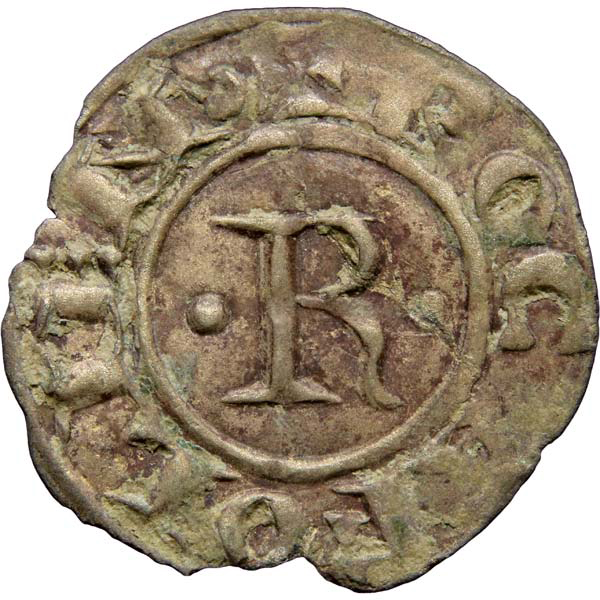
The material evidence makes the medieval name more tangible. A denier attributed to Raymond I of Roquefeuil carries a large R and a legend naming the lordship. The numismatic catalogue identifies Raymond as the Anduze heir who received Roquefeuil through his mother. On the coin, a family identity appears alongside the authority exercised over a place. A name that could be preserved through a marriage also circulated as money.

Historians have a precise term for one of the devices behind this kind of survival: substitution de nom et d’armes, the substitution of name and arms. Christian Maurel’s study of Marseille families describes arrangements intended to preserve a family’s identity when its existing line could no longer carry it forward. Patrimony, name, and heraldic obligations could travel together to an heir. Succession involved a set of duties as well as a set of possessions.
A house therefore presents a practical problem before it presents a mystery. Someone must inherit the property, maintain the records, recognize the obligations, and possess a legitimate right to act. Death threatens all four. The people who build durable institutions arrange for another person, or another body of people, to take them up. Their descendants may inherit the task; an appointed successor may perform it; a legal entity may hold the property while its managers change.
By the eighteenth century, William Blackstone described the corporate solution in unusually revealing language. Corporations gave their members “a kind of legal immortality.” He distinguished bodies made up of many people from corporations sole, where successive holders of an office maintained its legal continuity. The person occupying the position could die while the rights attached to the position endured. Name, succession, and recognized authority made that continuity workable.
This supplies a legal vocabulary for the comparison. A medieval house, an ecclesiastical office, and a modern corporation have different foundations and powers. They nevertheless confront the same human limit: their current members will disappear. The corporation formalizes one answer by creating an identity that can continue through changes of personnel. A family office answers a related question by organizing the work required to preserve and administer a family’s interests across generations.
The Rockefeller records make that work visible. The archival collection called the “Office of the Messrs. Rockefeller” documents John D. Rockefeller Jr.’s increasing management role and the later participation of his five sons: John D. 3rd, Nelson, Laurance, Winthrop, and David. Its contents include correspondence, deeds, contracts, minutes, charters, and certificates of incorporation. The plural name describes an administrative structure through which successive Rockefellers conducted their affairs.
An office gives a family memory and the capacity to act. Staff can retain knowledge that an heir has never personally acquired. Records can establish obligations that began before a new generation was born. Different relatives can undertake different responsibilities while drawing on a common body of information. Under those conditions, the founder’s name can acquire a lasting institutional presence. Understanding that presence requires us to follow the people who maintained it and the documents that authorized their work.
The surviving correspondence between John D. Rockefeller Sr. and Jr. shows the transfer in concrete terms. In July 1918, Senior informed his son that he was transferring stock in several companies descended from the Standard Oil enterprise, including Standard Oil of New Jersey, Atlantic Refining, and Vacuum Oil. Such a letter identifies parties, assets, and an act of transfer. It gives a researcher something that can be traced through ownership records, estate arrangements, and later administration.

Standard Oil’s legal form changed repeatedly. The 1882 trust placed interests associated with roughly forty corporations under nine trustees and their successors. The Ohio judgment against the trust in 1892 prompted further reorganization, and Standard Oil of New Jersey became the holding company in 1899. The Supreme Court ordered the unlawful combination dissolved in 1911. The fortune then had to be administered across the resulting companies and other investments. The Rockefeller office could continue its work while the original business arrangement changed around it.
Rockefeller’s institutional legacy extended into philanthropy. His documented Baptist commitments and his work with Frederick T. Gates belong in this history, alongside the Rockefeller Institute for Medical Research, founded in 1901; the General Education Board, established in 1902; and the Rockefeller Foundation, created in 1913. Wealth could be placed into bodies with officers, rules, records, and purposes intended to endure. The practical means of that endurance can be studied through their founding documents and administration.
The Rockefellers’ established ancestry begins much closer to modern Germany. Johann Peter Rockenfeller emigrated to North America in 1723 from the Wied district of the Rhineland, near present-day Neuwied, and settled in the part of New Jersey associated with Hunterdon County. The standard surname explanation derives Rockefeller from Rockenfeld, a German village name. Rockenfeller meant a person from that place; Rockafellow and other American spellings belong to the same surname history.
At the beginning of the twentieth century, Aaron R. Lewis was investigating a proposed French ancestry for the family. Aaron was the father of Harvey Spencer Lewis, who would establish the American organization known as AMORC. The published Transactions of the Rockefeller Family Association, 1905–1909 credits John Davison Rockefeller and his brother William with commissioning Aaron’s research. At the 1909 reunion, he delivered a presentation titled “Rockefeller Coins and Châteaux in France,” showing castle photographs and more than a dozen coins presented as ancestral material.
The commission had already attracted publicity. A September 1908 newspaper report described Lewis’s European investigation and his claim that the American Rockefellers descended from French barons. Medieval lordship was entering the public account of an American industrial family. Castles and coinage supplied objects through which the proposed ancestry could be pictured, discussed, and remembered.
This gives the French claim a sharper meaning. A documented immigrant family could acquire a much older social identity if its German roots could be joined to the lords of Roquefeuil. A village name would become the American form of a noble French name, and an industrial fortune would sit at the end of a story reaching back to medieval lordship. The proposed connection carried an obvious prestige. Establishing it required a chain of descent across the intervening centuries.
The distinction matters because the genealogy volume already acknowledged the German relatives. In an earlier address printed in the same book, Aaron described visiting their community and examining church records before turning to the purported French origins. The tribute crediting the brothers with his commission also thanked John D. Rockefeller for a monument at Johann Peter’s grave in New Jersey. The noble pedigree was being attached to an immigrant history that the family continued to commemorate.
The Roquefeuil family’s own history says that Rockefeller descent from its house has not been proved. That leaves a substantial gap between the established Rhineland ancestry and Lewis’s proposed medieval extension. The French claim offered the family castles, heraldry, coinage and centuries of titled ancestors. Read this way, the commission shows an industrial dynasty assembling a prestigious account of its past, with paid research and public presentations helping give that account authority.

AMORC’s later historical account places Aaron’s Rockefeller research behind the opportunity that took Harvey to France in 1909. Aaron needed an assistant, and his son accompanied him. The account follows Harvey from Paris to Toulouse, where he said he encountered Rosicrucian representatives and underwent initiation. It also preserves his report of the experience in a letter to his wife. The genealogy expedition and the founding narrative of the order meet through the same father and son.
Harvey’s own published version appeared in May 1916 as A Pilgrim’s Journey to the East. He described an unexpected business opportunity that made travel to France possible, followed by a search for Rosicrucian contacts. The article does not identify the Rockefeller commission. Near its conclusion, Lewis reported receiving documents appointing him a legate for America, along with instructions governing his future work. The original article and AMORC’s later account therefore need to be read together, with their different dates and purposes kept in view.
Lewis’s narrative is full of the language of continuity: an archivist, preserved records, manuscripts, seals, papers, officers, appointments, and reports. Even the extraordinary setting depends on recognizable administrative acts. Someone possesses authority, examines a candidate, admits him, and entrusts him with a task. As a founding account, the story explains why Lewis could claim to act on behalf of a tradition larger and older than himself. Its French initiation and ancient transmission are claims made within that account; establishing the authority of the people described would require their own surviving records.
AMORC historian Christian Rebisse also treats aspects of the journey as symbolic and connects its form with the traditional Rosicrucian founder’s journey. That observation gives the narrative another historical dimension. A founding story can organize the way members understand their institution, the obligations they accept, and the authority they recognize. Its effects can be investigated even while particular events or claims of ancient succession remain unsettled. Belief in an inheritance can help people build the structures through which they intend to transmit it.
By 1915, that undertaking had produced an American organization. AMORC’s centennial history reproduces its early founding documents and records Lewis’s election as Imperator and Grand Master General on April 1. It follows the subsequent development of headquarters and the establishment of Rosicrucian Park in San Jose in 1927. The surviving 1915 pronunziamento shows the act of organizing a named order, with a founder, a declared purpose, and a body of adherents.

The surviving materials establish a connection through the genealogy expedition: the Rockefeller brothers commissioned Aaron’s work, AMORC’s later history links that work to Harvey’s French journey, and Harvey made the journey central to his account of the order’s American establishment. They establish no Rockefeller membership in AMORC and no Rockefeller intention to sponsor an initiation. The connection lies in the opportunity and the work: a father researching a family’s ancestry took his son to France, and the son returned with a story of another inheritance.
Lewis also sought recognition among living European organizations. In 1921 he corresponded with Theodor Reuss, head of the Ordo Templi Orientis, or OTO. Reuss issued him an honorary diploma carrying high degrees associated with the Memphis-Mizraim rites and the OTO. AMORC’s own institutional history describes the document as honorific: Lewis had undergone no initiation into those orders, and the diploma gave him a role as a representative of Reuss’s sanctuary in its relations with AMORC.
The two men planned an international council in 1921, but their collaboration soon faltered over its purposes and ended in 1922. The episode shows recognition being negotiated through letters, degrees and proposed alliances. Reuss possessed an organization and a seal; Lewis possessed a growing American order. A document could connect them, but its meaning depended on the powers its issuer held and the limits of what it actually granted. The honorary diploma later became material for arguments about Lewis’s authority.
The older Rosicrucian literature makes succession explicit. The Fama Fraternitatis, published in 1614, describes a legendary founder, identified by the initials C.R.C., whose travels lead to the establishment of a fraternity in Germany. It sets out six rules, including healing without payment and following local customs of dress. Another requires that “Every Brother should look about for a worthy person, who, after his decease, might succeed him.” The original eight brothers are described as bachelors. The fraternity’s imagined continuity depends on choosing and preparing successors; its common designation and place of assembly, the House of the Holy Spirit, give that continuity an identity and a home.

Read beside the Roquefeuil succession and Blackstone’s account of corporations, that rule brings the comparison into focus. A house preserves an inheritance through a recognized heir. An office continues through a recognized holder. The manifesto’s fraternity proposes continuity through a worthy successor. Each arrangement needs a way to establish who belongs, who may act, and what must be carried forward. Their purposes differ, but the work of transmission remains essential to each.
Names and seals become especially important at the moment of succession. They allow an action to be recognized as belonging to an enduring body. An archive preserves the record against which that recognition can be tested. This is why a genealogist’s interest in arms, an administrator’s interest in incorporation papers, and an order’s interest in charters can sometimes meet. All three are concerned with the authority of a claim made in the present about an inheritance from the past.
The claim to succession faced organized opposition. Reuben Swinburne Clymer, leader of the Fraternitas Rosae Crucis, asserted an American Rosicrucian lineage through the nineteenth-century writer Paschal Beverly Randolph. By the late 1920s, his organization was challenging AMORC’s right to call itself Rosicrucian. Lewis answered with accusations against Clymer. Each leader claimed an inherited authority, and each disputed the other’s credentials. Their quarrel gave the question of the rightful successor a public and sometimes costly form.
Clymer’s two-volume The Rosicrucian Fraternity in America, published in 1935, organized the dispute around “Authentic and Spurious Organizations.” It attacked Lewis’s Toulouse account and reproduced letters, documents and testimony in support of Clymer’s case. Among its exhibits was a 1928 letter attributed to the French occultist Jean Bricaud, saying he knew of no such Rosicrucian Grand Lodge at Toulouse. This was a rival’s polemical collection, assembled to defeat Lewis’s claims. Clymer’s own asserted succession required examination by the same standard.
The battle extended into litigation. Clymer’s book discussed a libel suit arising from AMORC’s White Book D and a separate federal case concerning control of AMORC’s corporation and property. AMORC, in turn, published a pamphlet presenting a California judgment against a critic as a victory over a campaign it associated with Clymer and others. These publications show both camps using court proceedings to support their public positions. Claims about ancient legitimacy had become entangled with reputation, publications and control of a modern organization.
The disagreement exposes the difficulty in the Fama’s rule. A brother may choose a worthy successor, but people outside that relationship must decide whether to recognize the choice. Two organizations can invoke the same tradition while offering incompatible accounts of its transmission. A charter becomes persuasive only if others accept its issuer’s authority and its scope. A family genealogy faces a comparable test when it joins a known ancestry to a much older house.
When Harvey Spencer Lewis died in 1939, his son Ralph succeeded him as AMORC’s Imperator. An order describing its inheritance through initiation and appointment also experienced a father-to-son succession at its modern headquarters. That succession could be followed through the organization’s own history, while its claim to an ancient lineage remained a separate question. The practical inheritance included the leadership of an existing institution, its teaching materials, buildings, members and administrative work.

The parallel becomes clearer in Dr. James Ford’s Genealogy of the Ford Family, printed by the Plain Dealer Company in Wabash, Indiana, in 1890. Ford was a physician compiling a history of his relatives. Near the back of the book he inserted an appendix called “The Unwritten History of the Ford Family,” headed Ut fama traditum est: as handed down by report or tradition. He described material obtained through James Mitchell Ford in Kansas City, beginning with an explanation attributed to Bishop Hogan and followed by a written account supplied by Con Malony, an “Irish Linguist.”
The account reached beyond the family’s American births and marriages to a Danish prince who accompanied a king of Spain into Ireland six hundred years before Christ. It explained the prince’s name as “The Ford” or “Crossing” and made him a ruler of Ireland. Ford preserved this story as tradition, alongside a genealogy of more recent relatives. Like the Rockefeller French claim, it gave a modern family a possible place in a remote royal past.
Ford’s appendix and the Rockefeller reunion volume were published less than twenty years apart. Both show families using a printed genealogy to bring a prestigious ancestral story into circulation. The Rockefeller volume added photographs, coins and a commissioned researcher; Ford named the intermediaries who supplied his account. Those differences matter, but the ambition is recognizable in each: to give the present family a history extending far beyond the generations its members could personally remember.
The word fama also appears in the title of the Rosicrucian manifesto. It is ordinary Latin for report or reputation; its appearance in both works establishes a linguistic resemblance. The historical connection worth examining is the transmission of a story. Ford recorded the people through whom his ancient account had reached him. Lewis described the people who had admitted him and entrusted him with an American mission. The Rockefeller family hired Aaron to investigate a past that could be displayed in castles and coins. Each account depended on someone’s ability to carry an inheritance into the present.
Reading a pedigree with those questions in mind requires attention to each connection it draws. A father-to-child relationship records descent. A marriage may also explain the movement of property or the continuation of a name. An appointment identifies authority to act; a charter identifies the body for which someone acts. A later compiler may place several of these relationships into a single account of family continuity. Recovering their original meanings depends on returning to the records behind the account.
The Roquefeuil history shows a house name continuing through successive paternal lines. The Rockefeller records show a fortune administered through changing legal forms and generations of family participation. The Rosicrucian manifesto proposes worthy successors, and Lewis’s founding narrative invokes documents authorizing the transmission of an order. Together, these cases sharpen the question the Ford material leaves with us: what, exactly, was being inherited? The answer may involve land, assets, a name, an office, or the custody of a story. Following each inheritance to its next holder is how we discover what allowed the house to survive.